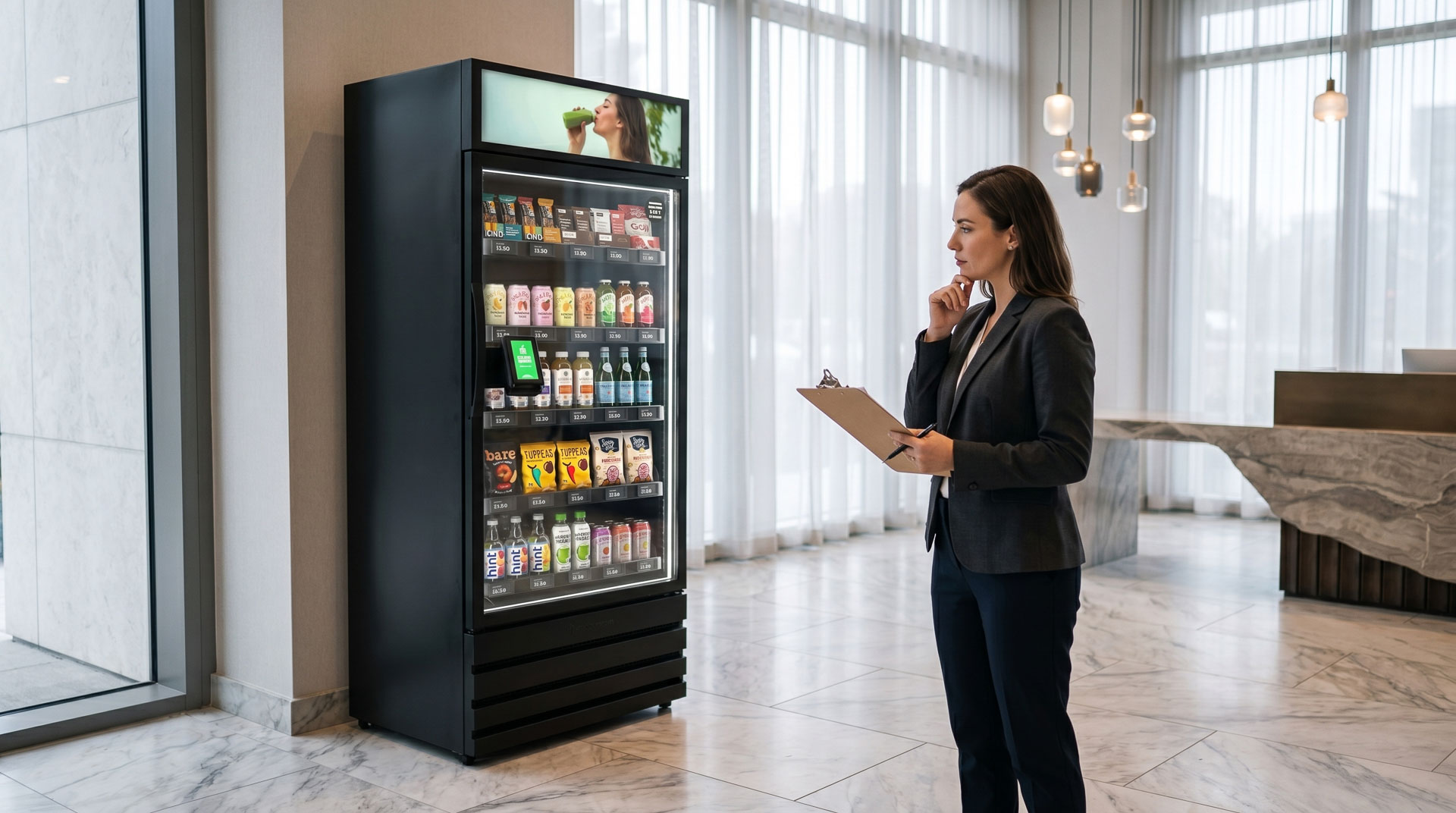
What Property Managers Should Know Before Adding Vending Machines
A good vending program for a multifamily, office, hotel, or commercial property should solve a specific convenience problem for residents, guests, tenants, and staff. It should not ask the client to become a part-time vending manager. For property managers and regional managers, the practical choice is the provider and format that fit the site, the daily traffic pattern, and the service expectations after installation.
Quick Answer
Use the vending decision to answer four questions: who will use it, what problem it solves, which products match the routine, and who owns the work after launch. In this case, the core issue is that property teams may approve vending without defining location, access, service expectations, product ownership, or resident communication. The right provider should help settle the operational questions before install so the amenity does not become another front-desk or leasing-office responsibility.
Define The Amenity Job
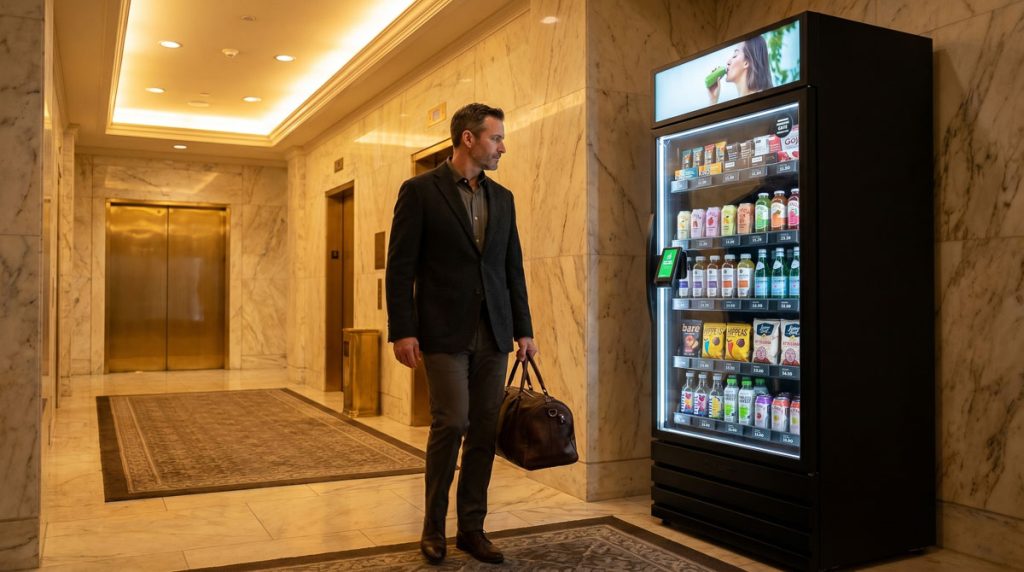
Start by mapping the moments when the amenity would actually be used. For a multifamily, office, hotel, or commercial property, that means studying when residents, guests, tenants, and staff arrive, pause, wait, change shifts, leave for the day, or return after hours before choosing equipment. The best location is where users can access it safely and naturally without sending nonresidents into restricted areas.
This matters because vending is rarely successful just because it exists. It works when the placement removes a small daily inconvenience. The smoothest vending launches are planned like an amenity, not dropped in like equipment.
Choose Products Around The Audience
The product mix should be specific enough to fit the audience without becoming narrow. For a multifamily, office, hotel, or commercial property, the strongest starting point is smart cabinets, refrigerated food, drinks, snacks, coffee, and property-specific essentials. That mix can change after launch, but the first version should be based on the use case rather than a generic snack list.
For What Property Managers Should Know Before Adding Vending Machines, product changes should be based on what residents, guests, tenants, and staff actually buy in the multifamily, office, hotel, or commercial property. Ask how the provider reviews purchase trends, service notes, requests, and seasonal demand so your team is not left counting empty slots or guessing what belongs in the machine.
Protect The Onsite Team
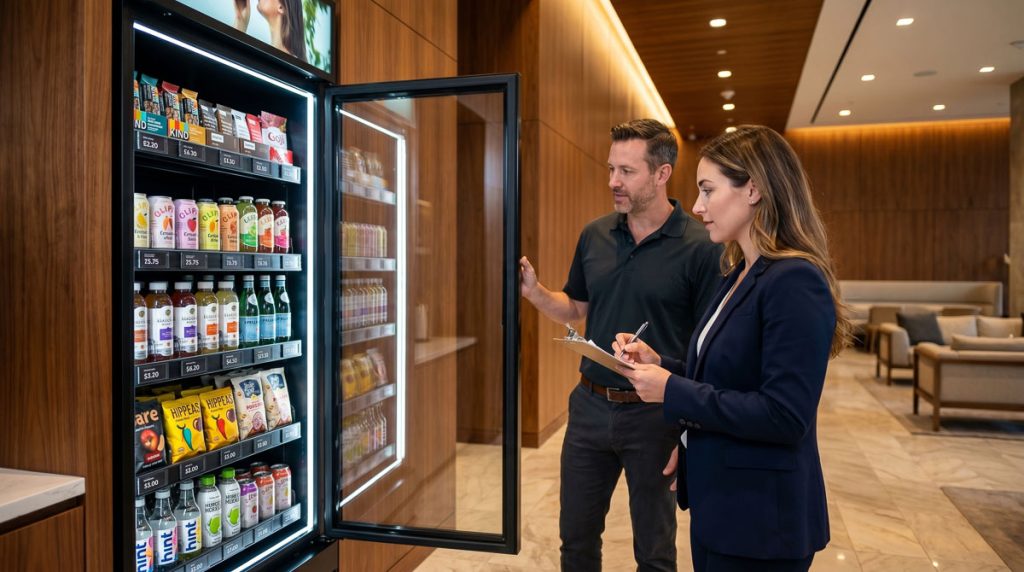
The service agreement is especially important in a multifamily, office, hotel, or commercial property. Confirm who handles stocking, cleaning, payment support, refunds, expired products, outages, and routine maintenance for residents, guests, tenants, and staff. If local staff have to notice and chase every issue, the program is not truly hands-off.
AI Vending is a Colorado-based smart store provider that installs, stocks, monitors, and services amenities for local properties and workplaces. For a multifamily, office, hotel, or commercial property, that full-service model is the useful benchmark: the client provides a suitable location and power, while the provider owns the service work for residents, guests, tenants, and staff.
Rollout Details Worth Confirming
Before approving a property manager vending program, walk the multifamily, office, hotel, or commercial property with practical constraints in mind. Confirm power, delivery access, visibility, user access, signal or connectivity, trash flow, nearby seating, and service access. Those details determine whether the amenity feels natural or forced.
A focused approval checklist:
- Confirm the primary users and the moments when they need food or drinks.
- Match the format to the site: compact smart vending for smaller spaces, larger smart stores or micro markets for heavier traffic.
- Require cashless payment and a clear support path for service issues.
- Ask how restocking frequency and product changes are adjusted after launch.
- Decide how the amenity will be announced so people know it is available.
Common Mistakes To Avoid
The first mistake is choosing equipment before defining what the program needs to accomplish for residents, guests, tenants, and staff in the multifamily, office, hotel, or commercial property. A polished machine in the wrong corner will underperform, while a simpler setup in the right path can become part of the routine. The second mistake is assuming the largest format is always the most useful for residents, guests, tenants, and staff.
The third mistake is treating residents, guests, tenants, and staff as one generic audience inside the multifamily, office, hotel, or commercial property. Different people may use the same amenity for breakfast, a short break, an after-hours meal, a customer wait, or a late commute. The provider should be able to plan around those patterns instead of offering the same product set everywhere.
Colorado Fit And Next Step
For Colorado sites like a multifamily, office, hotel, or commercial property, the strongest vending programs are practical, polished, and low-lift. Teams can review AI Vending’s Denver metro locations, compare related articles and insights, or use the contact page to start a site-specific conversation about property manager vending.
FAQs
What makes a good property manager vending program?
A good property manager vending program fits the multifamily, office, hotel, or commercial property, serves a real routine for residents, guests, tenants, and staff, offers products people will actually buy, and keeps stocking and service with the provider. The equipment matters, but the operating model matters more.
When should a site choose a micro market instead of smart vending?
A micro market usually makes sense when the multifamily, office, hotel, or commercial property has enough traffic, space, and visibility for open browsing and a broader food selection. Smart vending is often better when residents, guests, tenants, and staff need a smaller footprint, cashless control, and simpler placement.
What should the client team manage after installation?
Ideally, the client team should manage very little after installation. For property manager vending, the client may help with launch communication and site access, but the provider should manage products, restocking, payment support, and equipment service.
Leave a Reply