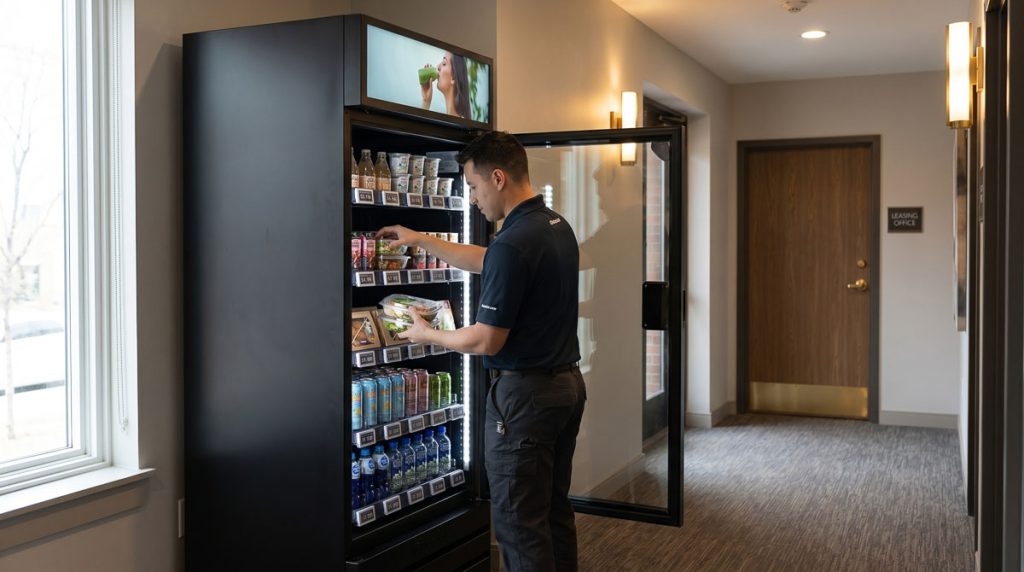
What Property Managers Should Know Before Adding Vending Machines
A good vending program for a multifamily, office, hotel, or commercial property should solve a specific convenience problem for residents, guests, tenants, and staff. It should not ask the client to become a part-time vending manager. For property managers and regional managers, the practical choice is the provider and format that fit the site, the daily traffic pattern, and the service expectations after installation.
Quick Answer
Use the vending decision to answer four questions: who will use it, what problem it solves, which products match the routine, and who owns the work after launch. In this case, the core issue is that property teams may approve vending without defining location, access, service expectations, product ownership, or resident communication. The right provider should help settle the operational questions before install so the amenity does not become another front-desk or leasing-office responsibility.
Define The Amenity Job
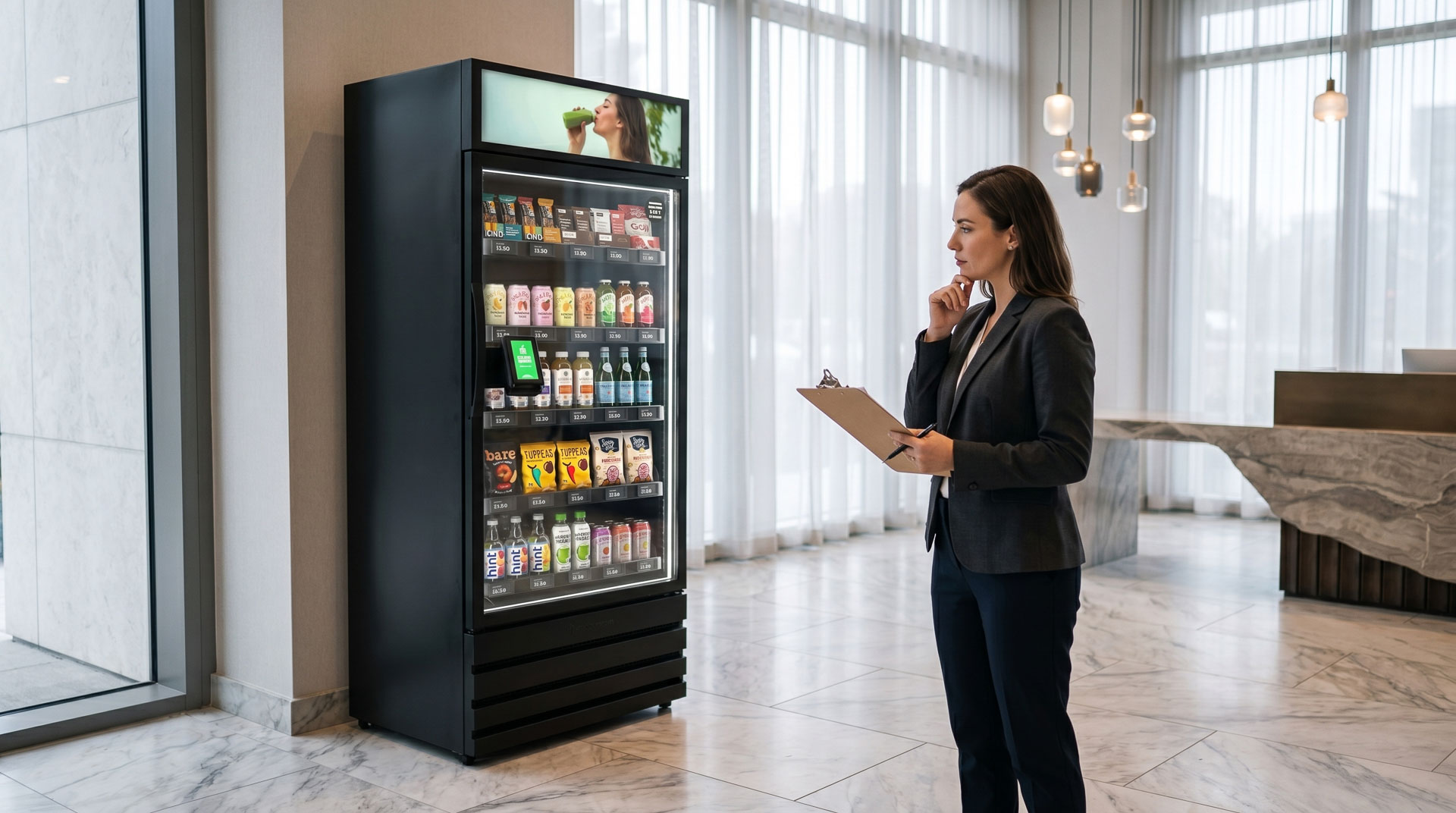
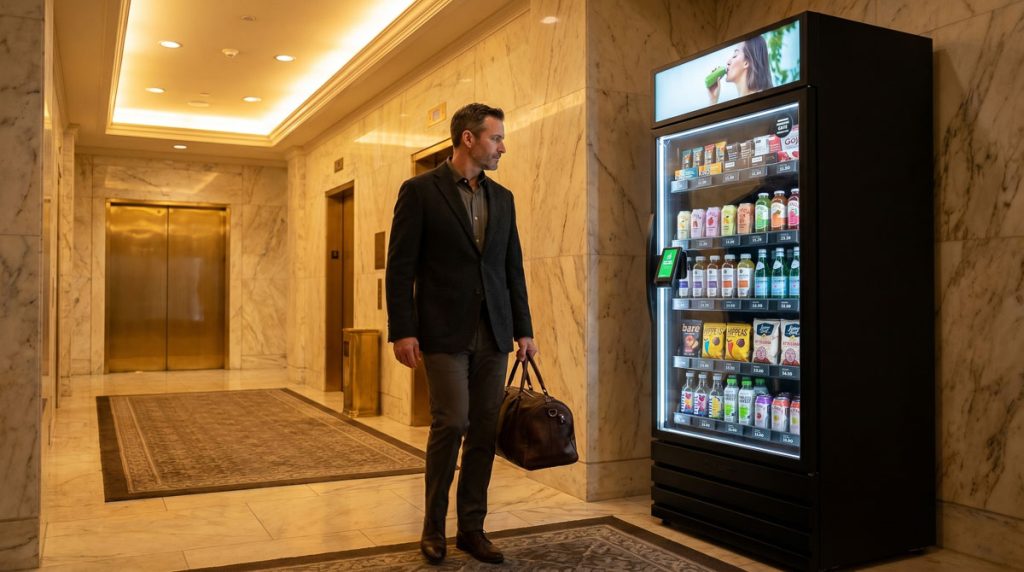
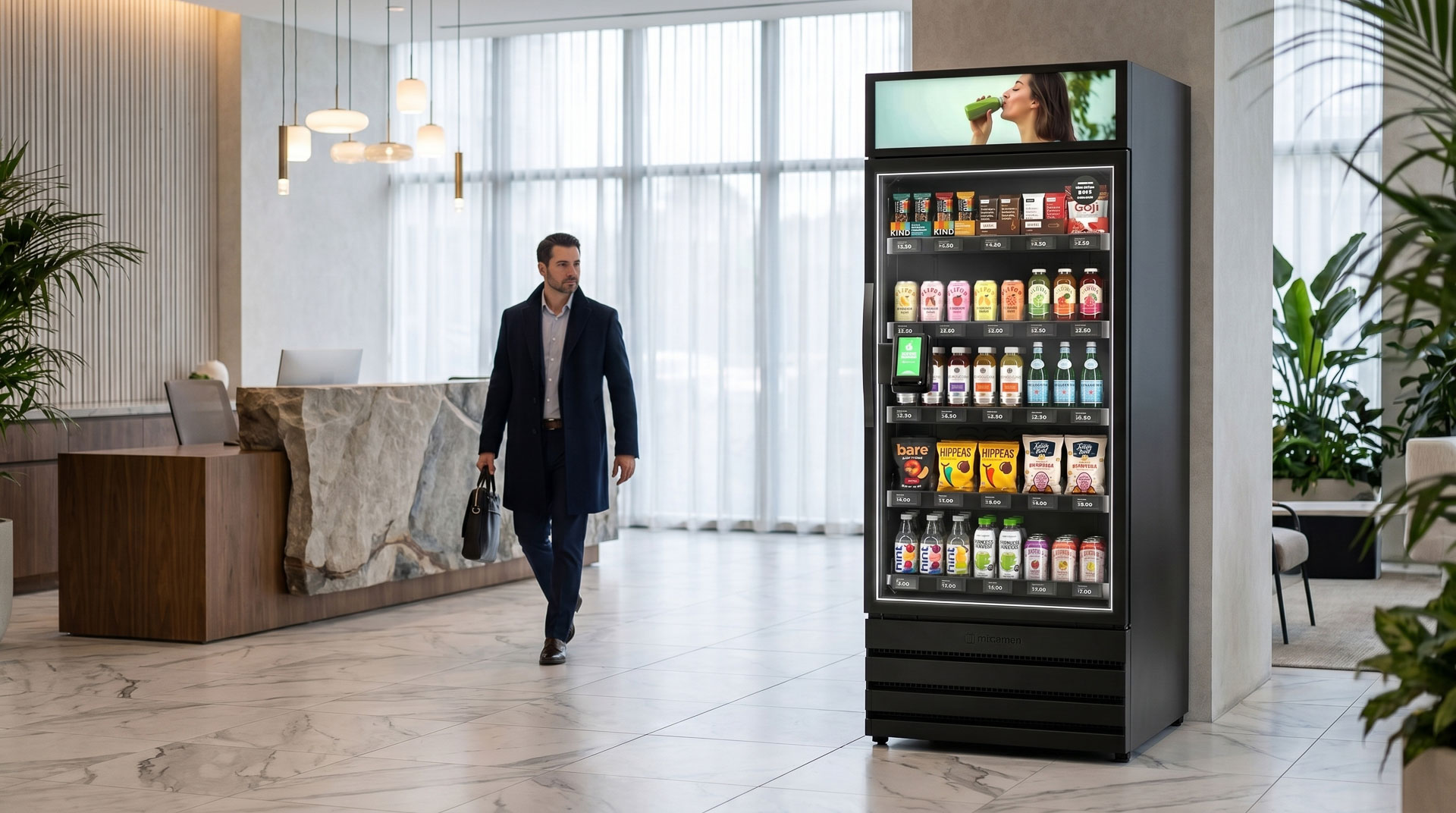
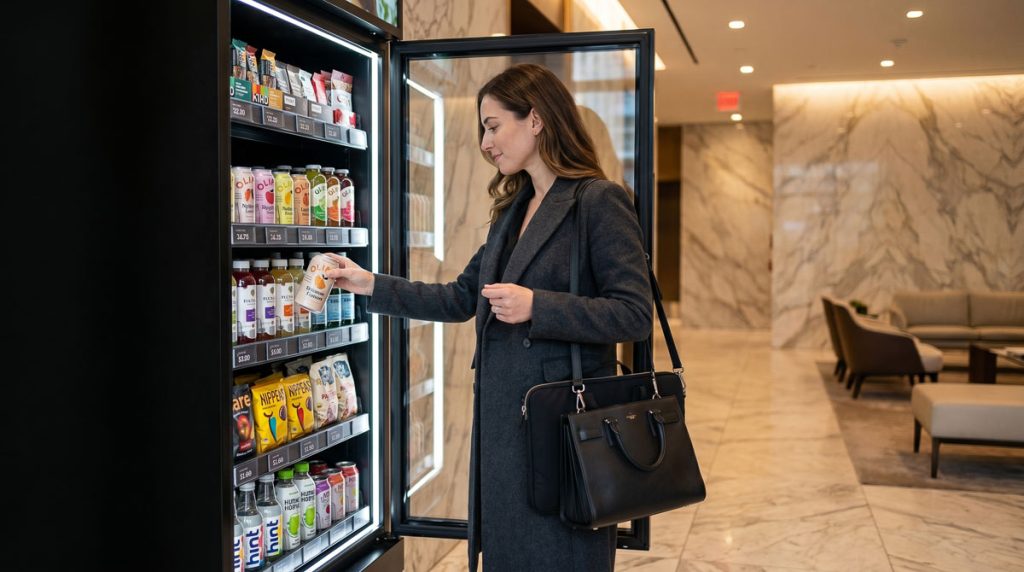
Start by mapping the moments when the amenity would actually be used. For a multifamily, office, hotel, or commercial property, that means studying when residents, guests, tenants, and staff arrive, pause, wait, change shifts, leave for the day, or return after hours before choosing equipment. The best location is where users can access it safely and naturally without sending nonresidents into restricted areas.
This matters because vending is rarely successful just because it exists. It works when the placement removes a small daily inconvenience. The smoothest vending launches are planned like an amenity, not dropped in like equipment.
Choose Products Around The Audience
The product mix should be specific enough to fit the audience without becoming narrow. For a multifamily, office, hotel, or commercial property, the strongest starting point is smart cabinets, refrigerated food, drinks, snacks, coffee, and property-specific essentials. That mix can change after launch, but the first version should be based on the use case rather than a generic snack list.
For What Property Managers Should Know Before Adding Vending Machines, product changes should be based on what residents, guests, tenants, and staff actually buy in the multifamily, office, hotel, or commercial property. Ask how the provider reviews purchase trends, service notes, requests, and seasonal demand so your team is not left counting empty slots or guessing what belongs in the machine.
Protect The Onsite Team
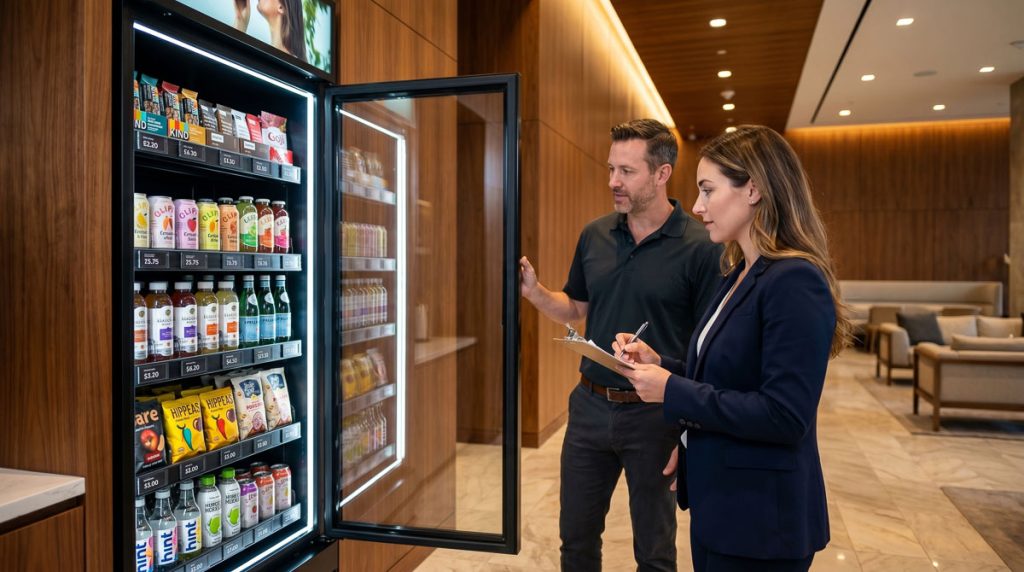
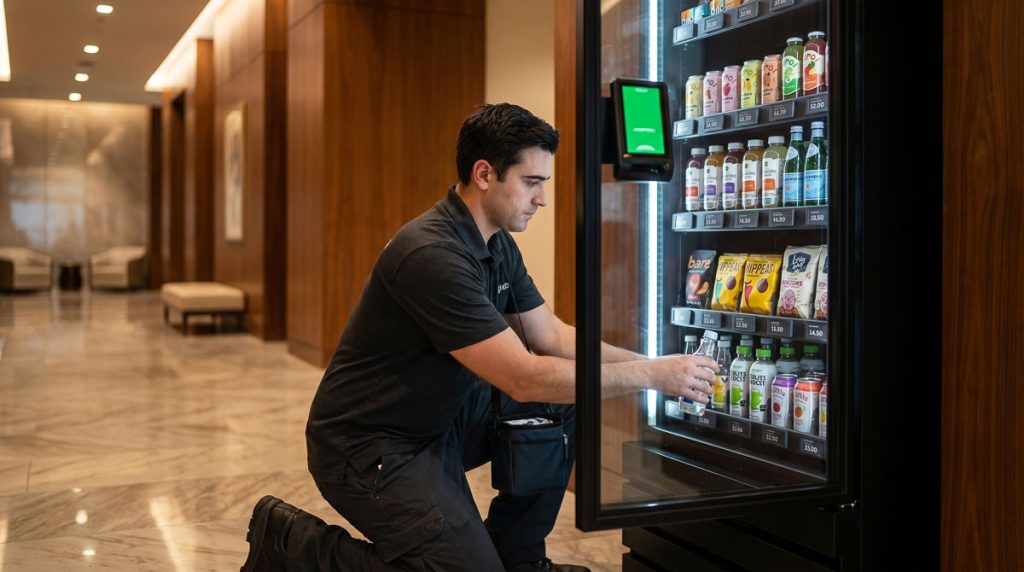
The service agreement is especially important in a multifamily, office, hotel, or commercial property. Confirm who handles stocking, cleaning, payment support, refunds, expired products, outages, and routine maintenance for residents, guests, tenants, and staff. If local staff have to notice and chase every issue, the program is not truly hands-off.
AI Vending is a Colorado-based smart store provider that installs, stocks, monitors, and services amenities for local properties and workplaces. For a multifamily, office, hotel, or commercial property, that full-service model is the useful benchmark: the client provides a suitable location and power, while the provider owns the service work for residents, guests, tenants, and staff.
Rollout Details Worth Confirming
Before approving a property manager vending program, walk the multifamily, office, hotel, or commercial property with practical constraints in mind. Confirm power, delivery access, visibility, user access, signal or connectivity, trash flow, nearby seating, and service access. Those details determine whether the amenity feels natural or forced.
A focused approval checklist:
Confirm the primary users and the moments when they need food or drinks.
Match the format to the site: compact smart vending for smaller spaces, larger smart stores or micro markets for heavier traffic.
Require cashless payment and a clear support path for service issues.
Ask how restocking frequency and product changes are adjusted after launch.
Decide how the amenity will be announced so people know it is available.
Common Mistakes To Avoid
The first mistake is choosing equipment before defining what the program needs to accomplish for residents, guests, tenants, and staff in the multifamily, office, hotel, or commercial property. A polished machine in the wrong corner will underperform, while a simpler setup in the right path can become part of the routine. The second mistake is assuming the largest format is always the most useful for residents, guests, tenants, and staff.
The third mistake is treating residents, guests, tenants, and staff as one generic audience inside the multifamily, office, hotel, or commercial property. Different people may use the same amenity for breakfast, a short break, an after-hours meal, a customer wait, or a late commute. The provider should be able to plan around those patterns instead of offering the same product set everywhere.
Colorado Fit And Next Step
For Colorado sites like a multifamily, office, hotel, or commercial property, the strongest vending programs are practical, polished, and low-lift. Teams can review AI Vending’s Denver metro locations, compare related articles and insights, or use the contact page to start a site-specific conversation about property manager vending.
FAQs
What makes a good property manager vending program?
A good property manager vending program fits the multifamily, office, hotel, or commercial property, serves a real routine for residents, guests, tenants, and staff, offers products people will actually buy, and keeps stocking and service with the provider. The equipment matters, but the operating model matters more.
When should a site choose a micro market instead of smart vending?
A micro market usually makes sense when the multifamily, office, hotel, or commercial property has enough traffic, space, and visibility for open browsing and a broader food selection. Smart vending is often better when residents, guests, tenants, and staff need a smaller footprint, cashless control, and simpler placement.
What should the client team manage after installation?
Ideally, the client team should manage very little after installation. For property manager vending, the client may help with launch communication and site access, but the provider should manage products, restocking, payment support, and equipment service.
How Modern Vending Can Improve Tenant and Employee Satisfaction
A good vending program for an apartment, office, mixed-use, or workplace property should solve a specific convenience problem for tenants and employees. It should not ask the client to become a part-time vending manager. For property managers, HR teams, and ownership groups, the practical choice is the provider and format that fit the site, the daily traffic pattern, and the service expectations after installation.
Quick Answer
Use the vending decision to answer four questions: who will use it, what problem it solves, which products match the routine, and who owns the work after launch. In this case, the core issue is that amenities that look good on a checklist do not always create daily value for the people using the building. The right provider should help the site choose vending that solves real convenience problems and can be managed without increasing onsite workload.
Start With The Use Case
Start by mapping the moments when the amenity would actually be used. For an apartment, office, mixed-use, or workplace property, that means studying when tenants and employees arrive, pause, wait, change shifts, leave for the day, or return after hours before choosing equipment. The best location is in a common area tied to real routines such as commute times, breaks, workouts, service waits, or late-night returns.
This matters because vending is rarely successful just because it exists. It works when the placement removes a small daily inconvenience. Satisfaction improves when the amenity is easy to notice, easy to use, and consistently maintained.
Match Products To Real Routines
The product mix should be specific enough to fit the audience without becoming narrow. For an apartment, office, mixed-use, or workplace property, the strongest starting point is smart vending, coffee, cold drinks, better snacks, meal options, and everyday convenience products. That mix can change after launch, but the first version should be based on the use case rather than a generic snack list.
For How Modern Vending Can Improve Tenant and Employee Satisfaction, product changes should be based on what tenants and employees actually buy in the apartment, office, mixed-use, or workplace property. Ask how the provider reviews purchase trends, service notes, requests, and seasonal demand so your team is not left counting empty slots or guessing what belongs in the machine.
Service Ownership Is The Real Test
The service agreement is especially important in an apartment, office, mixed-use, or workplace property. Confirm who handles stocking, cleaning, payment support, refunds, expired products, outages, and routine maintenance for tenants and employees. If local staff have to notice and chase every issue, the program is not truly hands-off.
AI Vending is a Colorado-based smart store provider that installs, stocks, monitors, and services amenities for local properties and workplaces. For an apartment, office, mixed-use, or workplace property, that full-service model is the useful benchmark: the client provides a suitable location and power, while the provider owns the service work for tenants and employees.
How To Approve The Right Fit
Before approving a tenant and employee vending program, walk the apartment, office, mixed-use, or workplace property with practical constraints in mind. Confirm power, delivery access, visibility, user access, signal or connectivity, trash flow, nearby seating, and service access. Those details determine whether the amenity feels natural or forced.
A focused approval checklist:
Confirm the primary users and the moments when they need food or drinks.
Match the format to the site: compact smart vending for smaller spaces, larger smart stores or micro markets for heavier traffic.
Require cashless payment and a clear support path for service issues.
Ask how restocking frequency and product changes are adjusted after launch.
Decide how the amenity will be announced so people know it is available.
Common Mistakes To Avoid
The first mistake is choosing equipment before defining what the program needs to accomplish for tenants and employees in the apartment, office, mixed-use, or workplace property. A polished machine in the wrong corner will underperform, while a simpler setup in the right path can become part of the routine. The second mistake is assuming the largest format is always the most useful for tenants and employees.
The third mistake is treating tenants and employees as one generic audience inside the apartment, office, mixed-use, or workplace property. Different people may use the same amenity for breakfast, a short break, an after-hours meal, a customer wait, or a late commute. The provider should be able to plan around those patterns instead of offering the same product set everywhere.
Colorado Fit And Next Step
For Colorado sites like an apartment, office, mixed-use, or workplace property, the strongest vending programs are practical, polished, and low-lift. Teams can review AI Vending’s Denver metro locations, compare related articles and insights, or use the contact page to start a site-specific conversation about tenant and employee vending.
FAQs
What makes a good tenant and employee vending program?
A good tenant and employee vending program fits the apartment, office, mixed-use, or workplace property, serves a real routine for tenants and employees, offers products people will actually buy, and keeps stocking and service with the provider. The equipment matters, but the operating model matters more.
When should a site choose a micro market instead of smart vending?
A micro market usually makes sense when the apartment, office, mixed-use, or workplace property has enough traffic, space, and visibility for open browsing and a broader food selection. Smart vending is often better when tenants and employees need a smaller footprint, cashless control, and simpler placement.
What should the client team manage after installation?
Ideally, the client team should manage very little after installation. For tenant and employee vending, the client may help with launch communication and site access, but the provider should manage products, restocking, payment support, and equipment service.
Smart Vending for Class B and C Denver Properties: Modernize Without Renovation
Smart vending gives Class B and C Denver properties a practical way to add a more modern resident amenity without construction, major capital planning, or daily staff management. It can turn underused common areas into useful convenience points while keeping restocking, maintenance, payment support, and product updates with the provider.
For property managers and owners, the appeal is not just a newer machine. It is a lower-lift way to improve resident convenience in existing spaces that may already have power, traffic, and visibility.
Quick answer
Smart vending for Class B and C properties is a cashless, provider-managed amenity that can be installed in existing common areas such as laundry rooms, mailrooms, lobbies, resident corridors, or small fitness areas. It helps older or budget-conscious properties feel more current without renovation because residents get quick access to snacks, drinks, meals, and essentials while the property team avoids inventory and service work.
The right setup should be simple for staff after launch. The provider should own the equipment plan, installation, product curation, restocking, payment support, maintenance, and ongoing product updates.
Why Class B and C properties need practical amenity upgrades
Class B and C properties often compete under real budget and staffing constraints. Property teams may want to improve the resident experience, but major renovations can be hard to justify when they require capital approval, downtime, vendor coordination, and construction disruption.
At the same time, resident expectations keep moving. People are used to cashless payment, fast access, delivery apps, mobile ordering, and everyday convenience. Even when a property is not marketed as luxury, residents still notice when common areas feel dated or basic conveniences are missing.
That is why practical amenity upgrades matter. Good options are visible, useful, easy to install, and simple to maintain. Smart vending fits that category when the service model is truly managed by the provider.
What smart vending adds without construction
Smart vending does not change the structure of the building. It adds a modern convenience point inside the property using existing space and standard installation planning.
For residents, the value is immediate:
They can grab a drink, snack, meal, or basic essential without leaving the property.
They can pay with a card or mobile wallet.
They get access outside office hours.
They see a cleaner, more current amenity in a common area.
This is what makes smart vending different from many other upgrades. It adds a visible resident benefit while keeping the property team’s role limited.
Why traditional vending can hurt resident perception
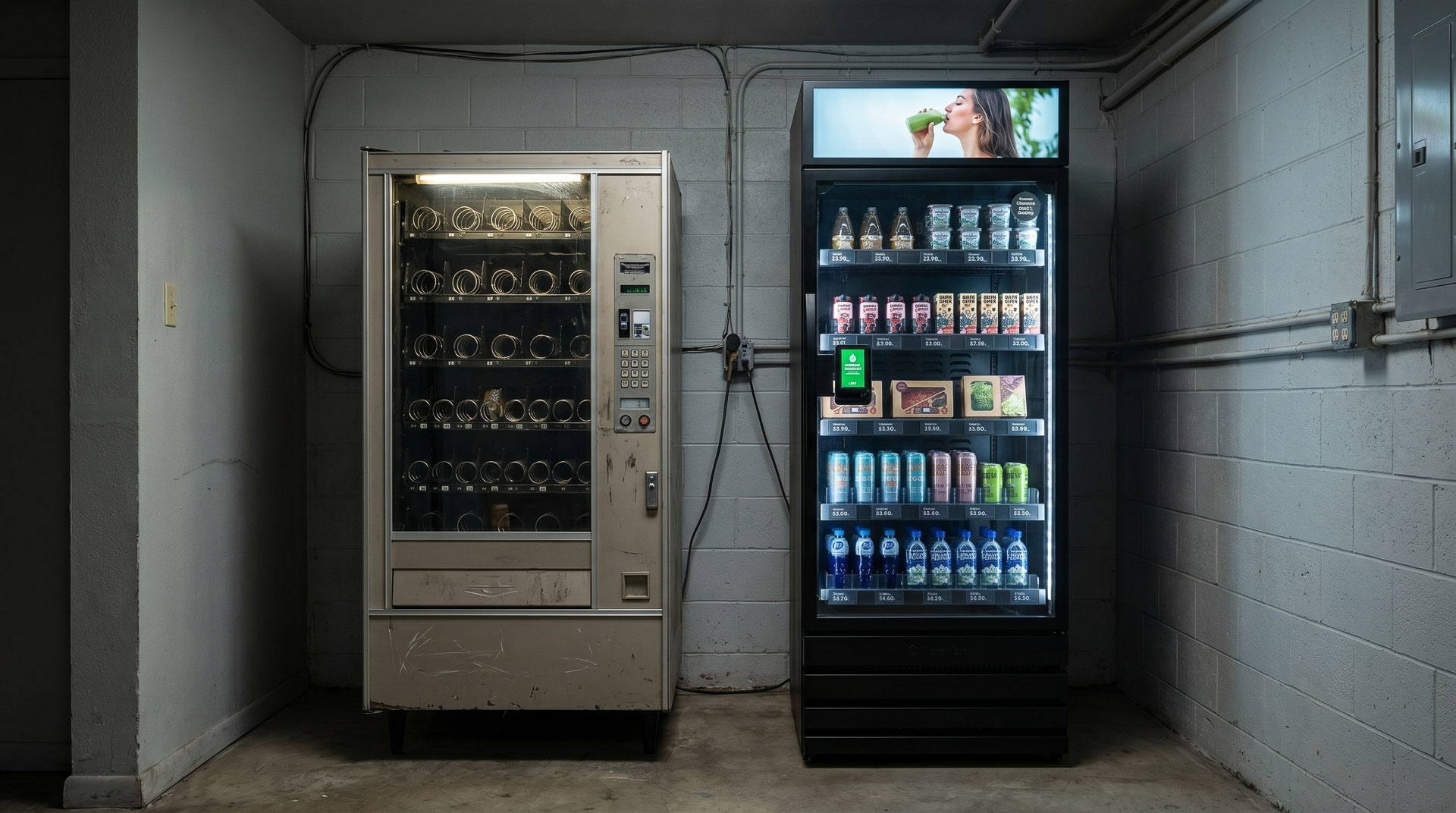
Traditional vending machines can create the opposite effect when they look outdated, accept limited payment methods, or sit half-empty. Even if they are technically functional, they may signal that the area has not been refreshed in years.
That matters because residents form opinions from repeated small interactions. A laundry room with poor lighting and an old vending machine can feel neglected. A mailroom with a clean, cashless smart vending unit can feel more intentional.
The difference is not only cosmetic. Smart vending can improve the experience by reducing common frustrations:
Mobile and card payments replace coins and bills.
Inventory tracking helps restocking align with real demand.
Product selection can adjust over time.
Service needs can be handled by the provider.
The property team is not pulled into routine vending issues.
For Class B and C properties, these small improvements can matter because they are achievable without repositioning the entire asset.
How a zero-CapEx model should work
A zero-CapEx amenity means the property does not pay upfront capital costs for the equipment or buildout. In a true zero-CapEx smart vending model, the provider supplies, installs, stocks, maintains, and operates the unit.
Property teams should verify the details because not every offer uses the term the same way. Ask what is included, who owns the equipment, whether the property has any installation or removal obligation, and what ongoing responsibilities remain with the onsite team.
Responsibility
Property Team
Provider
Provide suitable space
Yes
Helps evaluate
Provide power and access
Usually yes
Confirms requirements
Purchase equipment
No in a true zero-CapEx model
Yes
Install unit
No
Yes
Stock products
No
Yes
Monitor inventory
No
Yes
Handle payment support
No
Yes
Maintain equipment
No
Yes
The main property responsibility should be making the space available and coordinating initial access. After that, the provider should handle the recurring work.
Where smart vending fits in older properties
Smart vending works best where residents already pass through or spend time. Placement should make the amenity easy to notice, easy to access, and easy to service.
Location
Why It Can Work
What To Check
Laundry room
Residents already wait there
Lighting, clearance, and airflow
Mailroom
Regular package and mail traffic
Traffic flow and package-room congestion
Lobby or entry area
Strong first impression
Visibility without blocking access
Fitness or recreation area
Natural match for drinks and snacks
Product mix and power access
Parking or elevator access point
Daily resident path
Security, lighting, and service access
Laundry rooms
Laundry rooms are practical because residents already wait there. A smart vending unit can make the space feel more useful and less neglected, especially if the unit is clean, well lit, and positioned where it does not block circulation.
Mailrooms
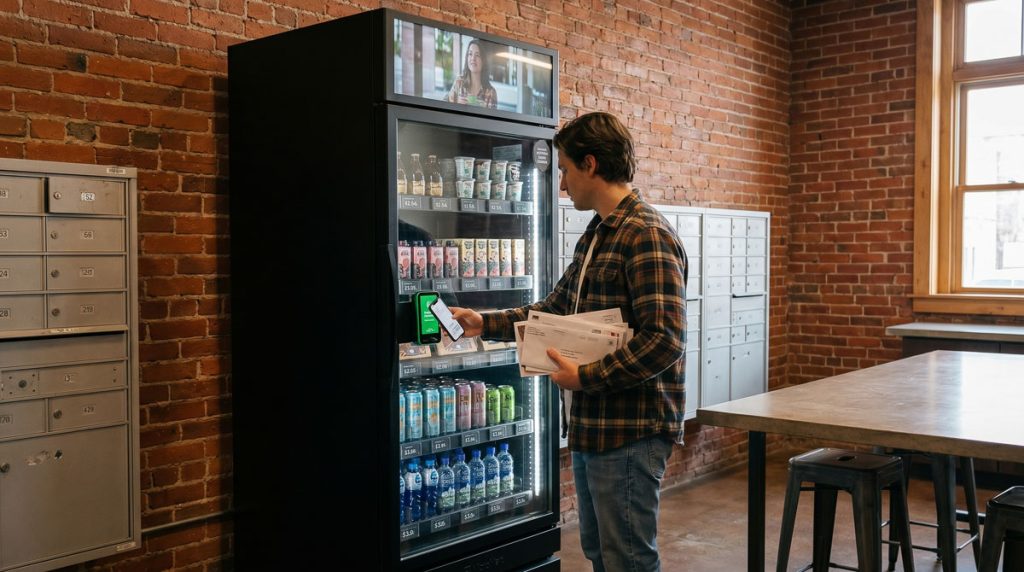
Mailrooms work because residents visit them regularly. A smart vending unit near package pickup or mail access can capture natural traffic without requiring a new destination.
Lobby or leasing-office adjacent areas
If the property has a visible lobby or entry area, smart vending can create a more modern first impression. Placement should not block traffic or interfere with leasing operations.
Fitness or recreation areas
If the property has a small gym or recreation room, products such as water, protein snacks, and functional beverages may fit the use case well.
Parking or elevator access points
In some layouts, residents pass through the same corridor every day. A clean, well-lit unit can be useful there if the placement is secure, visible, and easy to service.
A Denver usage signal worth considering
Class B and C properties should not assume luxury-apartment behavior will translate exactly to their resident base. Still, local usage data can help frame the amenity decision.
AI Vending’s downtown Denver case study, published March 23, 2026, reported 60.7% resident adoption, 30.4% monthly usage, and 25.9% of transactions between 10 PM and 5 AM at an Avenue5 Residential-managed property. The same case study reported 31.7% stronger demand for full meal options than AI Vending’s per-location average.
Those numbers are not a guarantee for every property. They are useful because they show why 24/7 access, meal options, and late-night convenience can matter in a multifamily setting. For Class B and C properties, the lesson is not to copy a luxury setup. It is to place the unit where residents already move and stock products around actual demand.
What property teams should expect after launch
After installation, the property team should expect minimal involvement. The provider should monitor sales and inventory, adjust restocking schedules, manage payment questions, and respond to maintenance needs.
The property team may still want to review performance at a high level. That could include:
whether the unit is being used
whether residents have raised concerns
whether placement is working
whether product categories match demand
whether the provider is responding to service needs
That review should not become daily management. If the property team has to regularly report low stock or troubleshoot payments, the operating model needs to be revisited.
Questions to ask before approving a unit
Before approving smart vending for a Class B or C property, ask direct operating questions:
Who owns the equipment?
Is there any installation, service, removal, or minimum-performance cost to the property?
What power, airflow, connectivity, and service access are required?
Who handles restocking, payment issues, refunds, damage, and maintenance?
How do you choose the initial product mix for this property?
How often do you review product performance?
What happens if residents do not use the unit enough?
Can products be adjusted for price expectations and resident demand?
Does the unit carry cash or operate cashless?
What insurance or damage responsibilities should the property understand?
The answers should be specific enough that the onsite team knows exactly what it will and will not manage after launch.
When smart vending may not be the right fit
Smart vending may underperform if the only available location is hidden, poorly lit, disconnected from resident traffic, or difficult for the provider to service. Convenience amenities need visibility. A unit tucked into a forgotten corner is less likely to become part of a resident’s routine.
It may also be the wrong starting point if the property cannot provide appropriate power, indoor placement, airflow, or service access. Refrigerated and freezer cabinets need more planning than a shelf-stable snack unit.
The product strategy matters too. If residents need practical drinks, snacks, meals, and essentials but the provider stocks novelty items or premium-priced products that do not fit the audience, the amenity can miss the mark.
Finally, be cautious if the provider expects onsite staff to manage inventory, troubleshoot payment issues, or chase service requests. That defeats the purpose of choosing a managed amenity.
Common mistakes to avoid
The first mistake is placing the unit in a hidden area just because space is available. Convenience depends on visibility and natural traffic.
The second mistake is accepting a generic product mix. Class B and C properties can vary widely, so products should match the resident base and price expectations.
The third mistake is failing to clarify responsibilities. Before installation, confirm who handles repairs, refunds, product issues, damage, insurance, and removal if the unit does not work for the property.
The fourth mistake is making renovation-level promises. Smart vending can improve the resident experience, but it should be positioned as a practical amenity upgrade, not a replacement for necessary capital improvements.
Frequently asked questions
Is smart vending suitable for older apartment buildings?
Yes, if the property has a suitable indoor space, power access, and a safe location for residents to use. Older properties can benefit because smart vending does not usually require major structural changes or construction.
What does zero CapEx mean for smart vending?
Zero CapEx generally means the property does not pay upfront capital costs for the equipment or installation. Property teams should still confirm exactly what is included, who owns the equipment, and whether any service, power, or removal costs apply.
Can smart vending fit in small or unusual common areas?
Often yes, but placement should be confirmed through a site survey. The provider should evaluate dimensions, power, traffic flow, visibility, safety, and service access before recommending a location.
Does the property team have to restock the machine?
In a fully managed smart vending model, no. The provider should handle inventory monitoring, restocking, and product updates. This should be confirmed before installation.
What products work best for Class B and C properties?
Useful everyday products tend to perform better than novelty items. Drinks, snacks, quick meals, personal care basics, and practical essentials can work well when they match the resident profile and price expectations.
What happens if the unit is damaged?
The provider should have a clear repair and service process. Property managers should confirm responsibility for damage, response time, insurance, and whether the unit carries cash. Cashless systems may reduce cash-related theft incentives, but they still need appropriate placement and monitoring.
Modernize without taking on another project
Smart vending is a practical way for Class B and C Denver properties to add convenience without taking on a renovation. It can make underused spaces feel more intentional, give residents a useful everyday amenity, and reduce the staff burden that comes with traditional vending.
Before approving a unit, confirm placement, power, service access, product strategy, damage responsibilities, and whether the model is truly hands-off for the property team.
AI Vending can help Denver property teams evaluate whether smart vending fits an existing common area before committing time or budget to a larger renovation project.