Blog

  • Integration Nation: Connecting Vending to Property Tech

    Integration Nation: Connecting Vending to Property Tech

    Integration Nation: Connecting Vending to Property Tech

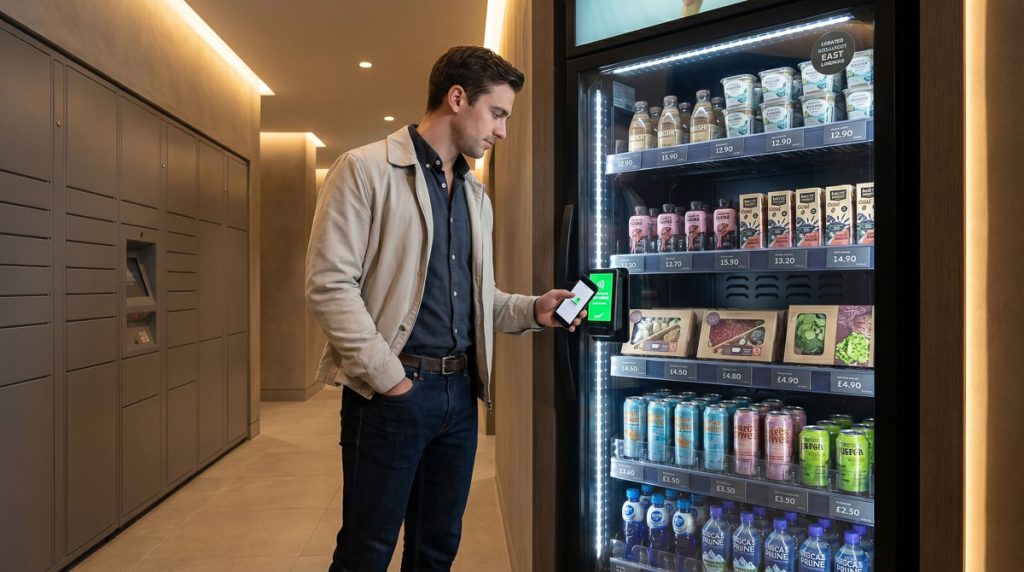
    Connecting vending to property tech means making the vending amenity fit the building’s digital operations, resident communications, service workflows, payment expectations, and reporting needs. It does not always mean a deep software integration with every property management system. The best approach is to connect the vending program where it improves the resident experience or reduces work for the property team.

    For property managers and ownership groups, the real goal is simple: smart vending should feel like part of the property’s operating system, not a disconnected machine that staff have to explain, monitor, or manage manually.

    Quick answer

    Smart vending can connect to property tech through resident apps, building communications, access planning, digital promotions, service workflows, payment support, and performance reporting. Some connections may be software-based. Others may be operational: clear launch communications, QR codes, resident portal placement, event credits, support routing, and reporting cadences.

    The right level of integration depends on the building, the resident journey, the provider’s capabilities, and what the property team actually needs.

    Start with the problem, not the integration

    Property tech stacks can already be crowded. Many teams use separate systems for leasing, payments, resident messaging, maintenance, access control, package management, events, and reputation management.

    Adding vending to that environment should not create another dashboard for staff to check. The first question should be:

    What job does this connection need to do?

    Useful answers might include:

    • help residents discover the amenity
    • make payment support clear
    • route service issues to the right provider
    • support resident events or move-in promotions
    • show usage trends to the property team
    • coordinate launch messaging
    • keep the amenity aligned with the building’s access rules

    If an integration does not solve a real problem, it may add complexity without improving the amenity.

    Common connection points

    Property teams can think about vending and property tech in layers:

    Connection PointWhat It Can DoBuyer Question
    Resident app or portalAnnounce the amenity, share instructions, promote creditsHow will residents learn it exists?
    Digital signage or emailSupport launch, events, and product updatesWho writes and manages the message?
    Access control planningPlace the unit where the right users can reach itDoes this location match resident and guest access rules?
    Payment supportKeep transaction questions out of the leasing officeWho handles refunds and receipts?
    Maintenance workflowsRoute machine issues to the providerHow does staff report a problem without owning it?
    ReportingShow usage, product movement, and service insightsWhat data will the provider share and how often?
    Resident eventsSupport move-in, renewal, or appreciation creditsCan promotions be managed without staff handling inventory?

    The strongest programs connect the resident experience and the service model. They do not integrate just for the sake of sounding advanced.

    Resident communication is usually the first integration
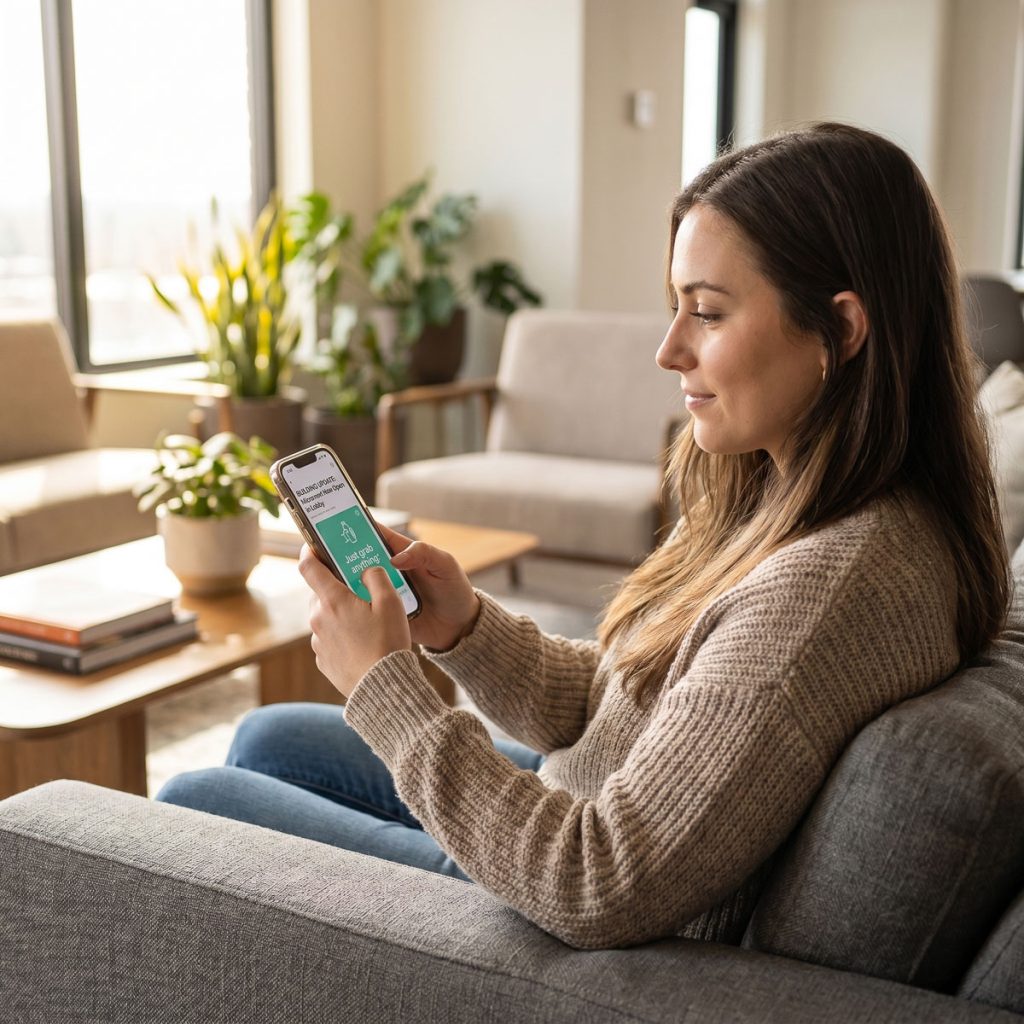
    Apartment resident reading a smart vending amenity announcement on a resident portal app on their phone.

    Most apartment teams do not need a complex technical integration on day one. They need residents to know what the smart vending amenity is, where it is, how payment works, and who to contact if there is an issue.

    That can happen through:

    • resident portal announcements
    • move-in emails
    • building newsletters
    • app posts
    • lobby signage
    • QR codes near the cabinet
    • event communications
    • renewal or resident appreciation messages

    This is a real form of integration because it connects the amenity to the resident journey. If residents never hear about the cabinet, the technology behind it does not matter.

    Payment support should stay out of the leasing office
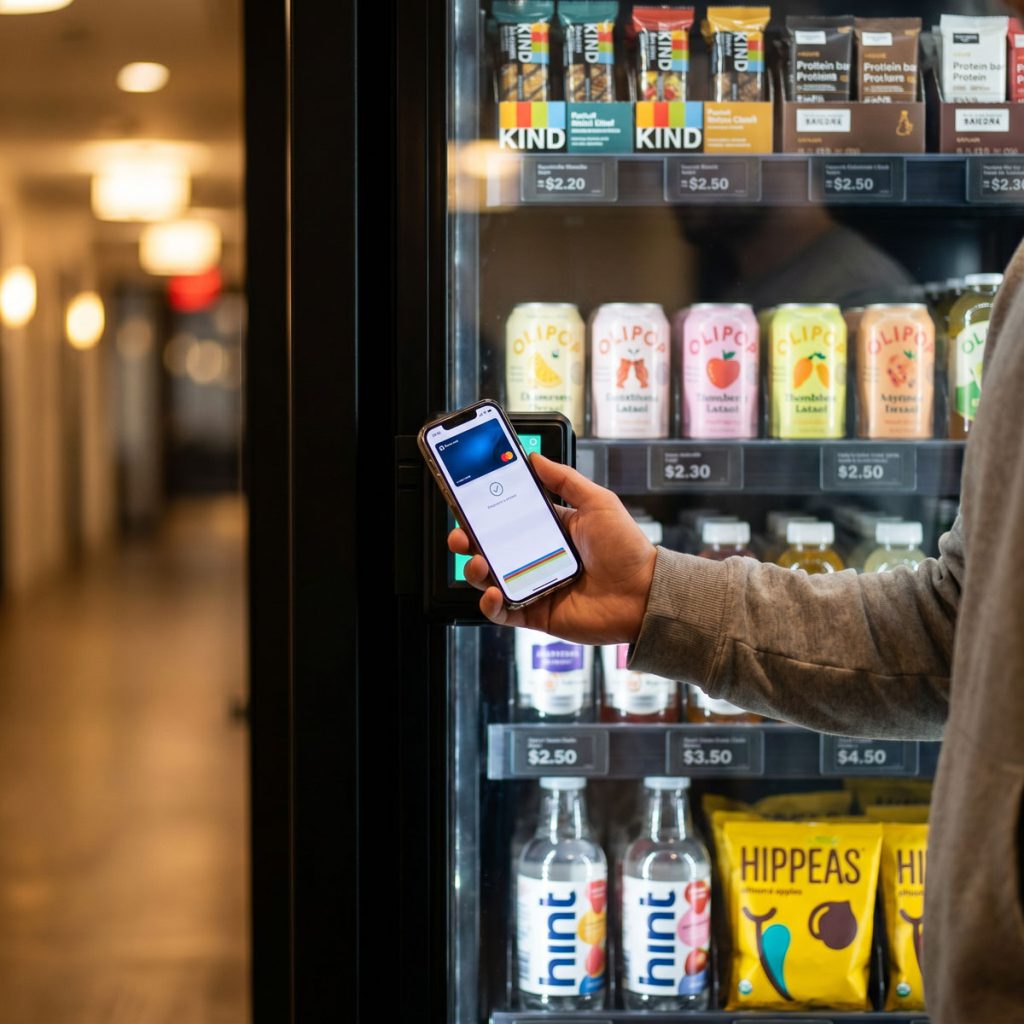
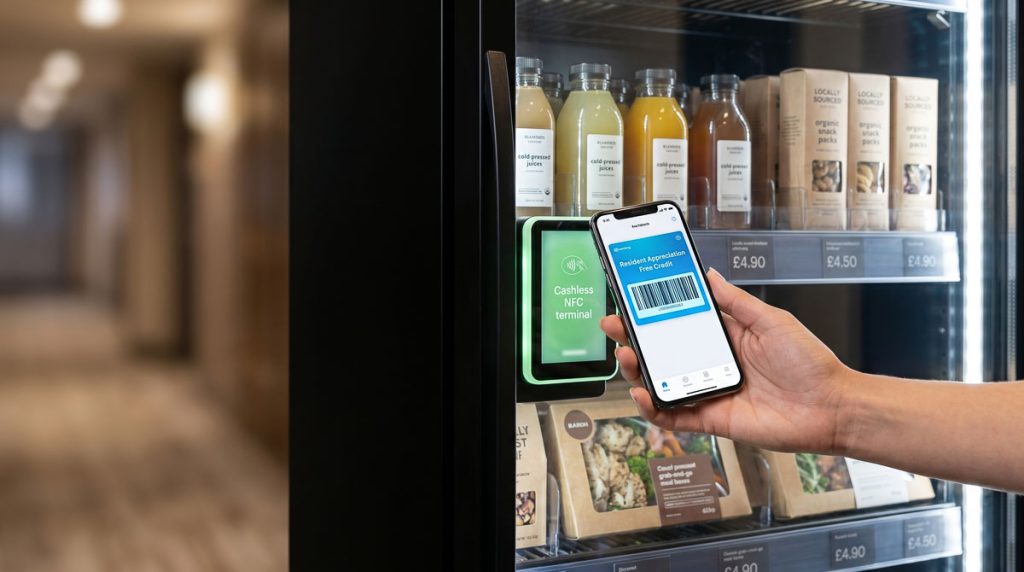
    Apartment resident tapping a mobile wallet to pay at a smart vending cabinet cashless payment terminal.

    Payment is one of the most important operational boundaries. Smart vending should support card and mobile wallet behavior, digital receipts, and provider-managed payment questions.

    The property team should know how residents get help, but it should not become the payment-support desk. A strong provider should define:

    • where receipt questions go
    • who handles refunds
    • how residents report transaction issues
    • how quickly support responds
    • what staff should do if a resident asks the leasing office

    This is where property tech and service design overlap. The resident should have a clear path, and the property team should not inherit the work.

    Access planning matters as much as software

    Some vending “integration” questions are really access questions. The property needs to decide who can reach the amenity and when.

    For example:

    • Is the cabinet in a resident-only area?
    • Can guests reach it?
    • Does it sit behind controlled entry?
    • Is it visible to staff or cameras where appropriate?
    • Can the provider service it without disrupting residents?
    • Does the location work after leasing-office hours?

    The vending system does not need to integrate with access control software in every case. But the placement should respect the building’s access strategy.

    Reporting should be useful, not noisy

    Smart vending can produce useful operating information, but property teams do not need another stream of raw data.

    Good reporting should answer:

    • Are residents using the amenity?
    • Which product categories are strongest?
    • Are restocks aligned with demand?
    • Are service issues being resolved?
    • Is the product mix changing based on behavior?
    • Are resident events or credits being used?

    The best reporting cadence is usually simple and decision-oriented. Ownership and regional teams may want periodic summaries. Onsite teams may only need exception-based updates and a clear support process.

    Promotions and resident events

    Property tech can make vending more useful during resident events. A smart vending program can support launch credits, renewal-week promotions, move-in welcome moments, product sampling, or resident appreciation campaigns.

    The integration does not have to be complicated. The provider and property team can coordinate:

    • who receives the promotion
    • when it runs
    • what products are included
    • how residents learn about it
    • who handles questions
    • what data is reviewed afterward

    The goal is to make the amenity part of the resident experience, not to create a one-off giveaway that staff have to manage manually.

    What should not be integrated

    Not every system should connect. Property teams should be cautious about unnecessary access to resident data, overly complex API promises, or integrations that require staff to manage product decisions.

    Avoid integration plans that:

    • require the property team to monitor inventory
    • push vending support into the leasing office
    • collect more resident data than needed
    • depend on a custom connection with no clear owner
    • sound impressive but do not improve resident use or service
    • create a new manual process for staff

    Simple and reliable is often better than complex and fragile.

    Data and privacy questions

    Any technology-connected amenity should be clear about data boundaries. Property teams should ask what data is collected, who can access it, how payment information is handled, and what reporting is shared with the property.

    For most smart vending decisions, the property does not need personal shopping profiles. It needs operational insight: product performance, usage trends, restock needs, and service quality.

    The provider should be able to explain the difference.

    What a connected vending rollout looks like

    A practical rollout might follow this sequence:

    1. Review building traffic, access, power, and visibility.
    2. Choose the cabinet location and product categories.
    3. Define resident communication before launch.
    4. Set payment support and service routing.
    5. Launch with clear signage and resident messaging.
    6. Review early usage and product performance.
    7. Adjust product mix, promotions, or communication based on behavior.

    The property team should be involved in decisions about location, audience, and messaging. The provider should own the vending operation.

    Questions to ask before connecting vending to property tech

    Before approving an integration plan, ask:

    • What resident or staff problem does this connection solve?
    • Does it require a true software integration or just better communication?
    • Who owns payment support?
    • Who owns maintenance and service routing?
    • What data will the provider share?
    • Does the plan require property staff to manage inventory?
    • How will residents learn about the amenity?
    • How will promotions or credits be handled?
    • What happens if a system connection fails?
    • Can the vending program still operate without creating staff work?

    The answers should clarify responsibility, not create new ambiguity.

    Make the amenity feel connected without making it complicated

    The best smart vending programs connect to property tech in ways residents and staff can feel: clear communication, easy payment, visible support, useful reporting, and clean service ownership. They do not need to be over-engineered to be effective.

    For Denver and Colorado properties, the strongest path is to treat smart vending as part of the amenity and operations ecosystem. Connect it where it improves adoption, service, reporting, and resident experience. Keep the vending operation with the provider.
    The next step is a site and workflow review: where the cabinet belongs, how residents will find it, how support gets routed, and what reporting the property actually needs.
  • Fighting Food Waste with AI Inventory Management

    Fighting Food Waste with AI Inventory Management

    Fighting Food Waste with AI Inventory Management

    AI inventory management can help fight food waste in smart vending by matching products more closely to real demand, flagging slow-moving items, improving restock timing, and helping operators rotate inventory before products expire. The goal is not to make a vending program magically waste-free. The goal is to make better stocking decisions with better information.

    For property and facility teams, the practical question is whether the vending provider can use inventory data to reduce stale products, avoid overstocking, and keep the amenity useful without asking onsite staff to manage the cabinet.

    Quick answer

    AI inventory management supports waste reduction by tracking what sells, what sits, what needs restocking, and what should change by location. In a managed smart vending program, that information can guide product mix, service timing, fresh-food rotation, and cabinet sizing.

    The biggest waste problem in vending is not usually one dramatic mistake. It is a series of small mismatches: wrong products, wrong quantities, wrong restock timing, and too little follow-up after launch.

    Where food waste happens in vending

    Close-up of expired and slow-moving vending products being removed to reduce food waste.

    Food waste in vending and onsite retail usually comes from operational mismatch. A product may be perfectly good in one building and a poor fit in another.

    Common causes include:

    • stocking the same products in every location
    • overestimating demand for fresh meals
    • underestimating late-night or weekend use
    • letting slow-moving items stay too long
    • using a restock schedule that does not match real sales
    • choosing a cabinet that is too large for the location
    • adding local or premium products without confirming demand
    • failing to rotate refrigerated products carefully

    Waste is not only a sustainability issue. It also affects resident and employee trust. If a cabinet feels stale, empty, or poorly matched to the audience, usage can fall.

    What AI inventory management actually means

    In a smart vending context, AI inventory management should mean practical product intelligence, not vague technology language.

    Useful capabilities may include:

    • product-level sales visibility
    • remote inventory monitoring
    • demand patterns by location
    • alerts when key products are low
    • slow-seller identification
    • restock planning based on actual use
    • support for product mix changes
    • better matching of refrigerated, frozen, and pantry products

    The provider still needs human judgment. The data can show what is happening, but the operator has to decide what to change, when to restock, and how to protect product quality.

    Demand-based stocking is the first lever

    The simplest way to reduce avoidable waste is to stock what people actually buy.

    That sounds obvious, but many vending programs still start from a generic list. The same drinks, snacks, and meals may be placed in an apartment lobby, office break area, warehouse, and fitness-adjacent space even though those audiences behave differently.

    Demand-based stocking asks:

    • What sells quickly?
    • What sells slowly?
    • What never gets touched?
    • What sells at certain times of day?
    • Are people buying meals, snacks, drinks, or essentials?
    • Do products change during move-in, events, or seasonal shifts?

    When the operator answers those questions regularly, the cabinet can become more useful and less wasteful.

    Product rotation matters for fresh food

    Fresh meals and refrigerated products can make a smart vending amenity more useful, but they require discipline. A provider should not add fresh food just because it looks good in a product photo.

    Fresh-food decisions should account for:

    • expected demand
    • shelf life
    • refrigeration performance
    • restock frequency
    • product rotation process
    • visibility of expiration dates
    • service access
    • local demand for meals versus snacks

    If a location does not have enough demand for fresh food, a stronger plan may use more shelf-stable meals, frozen options where supported, or a smaller refrigerated selection.

    AI helps by finding patterns faster

    Vending operator reviewing AI inventory demand data and sales patterns on a tablet or laptop

    Inventory data can reveal patterns that manual checks miss. A cabinet may show strong demand for full meals after 8 PM, low demand for a certain beverage, or different weekday and weekend behavior.

    Those patterns can help the operator:

    • reduce quantities of slow-moving products
    • increase space for products that sell consistently
    • test a small number of new items before expanding
    • restock fresh items closer to when demand happens
    • avoid filling the cabinet for appearance rather than use
    • identify locations that need a smaller setup

    The value is in acting on the data. A dashboard does not reduce waste unless the provider changes the product plan.

    Smart cabinets can reduce stockouts and overstock

    Stockouts and overstock are two sides of the same problem. If popular items are empty, residents stop trusting the amenity. If unpopular items fill the shelves, products may expire or need to be removed.

    Remote monitoring helps the provider see both issues. A better program should keep the cabinet stocked enough to feel useful without overfilling categories that do not move.

    Inventory SignalWhat It May MeanBetter Response
    Repeated stockoutsProduct demand is stronger than expectedIncrease quantity or restock frequency
    Slow movementProduct does not fit the audienceReplace or reduce the item
    Fresh item wasteDemand is lower than shelf life requiresUse smaller quantities or different formats
    Late-night meal salesResidents need after-hours foodAdjust restock timing and meal selection
    Low category demandCabinet mix is too broadShift space to stronger categories

    Sustainability claims need discipline

    Food waste is a serious topic, so claims should stay specific. A provider can say that AI inventory management may help reduce avoidable waste by improving product fit and restock decisions. It should not claim zero waste unless it can prove that outcome.

    Property teams should ask what the provider actually tracks:

    • expired products
    • removed products
    • slow movers
    • stockouts
    • category performance
    • restock frequency
    • product changes after launch

    The answer should be operational, not just environmental language.

    The property team should not manage waste

    A smart vending program should not shift food-waste work to the property. Onsite staff should not be asked to check dates, remove products, track sales, or tell the provider what to stock every week.

    The provider should own:

    • product selection
    • inventory monitoring
    • restocking
    • rotation
    • product removal
    • service timing
    • payment support
    • cabinet maintenance

    That accountability matters because waste prevention depends on consistent follow-through.

    How this applies in apartment and workplace settings

    In apartment buildings, inventory management can support resident routines: breakfast, work-from-home meals, after-gym drinks, late-night snacks, and small essentials. The product mix should reflect how residents actually use the building.

    In offices and facilities, demand may cluster around morning coffee, lunch gaps, long shifts, meetings, or visitor traffic. A workplace cabinet may need different items than a residential cabinet, even when the hardware looks similar.

    The best provider does not treat those buildings as interchangeable.

    Questions to ask a provider

    Before accepting a food-waste or AI inventory claim, ask:

    • What inventory data do you review?
    • How often do you adjust the product mix?
    • How do you identify slow-moving products?
    • What happens before refrigerated products expire?
    • Do you track removed or wasted products?
    • How do you decide whether fresh meals fit a location?
    • Can the cabinet size or category mix change after launch?
    • Who is responsible for product rotation?
    • What does the property team have to do?

    Specific answers are more useful than broad claims about AI.

    Make waste reduction operational

    Fighting food waste with AI inventory management works when the technology supports a disciplined operating model. The provider needs to monitor demand, rotate products, restock intelligently, and keep adjusting the mix after the cabinet is installed.

    For Colorado property and facility teams, smart vending can support a more responsible onsite retail program when product fit, service timing, and inventory decisions are treated as ongoing work.

    The next step is not choosing the biggest product list. It is reviewing the audience, location, refrigeration needs, and service plan so the cabinet can stay useful with less avoidable waste.

  • Amenities and Rent Growth: The Value Equation

    Amenities and Rent Growth: The Value Equation

    Amenities and Rent Growth: The Value Equation

    Amenities can support rent growth when they improve perceived value, resident satisfaction, and retention, but they do not automatically justify higher rents by existing on a checklist. The value equation is strongest when an amenity is visible, useful, well-run, and aligned with what residents actually use.

    For multifamily property teams, the practical question is not “Will this amenity raise rent by itself?” It is “Does this amenity improve the building experience enough to support pricing, retention, leasing, and reputation without adding operating drag?”

    Quick answer

    Amenities influence rent growth indirectly. They can help a property compete, support renewal conversations, improve tour impressions, and reduce resident friction. But rent growth depends on the full property, market, unit mix, location, pricing strategy, and resident demand.

    A useful amenity contributes to the value equation when it creates everyday benefit and does not become another burden for onsite staff.

    The value equation

    A simple way to evaluate an amenity is:

    Value DriverWhat It MeansWhat To Watch
    Resident usePeople actually use the amenity after move-inUsage cannot be assumed from tour appeal
    Tour signalThe amenity makes the property feel currentIt should not feel gimmicky or out of place
    Retention supportThe amenity gives residents one more reason to stayIt must stay reliable after launch
    Operational liftThe onsite team can support it without strainStaff-heavy amenities can erase value
    DifferentiationIt helps the property stand out in a crowded setThe difference must be easy to explain
    Cost structureOwnership understands setup and ongoing costsHidden labor and maintenance matter

    An amenity is stronger when several of these drivers work together. A beautiful amenity that residents ignore is weak. A useful amenity that staff must constantly manage may also be weak. The best value usually comes from usefulness plus low operational burden.

    Rent growth is not the same as amenity ROI

    Rent growth is shaped by many factors outside the amenity package: market supply, comparable properties, concessions, renewal strategy, unit finishes, neighborhood demand, and broader economic conditions.

    That is why property teams should avoid treating any single amenity as a guaranteed rent-growth lever. A better approach is to ask whether the amenity helps the property defend value.

    Useful amenities can support:

    • stronger first impressions during tours
    • fewer resident complaints about convenience gaps
    • better renewal conversations
    • more confidence in the amenity package
    • a clearer difference from nearby alternatives
    • practical daily value after move-in

    Those outcomes can matter even when they are hard to isolate in a spreadsheet.

    Daily-use amenities often carry more weight

    Apartment resident using a smart vending cabinet at night in a multifamily building common area corridor.

    Some amenities are impressive but occasional. Others are smaller but used often. Property teams should understand the difference.

    A rooftop deck may help the tour. A coworking area may support remote workers. Package lockers may reduce friction. Fitness centers may support lifestyle expectations. Smart vending can add daily convenience because residents understand the use case immediately: drinks, snacks, meals, and essentials inside the building.

    The best amenity mix usually includes both brand-building features and practical features residents use between lease signing and renewal.

    Smart vending inside the value equation

    Smart vending can contribute to the value equation because it is visible, practical, and relatively easy for residents to understand. It can support late-night access, work-from-home routines, fitness use, move-in needs, and everyday convenience.

    For property teams, the operational model is just as important as the resident benefit. A fully managed smart vending setup should keep equipment, product planning, restocking, payment support, maintenance, and product updates with the provider.

    That matters because an amenity that creates staff work can weaken the value it was supposed to create.

    How to evaluate whether an amenity supports value

    Before adding or replacing an amenity, ask four questions:

    Will residents understand it quickly?

    Residents should not need a long explanation. If the benefit is obvious, the amenity is easier to tour and easier to adopt.

    Will residents use it after the first week?

    Tour appeal is not enough. The amenity should fit real routines: mornings, evenings, remote work, workouts, weekends, guests, or late-night needs.

    Will it stay reliable?

    Reliability determines whether the amenity remains a positive signal. An empty cabinet, broken coffee machine, dirty lounge, or unavailable reservation system can turn a feature into a complaint.

    Will the property team have to run it?

    Operational lift changes the economics. If the onsite team has to stock, clean, schedule, troubleshoot, or explain the amenity every day, the real cost is higher than the proposal suggests.

    A practical scoring model

    Property teams can use a simple internal score before approving an amenity:

    QuestionLow ScoreHigh Score
    How often will residents use it?Rarely or only during toursWeekly or daily use cases
    How visible is it?Hidden or hard to explainEasy to show and understand
    How hard is it to operate?Staff must manage detailsProvider or system handles operations
    How well does it fit the property?Generic or mismatchedMatches residents and building style
    How flexible is it?Static after launchCan adjust based on use
    How measurable is it?No usage visibilityUsage, feedback, or service data available

    This does not replace financial modeling. It helps teams avoid amenities that sound good but create weak resident value.

    Be careful with unsupported claims

    Amenity vendors often want to connect their product directly to rent growth, retention, or property value. Those claims need discipline.

    A provider can reasonably explain how an amenity may support resident convenience, leasing differentiation, and operational efficiency. It should not promise a rent increase unless there is property-specific evidence and a clear methodology.

    For smart vending, usage data can be more useful than broad ROI claims. AI Vending’s downtown Denver case study, published March 23, 2026, reported 60.7% resident adoption and 30.4% monthly usage at an Avenue5 Residential-managed property. That kind of data can help a team evaluate resident behavior, but it still does not prove rent growth by itself.

    The operating burden belongs in the equation

    Property management team discussing smart vending amenity operations and resident value at a leasing office.

    A rent-growth conversation can become too focused on resident-facing benefits and ignore staff time. That is a mistake.

    Operational burden includes:

    • staff time
    • vendor coordination
    • maintenance follow-up
    • resident questions
    • cleaning
    • stocking
    • replacement products
    • payment issues
    • access rules

    An amenity that looks inexpensive but creates constant staff work may be more costly than it appears. A full-service model can be valuable because it protects the property team’s time and keeps accountability with the provider.

    What owners and asset managers should ask

    When evaluating an amenity for value impact, ask:

    • What resident problem does this solve?
    • Is this a tour feature, a daily-use feature, or both?
    • What proof do we have that residents will use it?
    • What does the onsite team have to do after launch?
    • Can the amenity be adjusted if resident behavior changes?
    • How will it be maintained?
    • What happens if usage is lower than expected?
    • Does this support our positioning compared with nearby properties?
    • Are we making a rent-growth claim, or a resident-value claim?

    The last distinction keeps the conversation honest.

    The best amenities earn their place

    The amenity package should support the property’s overall value story. It should help residents understand why the building fits their life, help leasing teams explain the difference, and help onsite staff avoid preventable friction.

    Smart vending is one example of a daily-use amenity that can fit this equation when it is placed well and fully managed. It should not be sold as a guaranteed rent-growth tool. It should be evaluated as a practical resident convenience that may support value when the property, placement, product mix, and service model are right.

    For Denver and Colorado property teams, the next step is to compare the amenity idea against actual resident routines, staffing capacity, building positioning, and service expectations before adding it to the rent-growth story.

  • The Future of Smart Vending in Denver Real Estate

    The Future of Smart Vending in Denver Real Estate

    The Future of Smart Vending in Denver Real Estate

    The future of smart vending in Denver real estate is not just more machines in more buildings. It is a shift toward managed, data-informed, cashless onsite retail amenities that support residents, tenants, employees, and guests without adding daily work for property teams.

    For Denver property managers, ownership groups, and asset managers, the most useful question is practical: can smart vending make a building more convenient, more competitive, and easier to operate without becoming another vendor headache?

    Quick answer

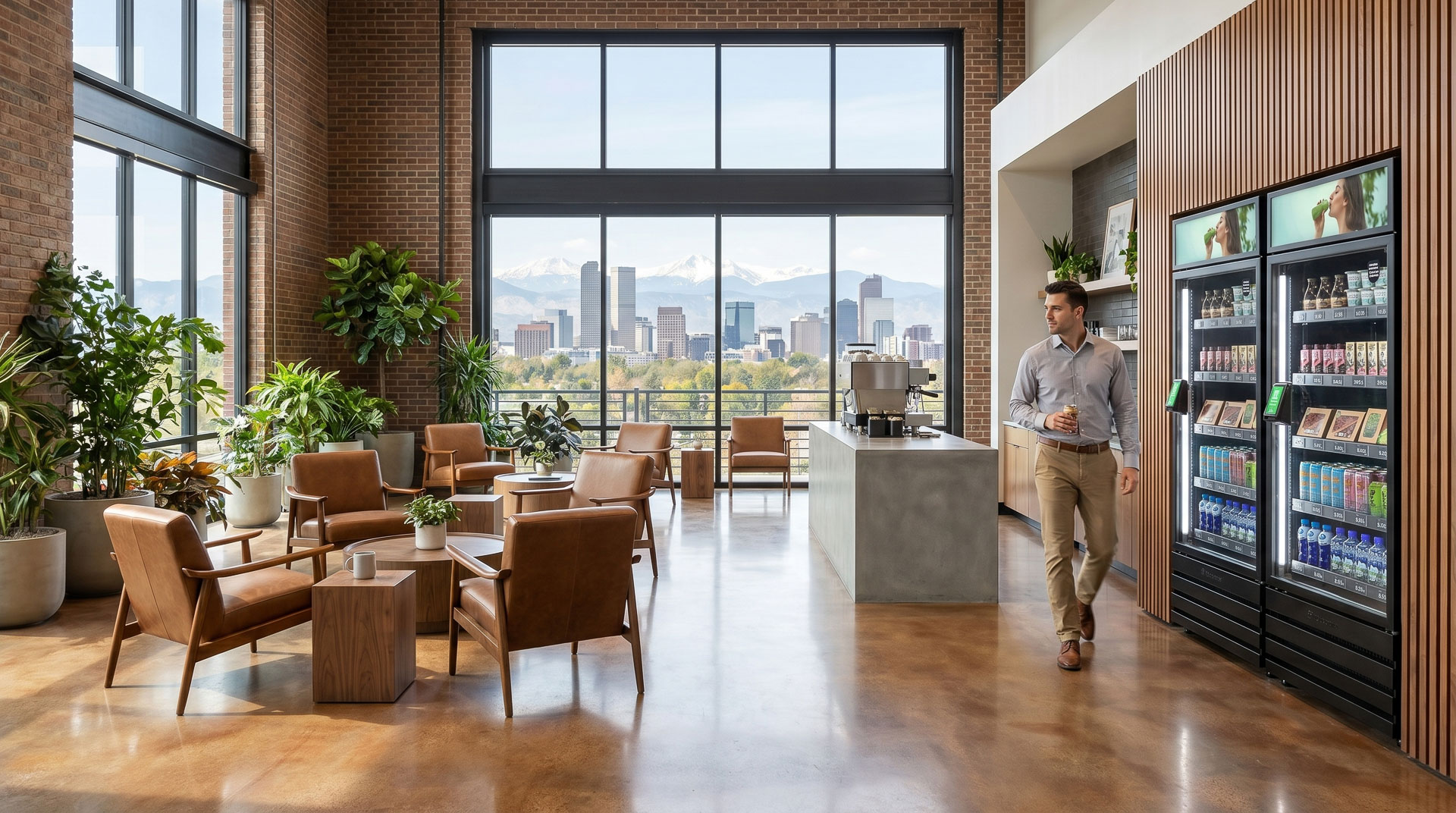
    Smart vending is likely to become a more normal part of Denver real estate because it solves a daily convenience problem inside existing buildings. The strongest programs will look less like traditional vending and more like compact smart stores: cashless, glass-front, monitored, locally serviced, and stocked based on actual usage.

    The future is not about novelty. It is about whether the amenity earns its place in the building.

    Why real estate teams are paying attention

    Real estate teams evaluate amenities through a different lens than consumers. A resident might ask whether the cabinet has the drink they want. A property team asks whether the amenity:

    • improves the resident or tenant experience
    • supports leasing and retention conversations
    • fits the look of the building
    • requires little or no staff time
    • can be serviced reliably
    • gives ownership a visible upgrade without major construction

    Smart vending is gaining attention because it can check several of those boxes when it is executed well. It can turn a lobby, mailroom, lounge, or fitness-adjacent area into a useful convenience point without building a staffed cafe or full micro market.

    From vending machine to smart store amenity

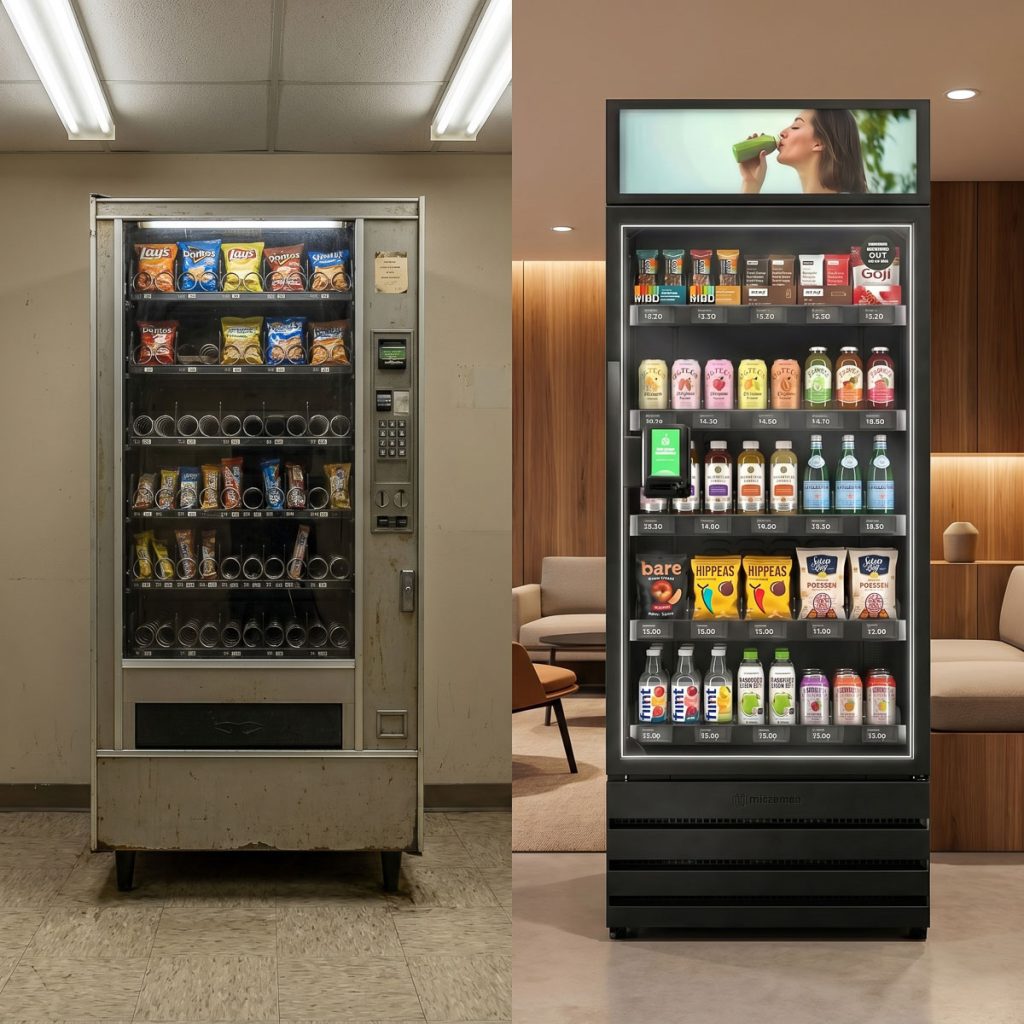
    Side-by-side comparison of traditional vending machine versus modern smart vending cabinet with cashless payment.

    Traditional vending is usually treated as a utility: a machine in a corner that sells packaged snacks or drinks. Smart vending changes the category when the setup is planned as an amenity.

    The difference shows up in several ways:

    Traditional VendingSmart Vending or Smart Store
    Often cash or card reader attached to a machineCashless card and mobile wallet access
    Limited product presentationGlass-front merchandising and clearer product visibility
    Static product planProduct mix can change based on actual usage
    Manual service checksRemote inventory visibility and provider monitoring
    Usually snack-and-drink focusedCan include meals, frozen items, essentials, and local products where supported
    Often feels like a break-room fixtureCan be planned around lobby, lounge, mailroom, or fitness design

    The future belongs to setups that feel intentional in the building, not machines that look inherited from an older office break room.

    Denver buildings need local service, not just hardware

    Denver real estate is varied. A downtown luxury apartment tower, a suburban Class B community, a mixed-use building, a student housing property, and an office building near a transit corridor do not need the same vending plan.

    Local fit matters because product demand, delivery access, parking, service timing, building rules, and resident expectations can vary from property to property. A smart vending program that looks good at launch but cannot stay stocked and serviced will lose credibility quickly.

    That is why the provider model matters. The machine is only one part of the decision. The property should understand who installs the unit, who stocks it, who monitors performance, who handles payment questions, and who responds when something needs attention.

    Data-informed stocking will matter more

    The future of vending in real estate will be shaped by product fit. Buildings do not need cabinets filled with items that look good in a proposal but sit untouched for weeks.

    Data-informed stocking helps the operator answer practical questions:

    • Which items sell at this property?
    • Which products are slow-moving?
    • Are residents buying meals or mostly drinks?
    • Does demand change by time of day?
    • Should refrigerated, freezer, or pantry space be adjusted?
    • Are late-night purchases meaningful enough to change the product plan?

    This is where AI and inventory management can be useful. The point is not to make the article about technology. The point is to stock the property better because the operator has better information.

    Multifamily will remain the strongest use case

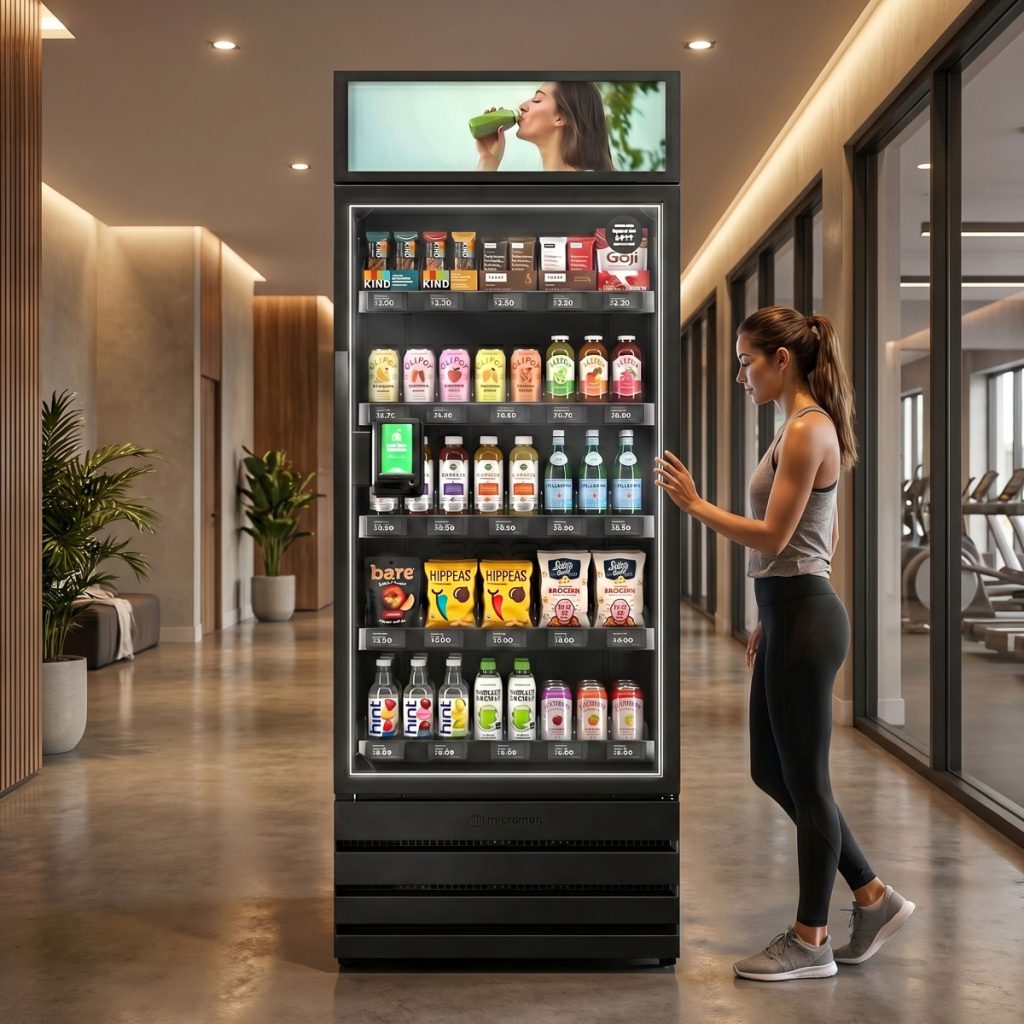
    Smart vending cabinet near a fitness center in a Denver multifamily apartment building.

    Multifamily properties are a natural fit because residents live with the amenity every day. They may use it after work, during remote-work days, after the gym, during move-in, or late at night when nearby stores are inconvenient.

    Smart vending can support:

    • resident lounges
    • mailrooms and package areas
    • fitness-adjacent spaces
    • coworking rooms
    • lobbies
    • student housing common areas
    • underused interior corridors with good visibility

    The strongest multifamily use cases are not about replacing every nearby retail option. They are about giving residents one useful, reliable option inside the building.

    Office and mixed-use properties have a different angle

    Office and mixed-use properties may use smart vending differently. Employees and tenants may need afternoon snacks, quick meals, drinks for late meetings, or visitor-friendly convenience near common areas.

    For these properties, the decision often depends on:

    • employee schedule patterns
    • meeting and visitor traffic
    • whether the building already has food service
    • how much space is available
    • whether the amenity serves tenants, guests, or both
    • service access and security rules

    Smart vending can complement coffee service, break rooms, and nearby retail. It should not be positioned as a universal substitute for a cafeteria or staffed food program when those are truly needed.

    The amenity will be judged by daily use

    Real estate teams are becoming more disciplined about amenities. A feature that tours well but does not get used can become expensive decoration. A practical amenity that residents use repeatedly can support the everyday experience more quietly.

    Smart vending has an advantage because the use case is simple. People understand food, drinks, and essentials. The challenge is execution:

    • Is the cabinet easy to find?
    • Does it look appropriate for the property?
    • Are the products relevant?
    • Is it stocked when residents need it?
    • Are payment questions handled by the provider?
    • Does the property team stay out of the operation?

    The future will favor providers that can answer those questions with service, not just software.

    Proof will matter more than promises

    Real estate teams should be cautious with broad claims about resident satisfaction, rent growth, or ROI unless a provider can explain the evidence behind them. Usage data is more useful than generic promises.

    AI Vending’s downtown Denver case study, published March 23, 2026, reported 60.7% resident adoption, 30.4% monthly usage, and 25.9% of transactions between 10 PM and 5 AM at an Avenue5 Residential-managed property. Those numbers do not guarantee the same outcome elsewhere, but they show why property teams should evaluate real resident behavior, not just product lists.

    The best future smart vending conversations will be grounded in what residents actually do after installation.

    What will not change

    Even as the technology improves, the basics will still decide whether the amenity works:

    • good placement
    • clear ownership of service
    • reliable restocking
    • appropriate product mix
    • safe, visible access
    • building-compatible hardware
    • realistic expectations
    • a provider that responds when needed

    Smart vending will not fix a poor location, weak product planning, or a vendor that disappears after installation. Technology can support the operation, but it cannot replace accountability.

    Questions Denver real estate teams should ask

    Before treating smart vending as part of the amenity roadmap, ask:

    • Which resident, tenant, employee, or guest behavior are we trying to support?
    • Where would the unit be visible without disrupting the building?
    • What product categories fit the audience?
    • Who handles stocking, payment support, refunds, maintenance, and product updates?
    • Can the product mix change after launch?
    • What data will the provider review?
    • What proof can the provider share from comparable properties?
    • What does the onsite team have to do after installation?
    • How will we know whether the amenity is working?

    The final question is important. Future-ready amenities need follow-through after the ribbon-cutting.

    A practical future, not a futuristic one

    The strongest future for smart vending in Denver real estate is practical. It is not about making every building feel like a tech demo. It is about adding a useful onsite retail amenity that can flex with resident and tenant needs while staying off the property team’s workload.

    For Denver and Colorado properties, smart vending should be evaluated as part of the broader amenity mix: a daily-use convenience feature with modern payment, managed service, and product decisions guided by real demand.
    The right next step is a property-specific conversation about traffic, placement, audience, product categories, and service expectations.

  • How Smart Vending Machines Work in Apartment Buildings

    How Smart Vending Machines Work in Apartment Buildings

    How Smart Vending Machines Work in Apartment Buildings

    Smart vending machines in apartment buildings work by combining cashless payment, controlled product access, remote inventory monitoring, and provider-managed restocking into one onsite convenience amenity. Residents get 24/7 access to drinks, snacks, meals, and essentials inside the building, while the property team should not have to manage inventory, troubleshoot payments, or run a small retail operation.

    For multifamily teams, the important question is not whether the machine is “smart.” The important question is whether the setup improves resident convenience, fits the building, stays secure enough for the location, and remains fully managed after installation.

    Quick answer

    In a strong apartment smart vending setup, a resident authorizes a card or mobile wallet, opens a locked smart cabinet, takes one or more products, closes the door, and receives a digital receipt. Behind the scenes, the system tracks product movement, supports remote inventory visibility, and helps the operator restock based on actual use.

    The property usually provides an approved indoor location and power. The vending operator should handle equipment, product planning, stocking, service, payment support, and ongoing adjustments.

    What residents experience

    Residents do not think about smart vending as a technology project. They experience it as a practical convenience inside the building.

    A resident might use it when:

    • they get home late and do not want to leave again
    • they need a quick breakfast before work
    • they want a drink after the gym
    • they need a meal during a work-from-home day
    • they run out of a small essential
    • they want something during a weekend or after leasing-office hours

    The best smart vending experience feels closer to a compact onsite market than a traditional spiral machine. The resident can see products through a glass-front cabinet, pay without cash, take multiple items, and leave without waiting for staff.

    How the payment and access flow works

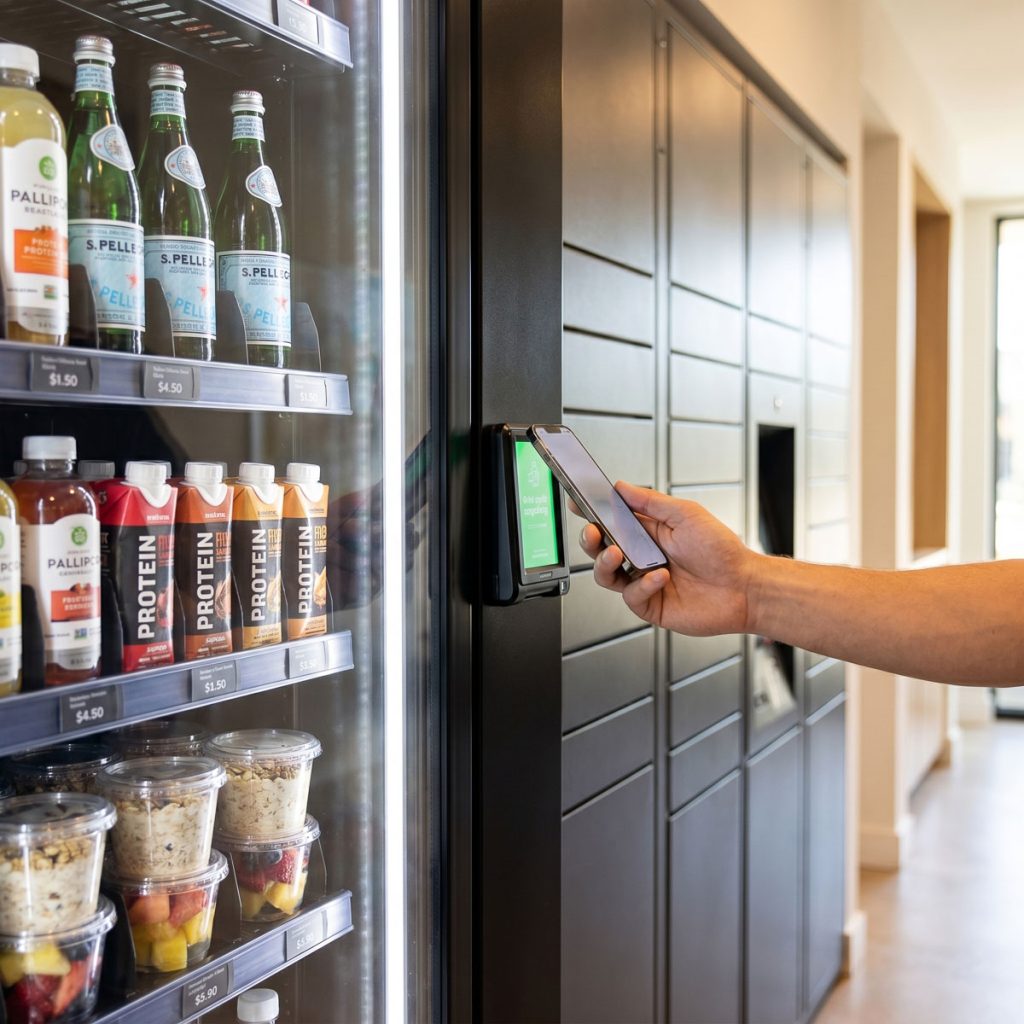
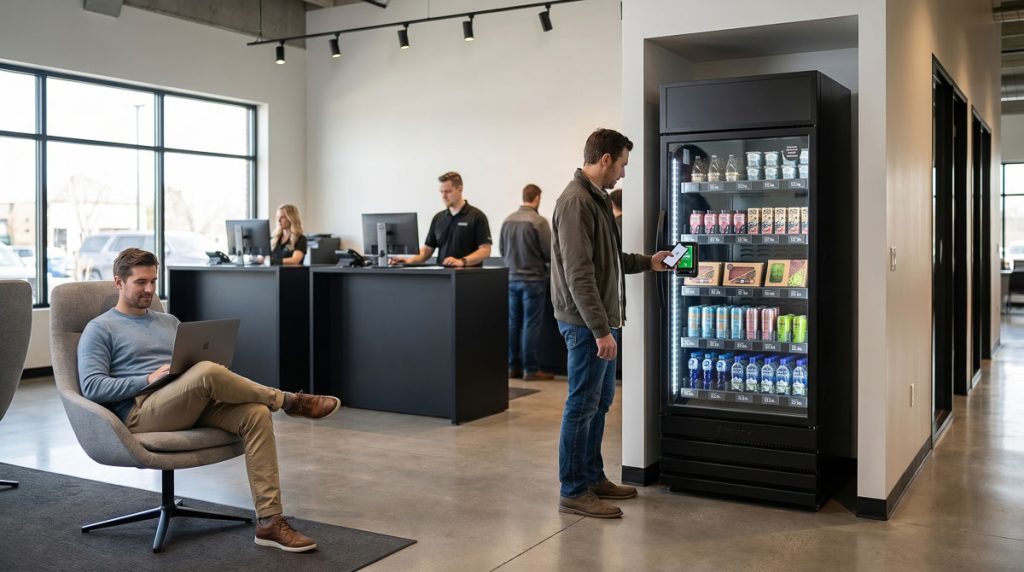
    Resident tapping a smartphone on an AI Vending smart store cabinet cashless 
NFC payment reader in a well-lit residential mailroom next to premium package 
lockers, with sparkling waters, protein shakes, and fresh breakfast options 
visible through the glass door.

    Most modern smart vending programs use a controlled-access flow:

    1. The resident taps, inserts, or swipes a card, or uses a supported mobile wallet.
    2. The system authorizes the payment method.
    3. The cabinet unlocks.
    4. The resident opens the door and selects products.
    5. The resident closes the door.
    6. The system finalizes the transaction and sends a receipt.

    That flow matters in apartment buildings because products stay locked until a payment method is authorized. It also removes cash collection from the property and reduces common issues tied to bills, coins, and change.

    What makes the machine smart

    “Smart” should mean more than a card reader. A useful apartment smart vending program normally includes:

    • cashless payment
    • controlled cabinet access
    • product recognition or transaction tracking
    • remote inventory visibility
    • usage-informed restocking
    • digital receipts
    • service alerts or monitoring
    • product mix adjustments over time

    The practical value is not the technology by itself. The value is that the operator can see what is selling, what is slow, what needs restocking, and what should change for that specific building.

    Where smart vending fits in an apartment building

    Placement has a major effect on performance. The unit should be easy for residents to see, safe to access, and simple for the provider to service.

    Common apartment locations include:

    LocationWhy It Can WorkWhat To Check
    Lobby or entry areaHigh visibility and strong tour impressionTraffic flow, noise, appearance, and access control
    Mailroom or package areaResidents already visit regularlyCrowding, service access, and lighting
    Resident loungeFits social and work-from-home routinesProduct mess, cleaning expectations, and visibility
    Fitness-adjacent areaSupports hydration, protein, and post-gym useHumidity, airflow, and product fit
    Laundry roomUseful in older properties with repeat resident visitsSpace, power, and whether the room feels secure
    Parking-level interior corridorCan support late-night useLighting, visibility, and resident comfort

    Outdoor-only areas, hidden corners, and poorly ventilated spaces usually create problems. Refrigerated and freezer cabinets also need proper indoor placement, airflow, and reliable power.

    Product mix should match resident behavior

    Apartment vending works best when the product mix is built around real routines, not a generic snack list.

    Resident NeedProduct ExamplesOperational Consideration
    Morning routineCoffee drinks, breakfast bars, yogurt where supportedRefrigeration and restock timing
    Work-from-home dayMeals, sparkling water, snacks, functional drinksMidday demand and product variety
    Fitness useWater, electrolytes, protein snacksPlacement near gym traffic
    Late-night convenienceMeals, snacks, drinks, essentials24/7 access and lighting
    Local preferenceColorado or regional products where practicalShelf life, demand, and supplier reliability

    The mix should change as the operator learns the building. If residents ignore a product, it should not stay in the cabinet just because it was part of the first plan.

    What the property team should not have to do

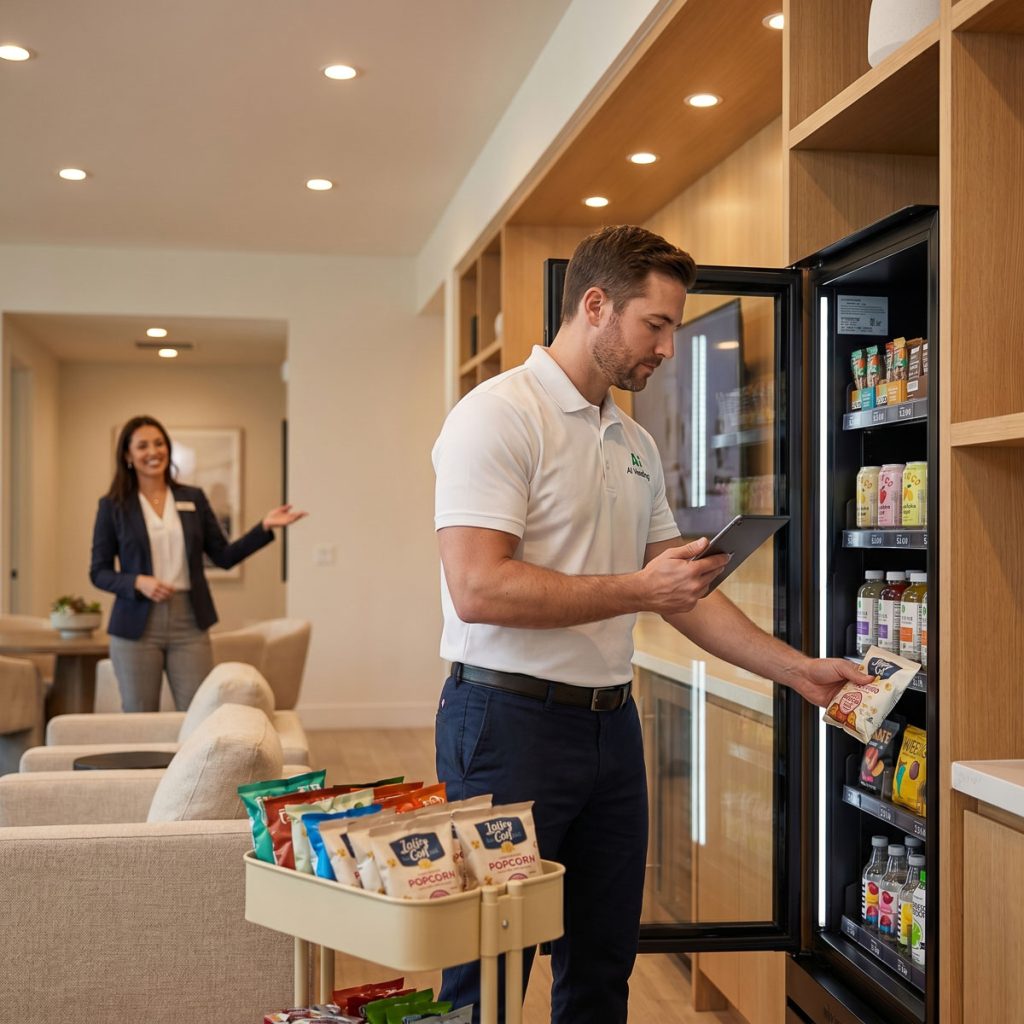
    AI Vending service representative restocking an ambient smart store cabinet 
in a luxury apartment resident lounge using a real-time inventory tablet while 
a leasing agent conducts a property tour with a prospective resident in the 
background.

    The service model is the part many apartment teams care about most. A smart vending amenity should not become another task for the leasing office, maintenance team, or community manager.

    The provider should handle:

    • delivery and installation
    • product curation
    • inventory monitoring
    • restocking
    • payment support
    • refunds or transaction questions
    • service and maintenance
    • product changes
    • cleaning expectations tied to the unit

    The property should not have to buy snacks, check stock, chase payment issues, or decide which products to remove. If a vendor expects onsite staff to manage those details, the amenity is not truly hands-off.

    How remote inventory management helps

    Remote inventory management lets the provider see product movement without waiting for a resident complaint or a manual check. That matters because apartment demand changes by location, season, and resident mix.

    The operator can use inventory information to:

    • restock before popular products are empty
    • reduce slow-moving items
    • add more meal options if residents buy them
    • adjust the mix around move-ins or resident events
    • avoid overfilling low-demand categories
    • identify service issues faster

    Inventory data does not replace good service. It gives the provider better information so service can be more precise.

    What smart vending changes for property operations

    For property managers, the appeal is practical. Smart vending can add a daily-use amenity without a renovation project, staffing model, or managed store.

    It can help a building:

    • improve resident convenience
    • make underused common space more useful
    • support after-hours needs
    • add a modern amenity residents understand quickly
    • reduce reliance on nearby offsite convenience options
    • create a cleaner alternative to outdated vending

    The strongest setups are planned like an amenity, not dropped into a leftover corner.

    A Denver apartment proof point

    AI Vending’s downtown Denver case study, published March 23, 2026, gives one useful example of how residents may use a managed smart store amenity. The case study reported 60.7% resident adoption, 30.4% monthly usage, and 25.9% of transactions between 10 PM and 5 AM at an Avenue5 Residential-managed property.

    Those numbers should not be treated as a guarantee for every building. They are useful because they show why apartment teams should evaluate after-hours access, meal options, and product fit instead of thinking only about daytime snack use.

    Questions to ask before installation

    Before adding smart vending to an apartment building, ask:

    • What cabinet format fits our space?
    • Is the unit designed for indoor use only?
    • What power, airflow, and connectivity are required?
    • Who handles restocking, payment support, refunds, and maintenance?
    • How often is inventory reviewed?
    • Can the product mix change based on resident behavior?
    • What happens when a product does not sell?
    • How is the cabinet serviced without disrupting residents?
    • What does the property team have to do after launch?
    • How will the provider evaluate whether the location is working?

    The answers should make the operating model clear. If the property team is still responsible for routine vending work, the proposal needs another look.

    What can go wrong

    Smart vending can underperform when the location is hidden, the product mix is generic, the provider does not restock reliably, or the cabinet is treated as a novelty rather than an amenity.

    Common mistakes include:

    • choosing a low-visibility location
    • ignoring power, airflow, or service access
    • stocking products that do not match residents
    • using a provider that cannot support the property locally
    • relying on the property team to notice inventory problems
    • making the setup look out of place in a premium common area

    A smart vending program is only as good as its ongoing operation.

    Make it useful after the first week

    The launch matters, but long-term usefulness matters more. Residents will try a new amenity once if it is visible. They will keep using it only if the cabinet stays stocked, clean, easy to use, and relevant to their routines.

    For apartment buildings, smart vending works when technology, placement, products, and service are planned together. The best setup should feel simple to residents and almost invisible to the property team.
    For a Denver or Colorado apartment community, the next step is a site-specific review of resident traffic, common-area options, power, visibility, and product needs before choosing the cabinet mix.

  • Denver Vending Services for Car Dealership Customer Lounges

    Denver Vending Services for Car Dealership Customer Lounges

    Denver Vending Services for Car Dealership Customer Lounges

    Denver vending services for car dealerships should be planned as a customer-facing amenity inside the dealership, not just an employee break-room perk. A smart vending cabinet can sit in a customer lounge, service waiting area, or guest-accessible hospitality space so shoppers and service customers have easy access to drinks, snacks, coffee, light meals, and essentials while they are onsite.

    The same program can also support employees in break rooms, technician areas, and fixed-ops spaces, but the placement should start with the dealership experience customers actually see. For Denver dealerships, a store along a busy metro corridor, a service-heavy dealership with long morning wait times, and a multi-building auto group location may need different customer lounge placement, product mix, and service expectations.

    Quick answer

    Car dealerships should choose vending services that are customer-ready, cashless, professionally stocked, easy to service, and matched to the dealership’s layout. The best fit is usually a full-service smart vending or smart store model placed where customers already wait: the service lounge, customer waiting room, delivery area, or another visible hospitality space.

    The provider should install the equipment, curate products, monitor inventory, restock, maintain the unit, and handle support. That lets the dealership offer a visible customer amenity without turning the front desk, service advisors, or office team into vending managers.

    Why dealerships need a different vending plan

    Customer using a smartphone cashless payment terminal on an AI Vending smart 
cabinet in a modern Denver car dealership service check-in waiting area while 
another customer works on a laptop nearby.

    Dealerships have several traffic patterns under one roof, and the customer-facing spaces matter first. A customer waiting for an oil change has different needs than a technician on a short break, a sales associate between appointments, or a parts employee working through lunch.

    That means the vending program should be planned around actual use cases inside the dealership:

    • customer waiting rooms
    • service lounges
    • employee break rooms
    • technician and fixed-ops areas
    • parts departments
    • body shop or recon areas
    • after-hours staff access

    A one-size-fits-all snack machine hidden in a staff area may miss the highest-visibility opportunity: serving customers while they wait. A stronger vending service considers who will use the amenity, when they will use it, and what products make sense for each customer-facing or employee-only location.

    Front-of-house versus back-of-house vending

    Customer-facing vending and employee-only vending should not be treated as the same setup. The dealership may need one polished, guest-ready unit in the customer lounge and a different product mix for staff-only spaces.

    AreaPrimary AudienceProduct PrioritiesPresentation Priorities
    Customer loungeService customers and guestsDrinks, low-mess snacks, coffee, mints, simple essentialsPolished, quiet, clean, easy to understand
    Service waiting areaCustomers waiting for maintenanceWater, snacks, quick breakfast, coffeeVisible but not disruptive
    Sales floor support areaSales team and guestsDrinks, caffeine, light snacksClean and brand-appropriate
    Employee break roomSales, admin, service, and parts staffFilling snacks, meals, caffeine, hydrationUseful and easy to restock
    Technician or fixed-ops areaTechnicians and service staffFast snacks, drinks, meals where refrigeration is availableDurable, accessible, out of work paths

    Front-of-house vending should protect the customer experience because customers see it, use it, and associate it with the dealership’s hospitality. Back-of-house vending should support employees during long shifts without slowing down dealership operations.

    Customer lounge vending should feel polished

    In a dealership customer lounge, presentation matters. This is where the vending setup becomes part of the customer’s visit, next to coffee, seating, Wi-Fi, service updates, and hospitality touches. The unit should look intentional, stay clean, and offer products that fit the dealership’s brand experience. A poorly stocked or outdated machine can make the waiting area feel neglected.

    Useful customer-facing products may include:

    • bottled water and sparkling water
    • coffee or cold brew where appropriate
    • lower-mess snacks
    • protein bars and granola-style snacks
    • gum or mints
    • quick breakfast items
    • phone chargers or small essentials where supported

    The product mix should avoid items that create spills, strong odors, or extra cleanup in the customer lounge. The goal is to give customers a convenient option during service or sales visits without adding work for reception or service staff.

    Employee vending should support long shifts

    Dealership employees often work through busy sales days, service rushes, deliveries, and end-of-month activity. Technicians and service staff may not have the same flexibility to leave for food or drinks during peak hours.

    Employee-focused vending can be added in separate staff areas and can include more filling products:

    • energy drinks and coffee
    • water and hydration options
    • sandwiches or meals where refrigeration is available
    • protein snacks
    • salty and sweet snacks
    • basic personal care items
    • phone chargers or small tech accessories

    The employee mix should be practical. It does not need to look exactly like the customer lounge assortment, and it should be adjusted based on actual use. In many dealerships, the customer-facing unit and the staff unit should be treated as two related placements with different goals.

    Where vending fits in a dealership

    Placement should match the dealership’s operations. If the goal is to serve customers, the unit should be inside the dealership where customers already wait or pass through, not tucked away in an employee-only room. It should be visible to the intended audience, easy to service, and out of the way of customer flow, vehicle delivery paths, and service-lane movement.

    LocationBest UseWhat To Check
    Customer loungeDrinks, snacks, polished waiting-area convenienceAppearance, cleanliness, noise, and product mess
    Service waiting areaQuick drinks and snacks for customersTraffic flow and support visibility
    Employee break roomFilling snacks, meals, drinks, caffeineRestocking access and product variety
    Technician areaFast shift supportClearance, durability, and service access
    Parts departmentEmployee convenienceSpace, power, and whether customers pass through
    Back-of-house hallwayStaff-only accessLighting, visibility, and crowding

    Outdoor or poorly ventilated areas should be avoided unless the equipment is specifically approved for that environment. Refrigerated and freezer options need appropriate indoor placement, airflow, and power.

    Cashless service is a better fit for modern dealerships

    Cashless vending fits how customers and employees already pay. Cards and mobile wallets are faster than bills and coins, and they let customers use the amenity without asking dealership staff for change, help, or a manual checkout.

    For dealerships, cashless operation also helps reduce common vending headaches:

    • bill jams
    • coin issues
    • change complaints
    • onsite cash handling
    • unclear refund responsibility
    • manual collection coordination

    The provider should handle payment support and refunds. Dealership staff should not be pulled into customer vending transaction issues while they are trying to run the showroom or service lane.

    What a full-service vending provider should handle

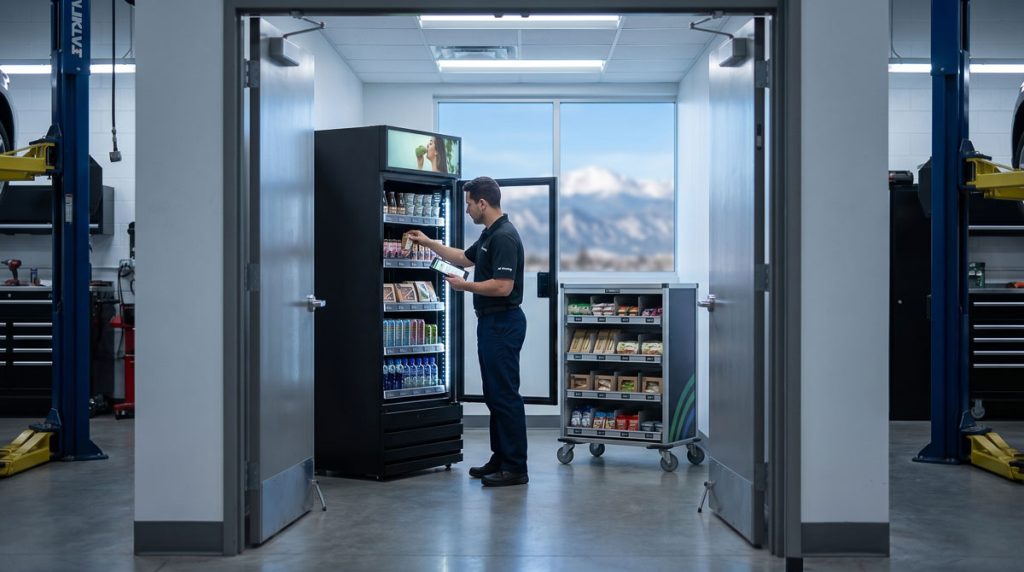
    AI Vending uniformed service technician restocking a smart vending unit with 
fresh meals and energy drinks in a Denver car dealership back-of-house employee 
corridor using a real-time inventory tablet with Rocky Mountain views through 
the window.

    The service model matters as much as the equipment, especially when the machine is in a customer-facing area. A dealership should not have to assign someone to check inventory, buy products, clean up the program, or chase service requests.

    A full-service vending provider should handle:

    • site review and placement recommendations
    • equipment delivery and installation
    • product curation by audience and location
    • cashless payment setup
    • remote inventory monitoring
    • restocking based on actual usage
    • maintenance and service issues
    • customer support for payment questions
    • product changes when items do not sell

    In AI Vending’s model, the dealership provides space and power while the operator handles equipment, stocking, monitoring, maintenance, and support. That keeps the customer-facing amenity accountable to the provider instead of the dealership team.

    Smart vending versus traditional vending for dealerships

    Traditional vending can work for basic snacks and drinks, but smart vending is often a stronger fit when the dealership wants a more modern, controlled, cashless experience in a customer lounge or service waiting area.

    Smart vending can support:

    • glass-front product presentation
    • cashless checkout
    • controlled product access
    • refrigerated, pantry, or freezer cabinet options
    • data-informed product updates
    • a cleaner customer-facing look
    • provider-managed stocking and service

    The format should fit the location. A customer lounge may need a more polished setup. An employee break room may need more filling products. A technician area may need durability and fast access more than presentation.

    Questions to ask before choosing a provider

    Before approving dealership vending services, ask:

    • Where should the customer-facing unit go inside the dealership?
    • What setup do you recommend for customer-facing versus employee-only areas?
    • Who handles stocking, payment support, refunds, and maintenance?
    • Can the product mix differ by location inside the dealership?
    • Can the setup support refrigerated meals or only snacks and drinks?
    • What power, airflow, connectivity, and service access are required?
    • How often do you review inventory data?
    • What happens when products do not sell?
    • How quickly do you respond to visible service issues?
    • Does the equipment fit the look of our customer lounge?
    • What does dealership staff have to do after installation?

    The last question is important. A vending service should support the dealership, not become another job for the team.

    When vending may not be the right fit

    Vending may underperform if the only available location is hidden, hard to service, poorly lit, or disconnected from customer and employee traffic. If the purpose is customer convenience, a staff-only break room will not solve the customer lounge problem. Vending may also be the wrong setup if the dealership wants fresh meals but cannot support refrigerated equipment, product rotation, or service access.

    Dealerships should also avoid putting customer-facing vending in a location that feels cluttered or off-brand. If the lounge is part of the sales and service experience, the equipment should look appropriate for that space.

    Build around the dealership experience

    The best vending services for car dealerships are planned around real daily routines inside the store. Customers want something easy while they wait in the lounge, service area, or showroom. Sales and service employees need quick options during long shifts. Technicians and fixed-ops teams need access that does not pull them away from the workday.

    A smart vending program can support all of those needs if the placement, product mix, payment flow, and service model are right.

    AI Vending can help Denver dealerships evaluate where a customer-facing vending setup should go inside the dealership, how it should look in the lounge or service waiting area, and whether separate employee break-room vending should be added behind the scenes.

  • Green Vending: Sustainability in Automated Retail

    Green Vending: Sustainability in Automated Retail

    Green Vending: Sustainability in Automated Retail

    Green vending is about making automated retail more thoughtful: better product planning, less unnecessary waste, smarter restocking, efficient equipment choices, and product assortments that fit the people who actually use the amenity. It is not enough to put a few “natural” snacks in a machine and call it sustainable.

    For property and facility teams, the practical question is whether an automated retail program can improve convenience while reducing avoidable waste, unnecessary service trips, and poorly matched inventory.

    Quick answer

    Green vending uses data-informed stocking, cashless smart store technology, responsible product selection, and managed service practices to make onsite retail more efficient. The strongest sustainability story comes from matching products to real demand, rotating inventory before it expires, choosing appropriate equipment, and avoiding overstocked machines that no one uses.

    Sustainability claims should be specific and supportable. A vending provider should explain what it actually does, not rely on vague green language.

    What green vending should mean

    Green vending should be practical. It can include:

    • stocking products based on actual demand
    • reducing expired or slow-moving inventory
    • offering better-for-you or locally relevant options when demand supports them
    • using cashless systems that support remote monitoring
    • planning restocks efficiently
    • choosing equipment that fits the location and product mix
    • avoiding oversized setups that waste space and energy

    The best version is not a marketing label. It is an operating discipline.

    Sustainability Lever

    What It Means

    Buyer Question

    Demand-based stocking

    Products change based on what people buy

    How often do you review inventory data?

    Waste reduction

    Slow or expiring products are addressed before they pile up

    What happens to products that do not sell?

    Equipment fit

    Cabinet type matches traffic, space, and refrigeration needs

    Why is this setup the right size?

    Local or regional products

    Local items are stocked when demand and logistics support them

    How do local products earn shelf space?

    Efficient service

    Restocking follows real need, not guesswork

    How do you plan service visits?

    Claim discipline

    Health, dietary, and sustainability claims are documented

    What proof supports the claim?

    Why automated retail creates waste when it is poorly managed

    Traditional vending can waste products when machines are stocked from a fixed plan instead of actual use. If the same items sit for weeks, the provider eventually has to remove them, discount them, or replace them. That creates avoidable waste and weakens the resident or employee experience.

    Poor product fit also wastes space. A machine full of items people do not want is not useful, even if it looks stocked.

    Smart vending can help because the operator can see what sells and what does not. That information can guide restocking and product changes over time.

    Data-informed stocking is the core sustainability lever

    Resident reaching into an open AI Vending refrigerated smart cabinet stocked 
with premium local Colorado brand drinks and organic snacks with a digital 
cashless checkout interface visible on the inner door panel.

    The most useful sustainability improvement is not the most dramatic one. It is stocking the right products in the right amounts.

    When a provider reviews usage data, the product mix can shift away from slow-moving items and toward products residents, employees, or tenants actually buy. That can reduce stale inventory and make the amenity more useful.

    The provider should be able to answer:

    • Which products are selling?
    • Which products are slow?
    • How often is inventory reviewed?
    • What happens before products expire?
    • Can the product mix change by season or audience?
    • How does restocking respond to actual usage?

    If the provider cannot answer those questions, the sustainability story is probably too vague.

    Local and better-fit products

    Local products can support a stronger amenity when they match demand, shelf life, and service requirements. A Colorado property may benefit from recognizable local brands or products that fit resident preferences, but local should not mean random.

    Products need to earn their place. If an item does not sell or creates operational issues, it should be replaced.

    Better-fit products can also include dietary-preference options, lower-sugar beverages, protein snacks, fresh meals where refrigeration is available, or practical essentials. The key is not to overclaim. Product labels and supplier information should support any health, dietary, or sustainability claims.

    Packaging and product claims

    Packaging is part of the sustainability conversation, but it needs careful handling. A product may use recyclable packaging, recycled content, plant-based materials, or other environmental claims, but those claims should come from the brand or supplier documentation.

    Property teams should be cautious with broad language such as eco-friendly, zero waste, or guilt-free unless the provider can explain exactly what the claim means. It is better to say the program can include products with documented sustainability attributes than to make a claim the property cannot verify.

    The same rule applies to health and dietary claims. Use manufacturer labels and documentation, not assumptions.

    Equipment fit matters

    Sustainability is also about choosing the right format. A large setup in a low-traffic area may waste space and energy. A smaller modular smart vending setup may be a better fit if the property needs a compact amenity with controlled access and managed inventory.

    The equipment should match:

    • expected traffic
    • product categories
    • refrigeration needs
    • available space
    • service access
    • indoor placement requirements
    • power and ventilation

    Overbuilding the amenity can be just as wasteful as understocking it.

    Restocking and service routes

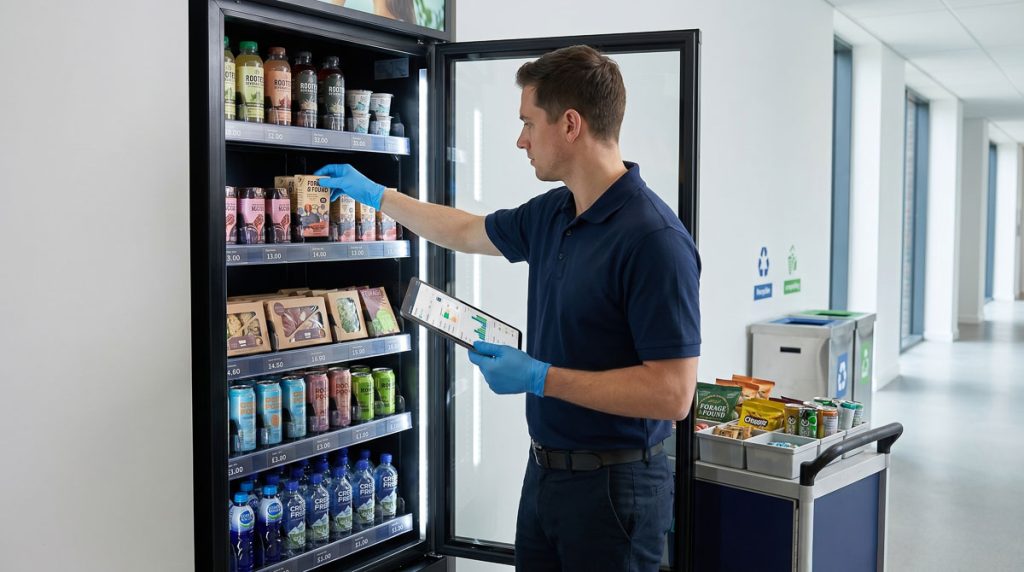
    Uniformed AI Vending service representative wearing gloves and using a tablet 
for real-time inventory sync while restocking a smart vending unit in a bright 
modern corridor with recycling and composting bins visible in the background.

    Restocking is part of the sustainability conversation. A provider that restocks blindly may make unnecessary trips or miss the products that actually need attention. A provider that monitors inventory can plan service around real need.

    That does not mean every trip can be eliminated. It means restocking should be tied to usage, product life, and service quality instead of guesswork.

    For property teams, the question is simple: does the operator use data to make restocking smarter?

    The service model behind greener vending

    Sustainability depends on follow-through. Product fit, restocking, product rotation, and service quality have to keep improving after installation.

    In AI Vending’s full-service model, the property provides space and power while the operator monitors inventory, restocks, maintains the unit, and adjusts the product mix based on use. That keeps accountability with the provider, where the product and service decisions are actually made.

    Questions to ask a green vending provider

    Before accepting sustainability claims, ask:

    • How do you reduce expired or wasted inventory?
    • How often do you review sales and product performance?
    • Can you adjust products by location, season, or audience?
    • What product claims are verified by packaging or supplier documentation?
    • Can you include local or regional products when demand supports them?
    • How do you decide between refrigerated, freezer, and pantry equipment?
    • How do you plan restocking routes?
    • What does the property team have to do after installation?
    • How do you keep the machine clean, stocked, and presentable?

    Specific answers matter more than broad green language.

    What to avoid

    Avoid claims that are too broad, such as saying a vending program is sustainable without explaining why. Avoid implying that every local product is automatically better. Avoid stocking products for image rather than demand. Avoid fresh food unless the provider can manage rotation, refrigeration, and waste.

    Also avoid making residents do the work. A sustainability-focused amenity should not require the property team to track inventory, police product choices, or manage waste.

    Make sustainability practical

    Green vending works when sustainability is treated as a practical operating standard. The provider should stock what people use, reduce avoidable waste, choose the right equipment, and keep the amenity useful over time.

    For property teams, the right question is not whether the vending program sounds green. It is whether the provider can explain how the program makes better product, restocking, equipment, and service decisions.AI Vending can help Colorado properties evaluate a smart vending setup that supports convenience, product fit, and responsible automated retail.

  • Enhancing Security with Well-Lit, Automated Amenities

    Enhancing Security with Well-Lit, Automated Amenities

    Enhancing Security with Well-Lit, Automated Amenities

    Well-lit, automated amenities can support a property’s security posture by making common-area use more visible, reducing cash handling, and giving residents or employees access to useful products without requiring staff to operate a store. They do not replace access control, cameras, patrols, lighting plans, or property policies, but they can fit into a safer, more orderly common-area strategy.

    For property and facility teams, the practical question is how to add convenience without creating new blind spots, cash risks, or staff workload.

    Quick answer

    Automated amenities such as cashless smart vending can enhance security when they are placed in visible, well-lit areas, use controlled access, avoid cash collection, and are supported by a provider that handles stocking, maintenance, and payment issues. The amenity should work with the property’s existing security practices rather than trying to replace them.

    The best setup starts with location. A useful automated amenity should be easy to find, easy to use, easy to service, and aligned with resident or employee traffic patterns.

    Why lighting matters

    Resident browsing an AI Vending glass-front smart vending cabinet positioned 
in a bright modern residential mailroom and package pickup area with clear 
traffic flow and smart package lockers in the background.

    Lighting affects how people experience common areas. A vending unit in a dark corner or hidden hallway is less inviting and harder to monitor. A unit in a visible, well-lit location feels more intentional and is easier for residents, employees, and staff to notice.

    Good lighting supports

    • clearer visibility around the amenity
    • easier product browsing
    • better camera views where cameras are already used
    • fewer hidden corners around the unit
    • a more polished resident or employee experience

    Lighting alone does not guarantee security. It is one part of a broader site plan that may include access control, camera placement, staffing policies, maintenance, and regular property walks.

    Why automation changes the risk profile

    Traditional vending often includes cash acceptance, mechanical jams, and service calls tied to bills and coins. Automated smart vending can shift the experience toward cashless, controlled-access use.

    That matters because cashless operation removes onsite cash from the machine. Controlled-access cabinets keep products secured until payment is authorized. Remote monitoring can also help the operator see inventory and service issues sooner.

    These are practical improvements, not absolute guarantees. A property still needs appropriate placement, lighting, building access, and service response.

    What a secure amenity placement looks like

    The best location is visible, convenient, and easy to service. It should not block exits, narrow hallways, mailroom traffic, package pickup, or emergency routes.

    Good placements often include:

    • lobby-adjacent common areas
    • resident lounges
    • mail or package areas with enough clearance
    • fitness center entrances
    • office break areas
    • student housing study lounges
    • staff-only back-of-house areas

    Poor placements include hidden alcoves, dark corridors, outdoor areas not approved for the equipment, cramped utility spaces, or locations that make users feel isolated.

    Location

    Why It Can Work

    What To Check

    Lobby-adjacent area

    Visible and easy to find

    Do not crowd entry flow or seating

    Mail or package area

    Residents already visit it often

    Keep package traffic and service clearance open

    Fitness center entrance

    Matches hydration and snack needs

    Confirm access hours and product fit

    Office break area

    Supports employee routines

    Confirm cleaning and traffic expectations

    Student housing lounge

    Useful for late-night access

    Lighting, camera views, and durability matter

    Staff-only back-of-house area

    Supports shift workers

    Access and restocking routes must be clear

    Controlled access versus open access

    Resident tapping a credit card on an AI Vending smart cabinet cashless payment 
terminal with a uniformed service representative and inventory cart visible in 
the blurred background corridor.

    Open retail can work in the right environment, but it creates different risks. Products are accessible before payment, and the area may require more monitoring. Automated smart vending keeps products inside the unit until a valid payment method is used.

    This can make smart vending a better fit for multifamily lobbies, mixed-use buildings, student housing common areas, and smaller workplaces where open shelves would be harder to supervise.

    The decision is not only about theft. It is also about cleanliness, accountability, product presentation, and the amount of attention the amenity requires from staff.

    Cashless payment reduces cash-related issues

    Cashless smart vending removes the need for bill validators, coin mechanisms, and cash collection. That can reduce common problems tied to jams, change, and onsite cash handling.

    For residents and employees, cashless payment is also faster and more familiar. For the property team, the important point is that the provider should handle payment support, refunds, and transaction questions.

    If the onsite team is pulled into payment troubleshooting, the amenity is not as hands-off as it should be.

    Security is also a service issue

    An automated amenity can still create problems if it is poorly serviced. Empty shelves, product spills, broken doors, failed payments, and slow support all weaken the experience.

    Property teams should evaluate the provider’s service model:

    • Who monitors inventory?
    • Who restocks the unit?
    • Who responds to service issues?
    • How are payment problems handled?
    • How quickly can the provider resolve a visible problem?
    • Who keeps the unit presentable?
    • What does onsite staff have to do?

    In AI Vending’s full-service model, the property provides space and power while the operator stocks, monitors, maintains, and supports the amenity. That keeps service accountability with the provider instead of the onsite team.

    What to ask before installation

    Before approving an automated amenity, ask:

    • Is the location visible and well-lit?
    • Does the placement support existing camera or access-control plans?
    • Does the unit operate cashless?
    • Are products secured before payment?
    • What power, connectivity, airflow, and service clearance are needed?
    • Who handles restocking and service?
    • Who receives support calls?
    • What happens if the unit is damaged or offline?
    • Can the provider adjust products based on usage?
    • Does the amenity fit the look of the property?

    These questions help the property avoid a common mistake: adding convenience while creating a new operational blind spot.

    When automated amenities may not help

    Automated amenities may not be the right answer if the only available location is hidden, poorly lit, hard to service, or disconnected from normal traffic. They may also be a poor fit if the property expects the equipment to solve underlying access-control, staffing, or maintenance issues.

    If a common area already feels uncomfortable, the property should address lighting, visibility, access, and maintenance before adding an amenity. A vending unit should reinforce a good plan, not cover for a weak one.

    Build convenience into the security plan

    The strongest amenity decisions connect convenience with operations. A well-lit, cashless, controlled-access smart vending unit can give residents or employees useful 24/7 access while reducing cash handling and keeping products secured.

    The important word is “support.” Automated amenities support a property’s security and convenience strategy when they are placed well, maintained consistently, and operated by a provider that takes responsibility for the details.

    AI Vending can help property and facility teams evaluate smart vending placement, visibility, cashless access, and service expectations before adding an automated amenity.

  • Micro-Markets vs. Smart Vending: Which is Right for You?

    Micro-Markets vs. Smart Vending: Which is Right for You?

    Micro-Markets vs. Smart Vending: Which is Right for You?

    Micro-markets and smart vending both give people convenient onsite access to food, drinks, and essentials, but they solve different operational problems. A micro-market is usually an open retail area with shelves, coolers, and a self-checkout kiosk. Smart vending uses controlled-access machines or smart cabinets that stay locked until payment is authorized.

    The right choice depends on your space, staffing expectations, traffic level, security needs, product mix, and how much operational complexity the property or facility wants to take on.

    Quick answer

    Choose a micro-market when you have enough space, steady daily traffic, and a setting where open shelves can be monitored and maintained. Choose smart vending when you want a compact, cashless, controlled-access amenity that can serve residents, employees, or tenants 24/7 with less space and less open-retail exposure.

    For many apartment, office, healthcare, and mixed-use properties, smart vending is the cleaner fit because it offers a modern retail experience without requiring a large room, staffed oversight, or open product displays. For larger staff-only workplaces with strong daily traffic, a micro-market can still make sense.

    What is a micro-market?

    A micro-market is a small self-service retail area inside a workplace, residential property, or commercial building. It may include open shelving, refrigerated coolers, freezer cases, product displays, and a kiosk or app-based checkout system.

    Micro-markets can feel more like a small convenience store than a vending machine. People can pick up products, read labels, compare options, and check out on their own.

    That open format is the main advantage and the main tradeoff. It can offer a broader selection and more browsing, but it usually needs more space, stronger oversight, and more trust in the environment.

    What is smart vending?

    Smart vending uses cashless machines or smart cabinets to provide controlled access to products. In a modern smart store setup, a user authorizes payment, opens the cabinet, takes items, closes the door, and the system finalizes the transaction.

    The experience is still self-service, but the products are secured inside the machine. That makes smart vending easier to place in lobbies, lounges, break rooms, mail areas, fitness centers, and other common areas where an open market would be too large or exposed.

    Smart vending can include drinks, snacks, quick meals, frozen items, and everyday essentials depending on the equipment and product program.

    Side-by-side comparison

    Category

    Micro-Market

    Smart Vending

    Space required

    Usually larger

    Usually compact and modular

    Product access

    Open shelves and coolers

    Locked or controlled-access units

    Checkout

    Kiosk, app, or self-checkout

    Card or mobile wallet authorization

    Security exposure

    Higher because products are open

    Lower because products are secured

    Product selection

    Often broader

    Curated by cabinet type and demand

    Best environment

    Staffed workplaces, high-trust areas, high traffic

    Apartments, offices, healthcare, student housing, mixed-use spaces

    Operational complexity

    Can be higher

    Lower when provider-managed

    Neither option is automatically better. The better choice is the one that fits the building and user behavior.

    Best fit by property type

    Setting

    Micro-Market Fit

    Smart Vending Fit

    Large office or corporate campus

    Strong if traffic is high and space is dedicated

    Strong for satellite areas, lobbies, or after-hours access

    Multifamily property

    Limited unless there is a staffed or monitored market area

    Strong for lobbies, lounges, mailrooms, and fitness areas

    Student housing

    Possible in large common areas

    Strong for late-night access and essentials

    Medical office building

    Possible in tenant-only areas

    Strong when product access should stay controlled

    Warehouse or distribution center

    Strong if employee volume supports it

    Strong for compact break areas and shift coverage

    Hotel or hospitality back-of-house

    Possible with enough staff traffic

    Strong for compact staff convenience points

     This table is only a starting point. Site layout, access control, product demand, and service expectations should decide the final format.

    When a micro-market makes sense

    Employees using an open-concept micro-market snack station with oak wood 
shelving and a tablet self-checkout kiosk in a bright modern Denver corporate 
break room

    A micro-market can work well when the building has a dedicated break area, strong daily traffic, and an audience that uses the space repeatedly. It is often a good fit for larger offices, warehouses, campuses, and workplaces where employees spend long stretches onsite.

    Micro-markets are strongest when:

    • there is enough room for shelves, coolers, and checkout
    • the area is visible and easy to monitor
    • employees or tenants use the space throughout the day
    • the product mix needs to be broad
    • the operator can restock and maintain the area consistently

    The tradeoff is that open retail requires trust and oversight. Products are accessible before payment, so shrink, mess, and checkout compliance can become part of the operating model.

    When smart vending makes sense

    Resident tapping a smartphone on an AI Vending smart cabinet cashless payment 
terminal in a modern apartment mailroom corridor stocked with fresh meals, 
coffee, and everyday essentials.

    Smart vending is often a better fit when space is limited, the location is open to more people, or the property wants a controlled-access amenity. It can fit in common areas where a full micro-market would be too large or too exposed.

    Smart vending is strongest when:

    • the property wants 24/7 access without staffing
    • products should stay secured until payment
    • the footprint needs to be compact
    • the product mix can be curated
    • the provider will handle inventory, restocking, maintenance, and support
    • users want a fast cashless experience

    This is why smart vending often works well in multifamily buildings, student housing, medical office buildings, hotels, and smaller office environments.

    The security and accountability difference

    Security is one of the clearest differences. Micro-markets depend on open access and self-checkout behavior. Smart vending keeps products inside a controlled unit until a valid payment method is authorized.

    That does not mean smart vending is a security guarantee. Placement, lighting, building access, cameras, and service response still matter. But controlled-access machines reduce some of the open-shelf exposure that comes with a micro-market.

    For property teams, the practical question is whether the location can support open retail. If the answer is no, smart vending usually deserves a closer look.

    Product mix: breadth versus control

    Micro-markets can often support a wider product set because they have more open display space. Smart vending is more curated. The cabinet format, refrigeration needs, shelf space, and product recognition requirements all shape what should be stocked.

    That can be a strength. A curated smart vending setup can focus on the products users actually buy rather than trying to mimic a convenience store.

    The right provider should review usage data and adjust the assortment over time. Whether the format is a micro-market or smart vending, stale product selection weakens the amenity.

    Cost and staff lift

    Property and facility teams should ask what the format requires after launch. Who restocks? Who handles expired products? Who resolves failed payments? Who cleans the area? Who responds when something is broken?

    In a full-service smart vending model, the operator handles the day-to-day work and the property provides space and power. That structure matters because the amenity only works if it stays stocked, clean, and supported without becoming another staff assignment.

    Micro-markets can also be operator-managed, but the larger open format may create more touchpoints around cleanliness, checkout behavior, and product presentation.

    Decision checklist

    Ask these questions before choosing:

    • How much space do we have?
    • Is the location public, semi-private, or staff-only?
    • Do we want open shelves or controlled product access?
    • How much daily traffic will the area get?
    • What product categories matter most?
    • Can the provider support refrigerated or frozen products?
    • Who handles restocking, payment issues, and service?
    • How visible and well-lit is the location?
    • Will this feel premium in the building?
    • What happens if usage is lower than expected?

    The answer should point to the format, not the other way around.

    Which is right for you?

    Micro-markets are right for properties with enough space, enough traffic, and the right environment for open self-service retail. Smart vending is right for properties that need a compact, controlled, cashless, fully managed amenity that works in common areas without turning the property into a store operator.

    For many multifamily, mixed-use, and smaller workplace settings, smart vending is often easier to place and operate. For large staff-only environments with strong traffic and room for open retail, a micro-market may be the better fit.

    AI Vending can help property and facility teams compare the two formats and decide which setup fits the space, audience, and service expectations.

  • Using Vending Perks for Resident Retention Events

    Using Vending Perks for Resident Retention Events

    Using Vending Perks for Resident Retention Events

    Vending perks can make resident retention events more useful when they give residents something immediate, practical, and easy to redeem. Instead of relying only on coffee carts, one-time snacks, or generic giveaways, property teams can use smart vending credits, product drops, sampling moments, and 24/7 onsite access to support renewal campaigns and resident appreciation.

    The point is not to turn vending into a party favor. The stronger use is to connect an event with an amenity residents can keep using after the event ends.

    Quick answer

    Using vending perks for resident retention events means offering residents a temporary benefit tied to an onsite vending or smart store amenity. That might include free item credits, renewal-week snack drops, move-in welcome credits, resident appreciation promos, or curated product moments around events.

    The best programs are simple for residents and low-lift for the property team. The vending provider should manage product availability, payment support, promotion setup, restocking, and service so the event does not become another operational task.

    Why vending works for retention events

    Resident retention events work best when they create a real reason for residents to engage with the property. Food and beverages are already familiar event tools, but traditional event catering is short-lived. Once the event is over, the benefit disappears.

     Smart vending can extend the value. Residents can redeem perks when the timing actually works for them, including after work, during late-night routines, or on weekends. That flexibility matters in communities where residents have different schedules.

    Vending perks can support:

    • renewal season
    • resident appreciation weeks
    • move-in and onboarding
    • finals or student-housing events
    • fitness center programming
    • package-room or lobby activations
    • new amenity launches

     The offer should feel useful, not gimmicky. A resident is more likely to remember a convenient onsite amenity if the event helps them try it naturally.

    What counts as a vending perk?

    Resident scanning a free credit barcode on a smartphone at an AI Vending 
cashless smart cabinet terminal stocked with premium local snacks and cold 
beverages in a luxury apartment building

    A vending perk does not have to be complicated. The strongest options are easy to explain and easy to redeem.

    Perk Type

    How It Works

    Best Use

    Free item credit

    Resident receives a one-time credit or equivalent promotion

    Amenity launch, renewal push, resident appreciation

    Product sampling

    Provider stocks a curated set of featured items

    Wellness event, local brand feature, fitness programming

    Time-limited promo

    Certain products are highlighted during a campaign

    Move-in week, finals week, leasing events

    Staff-hosted demo

    Property team introduces the amenity while provider supports use

    First launch or resident event

    Themed assortment

    Product mix changes for an event or season

    Summer pool event, study week, holiday appreciation


    The right approach depends on the building, audience, and provider capabilities. Property teams should confirm exactly what can be supported before promising perks in resident communications.

    Connect perks to a real resident need

    The most useful vending perks are tied to routines residents already have. A fitness-center event might feature hydration and protein snacks. A move-in event might focus on drinks, quick meals, and forgotten essentials. A renewal event might use a small thank-you credit that introduces residents to the smart store.

    This is stronger than handing out a random coupon. The perk works because it shows residents how the amenity fits daily life.

    Property teams should think through:

    • When are residents most likely to use the amenity?
    • Which product categories match the event?
    • How will residents learn how the smart store works?
    • What happens if a featured product sells out?
    • Who answers payment or support questions?
    • How will the provider restock after the event?

    If the property team cannot answer those questions, the event may create confusion instead of goodwill.

    Use events to introduce the amenity

    Resident events are a useful way to teach residents that the amenity exists. Many residents will not change habits just because a new machine appears in a lobby or lounge. A small event gives the property team a reason to point it out.

    The introduction should be simple:

    • what the amenity offers
    • where it is located
    • how residents pay
    • when it is available
    • who handles support

    Avoid overexplaining the technology. Residents need to know how to use the smart store and why it is useful. Property teams need to know the provider is handling the operation.

    A usage signal for after-hours convenience

    Retention events should not promise renewal results from a vending promotion. Still, local usage data can help property teams understand why a 24/7 amenity is worth introducing during resident engagement campaigns.

    AI Vending’s downtown Denver case study, published March 23, 2026, reported 60.7% resident adoption, 30.4% monthly usage, and 25.9% of transactions between 10 PM and 5 AM at an Avenue5 Residential-managed property.

    Those numbers are not a guarantee for another property. They are useful because they show that residents may use onsite convenience outside normal office hours. A retention event can help residents discover the amenity, but continued value depends on stocking, service, location, and product fit.

    Retention value depends on follow-through

    AI Vending service representative restocking a smart vending cabinet with 
fresh snacks and meals in a modern apartment mailroom corridor while a 
resident picks up a package undisturbed in the background.

    A vending perk can create a good first impression, but retention value comes from consistent usefulness after the event. If the unit is empty, poorly stocked, hard to use, or slow to service, the event will not matter.

    That is why the operating model is part of the retention strategy. A smart vending amenity should be monitored, restocked, maintained, and adjusted based on what residents actually buy. It should not become a task for onsite staff.

    In AI Vending’s full-service model, the property provides space and power while the operator installs the equipment, curates products, monitors inventory, restocks, maintains the unit, and handles support. That keeps the event mechanics and the day-after service from landing on the onsite team.

    How to plan a vending perk event

    Start with the event goal. A renewal campaign, new amenity launch, and resident appreciation week should not use the same vending perk by default.

    Then decide:

    1. Which resident group is the event for?
    2. What product categories fit the moment?
    3. Where should the vending unit be promoted?
    4. How long should the perk run?
    5. What does the provider need to configure?
    6. How will the property communicate the perk?
    7. Who handles support questions?
    8. How will usage inform future stocking?

    The more specific the plan, the easier it is to keep the event clean and low-lift.

    When vending perks may not be worth it

    Vending perks may underperform if the building does not have enough resident traffic near the unit, if the available product mix does not match the event, or if the provider cannot configure the promotion cleanly.

    They may also be the wrong tool when the property is trying to solve a bigger resident-experience issue. A vending credit will not fix slow maintenance response, poor communication, or an amenity that is consistently out of service. It should support a broader resident experience strategy, not distract from core operations

    Finally, avoid overpromising. A perk can introduce residents to a useful amenity, but retention depends on the total resident experience.

    Mistakes to avoid

    The first mistake is making the perk too hard to redeem. If residents need a long set of instructions, the event loses momentum.

    The second mistake is promoting products that are not stocked well enough. A perk tied to an empty machine creates frustration.

    The third mistake is making the onsite team responsible for the mechanics. If staff are troubleshooting payments or restocking products, the vending program is not functioning as a managed amenity.

    The fourth mistake is treating the event as the whole strategy. Retention depends on the day-after experience too.

    Make the event useful beyond the event

    Vending perks work best when they introduce residents to a useful everyday amenity. The event creates attention. The smart vending program earns continued use through product fit, availability, payment simplicity, and reliable service.

    For property teams, the right question is not “Can we give residents a free snack?” It is “Can this event help residents discover a convenience amenity they will actually use?”

    AI Vending can help property teams design vending perks that match the building, resident profile, product mix, event calendar, and service plan.