Tag: Wellness

  • 24/7 Nutrition for Medical Staff: Vending in Healthcare

    24/7 Nutrition for Medical Staff: Vending in Healthcare

    24/7 Nutrition for Medical Staff: Vending in Healthcare

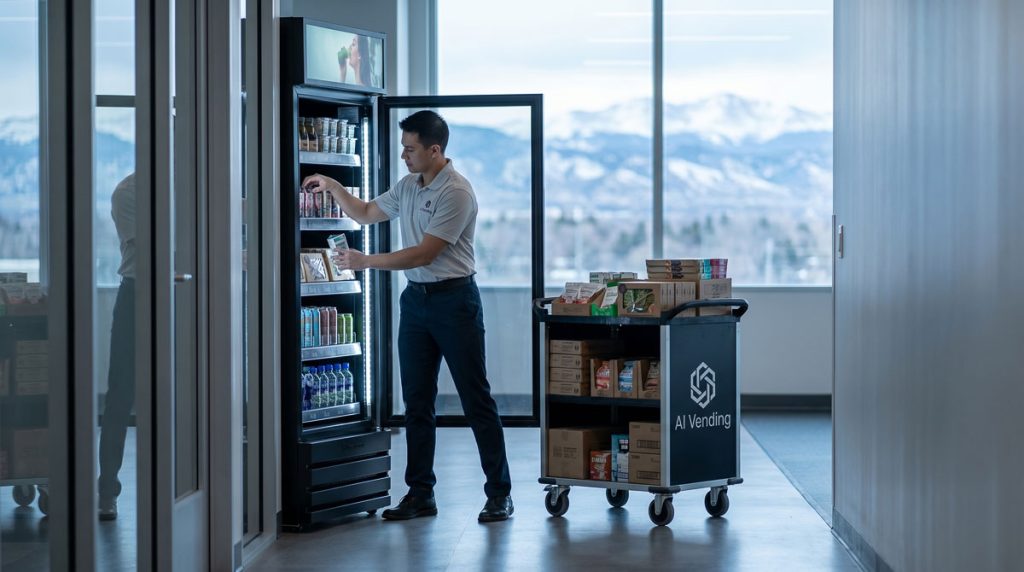
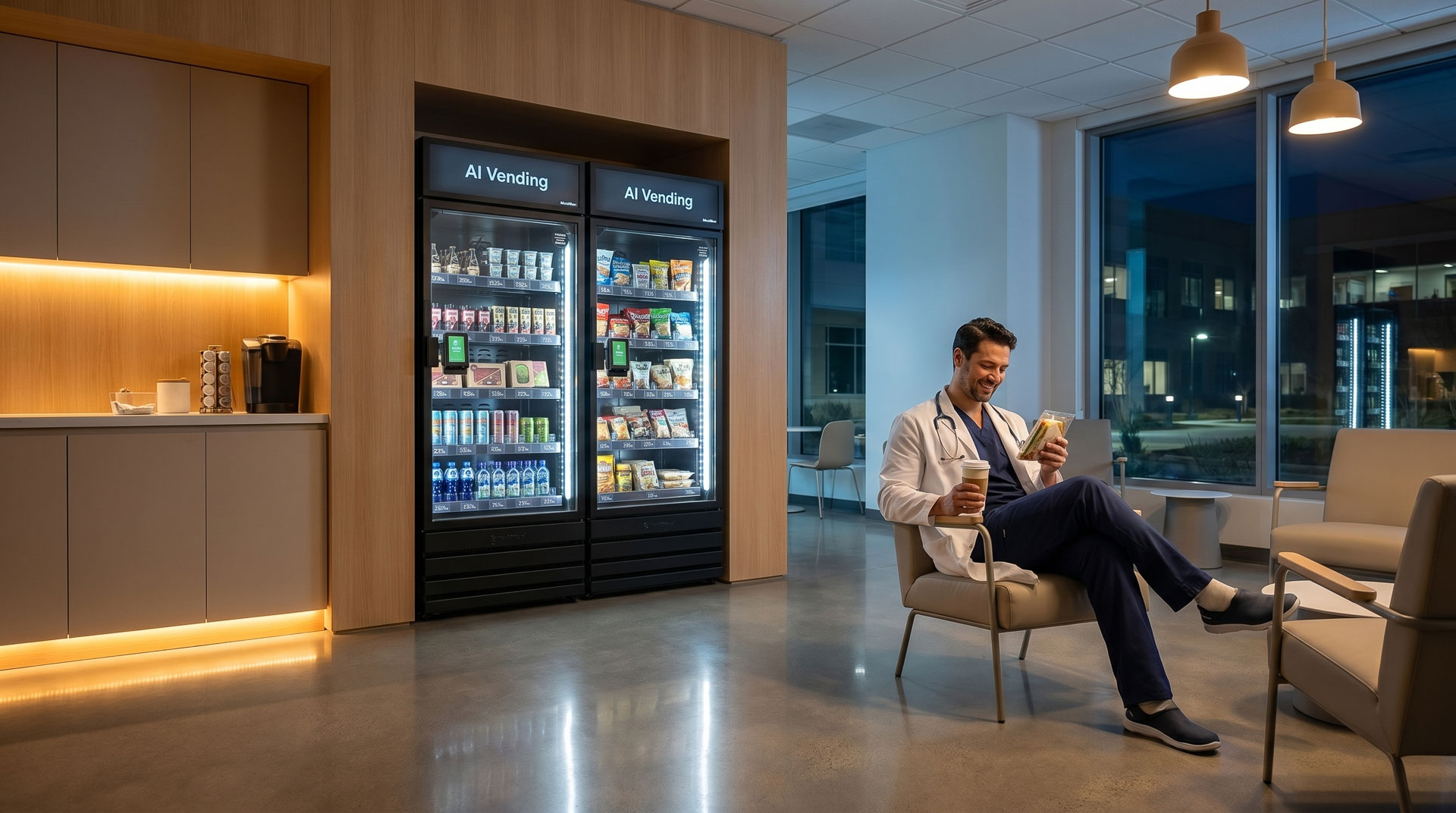
    Healthcare staff need reliable food and beverage access outside normal retail hours. A well-planned smart vending program can help hospitals, clinics, medical office buildings, and healthcare support facilities give staff quick access to meals, snacks, hydration, coffee, and basic essentials without asking clinical or facilities teams to run a retail operation.

    The value is practical. Medical staff often work early mornings, late nights, weekends, holidays, and compressed breaks. If the only options are a closed cafeteria, a delivery app, or leaving campus, the facility has a convenience gap that shows up during ordinary shifts.

    Quick answer

    Smart vending in healthcare is a 24/7 onsite retail setup that gives staff cashless access to food, drinks, and essentials in approved staff or common areas. It works best when the provider manages installation, inventory, stocking, payment support, and maintenance, while the facility provides a suitable indoor location and power.

    This is not a replacement for a cafeteria, employee wellness program, or nutrition strategy. It is a practical support layer for the times when staff need something quickly and the usual food options are closed, inconvenient, or too far away.

    Why healthcare facilities have a different vending need

    Healthcare buildings are not ordinary workplaces. They operate across shifts, departments, security zones, visitor patterns, and service requirements. A nurse coming off a late shift, a resident between rounds, a lab worker on an early schedule, and an overnight facilities team member may all need different things at different times.

    That creates several requirements:

    • access after cafeteria hours
    • products that are more useful than candy and soda alone
    • payment that does not depend on cash
    • placement that does not interfere with patient or visitor flow
    • service that does not become a facilities-team task
    • clear support for refunds, outages, and product issues

    Traditional vending can fill part of the gap, but the product mix and service model often lag behind staff expectations. Smart vending is stronger when it is treated as a managed staff convenience amenity, not just a machine in a hallway.

    What medical staff actually need from onsite vending
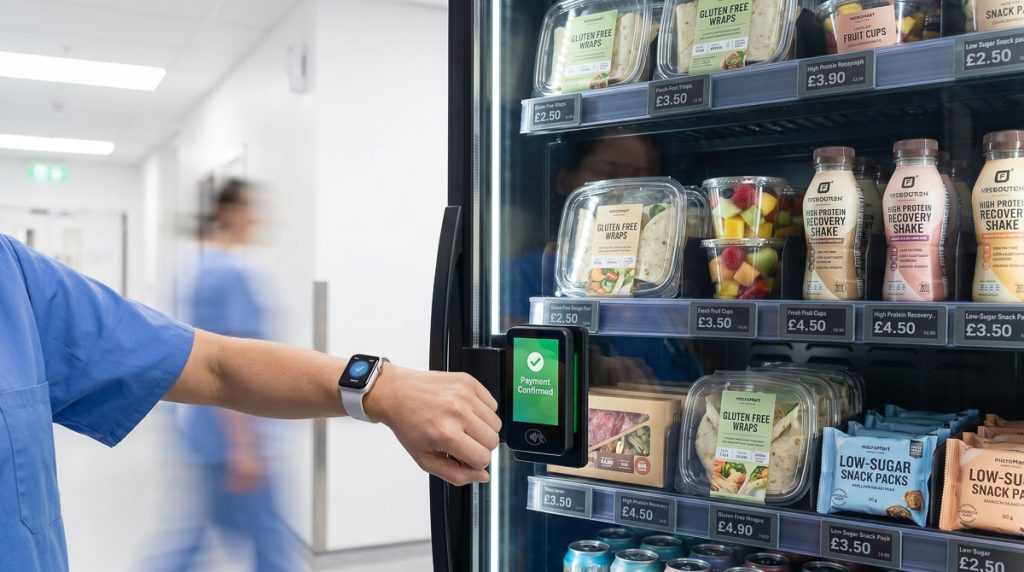
    A nurse tapping a smartwatch on an AI Vending smart cabinet cashless NFC payment 
terminal in a modern hospital corridor, with premium healthy food options visible 
through the glass door

    The product mix should reflect the workday. In healthcare, that often means reliable basics more than novelty products.


    Staff Need

    Useful Product Categories

    Planning Note

    Quick fuel between tasks

    Protein snacks, bars, nuts, sandwiches, wraps

    Prioritize filling options where refrigeration is available

    Hydration

    Water, sparkling water, electrolyte drinks, lower-sugar beverages

    Avoid unsupported health claims

    Overnight coverage

    Coffee, tea, caffeine options, meals, snacks

    Restocking should account for night-shift use

    Forgotten basics

    Toothpaste, deodorant, phone chargers, simple personal care items

    Keep selection limited and practical

    Dietary preferences

    Vegetarian, gluten-free, dairy-free, lower-sugar choices

    Use manufacturer labels, not assumptions

    Facilities should avoid promising that vending will improve health outcomes. The better claim is simpler and more accurate: staff get more practical choices close to where they work.

    Placement matters more in healthcare

    Healthcare placement should be planned carefully. A smart vending unit may work well in a staff lounge, break room, administrative office area, medical office building lobby, or other approved common area. It should not block corridors, emergency access, cleaning routes, security checkpoints, or visitor flow.

    The right placement is visible enough to be used but controlled enough to match the facility’s policies. For staff-focused programs, that often means separating the amenity from patient-facing spaces. For mixed-use medical office buildings, it may mean a common area that serves tenants, staff, and approved visitors without creating congestion.

    Before installation, the provider and facility team should confirm:

    • indoor location
    • power access
    • airflow and clearance
    • service access
    • connectivity needs
    • cleaning expectations
    • who can use the amenity
    • who receives service notifications

    These details matter because healthcare environments already have enough operational complexity.

    Staff-only, visitor-facing, or mixed-use?

    Healthcare vending decisions often start with audience. A staff-only break-room unit should prioritize shift coverage, filling snacks, quick meals, caffeine, hydration, and essentials. A visitor-facing unit needs a cleaner public presentation, simpler product choices, and placement that does not create confusion around patient-care areas.

    Medical office buildings may need a mixed-use approach. Tenants, administrative staff, patients, and visitors may all pass through the same building, but that does not mean every location is right for vending. The facility should decide whether the goal is staff support, tenant convenience, visitor convenience, or a combination.

    That decision affects the product mix, signage, support process, and service schedule. It also helps the provider avoid stocking products that look useful on paper but do not match the actual audience.

    Cashless access helps reduce friction

    Cashless smart vending is a better fit for many healthcare facilities because staff can pay quickly with cards or mobile wallets. It also removes cash handling from the machine and reduces common problems tied to bills, coins, and change.

    For the facility, cashless operation is easier to live with. The provider should own payment processing, refunds, and support, so staff are not bringing vending payment problems to the front desk, nursing leadership, or facilities team.

    The service model is the real difference
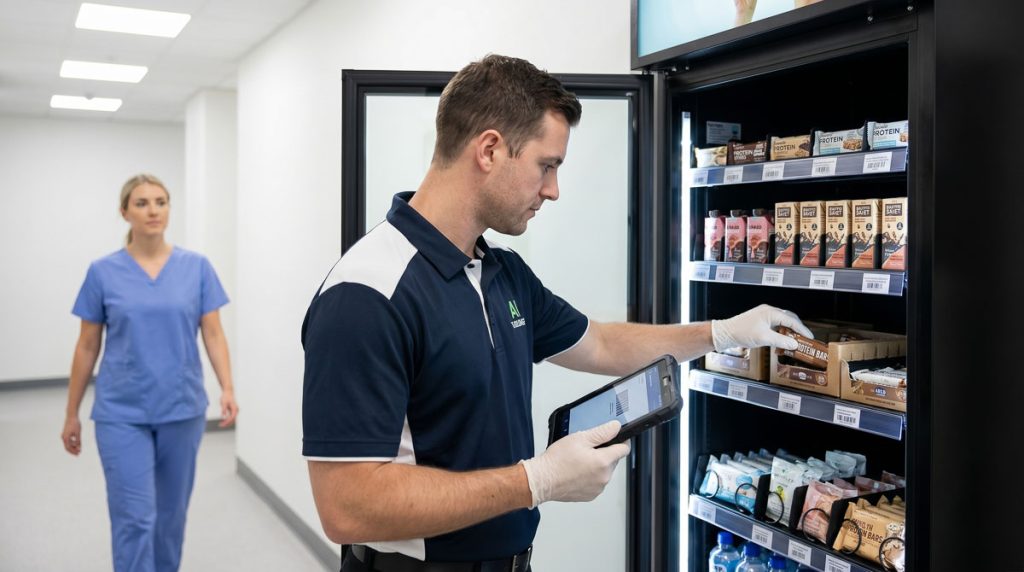
    An AI Vending uniformed service representative wearing gloves and using a tablet 
to restock a smart vending cabinet in a medical office building corridor, with 
hospital staff walking past undisturbed.

    The equipment is only one part of the decision. Healthcare teams should care just as much about who keeps the program stocked, clean, responsive, and useful.

    A full-service model should include:

    • site review before installation
    • product recommendations by audience and location
    • delivery and installation
    • cashless payment setup
    • remote inventory monitoring
    • restocking based on actual usage
    • product changes when items do not sell
    • maintenance and service response
    • customer support for payment or product issues

    AI Vending’s model follows this full-service approach: the facility provides space and power, while the operator handles the equipment, stocking, monitoring, maintenance, and support. That distinction matters in healthcare because staff convenience should not create extra work for clinical or facilities teams.

    What to ask before approving healthcare vending

    Facility leaders should ask practical questions before installation:

    • What product categories do you recommend for our staff schedule?
    • Can the unit support refrigerated items, pantry items, or both?
    • How do you verify dietary or product-label claims?
    • Who handles restocking and service issues?
    • How are refunds and failed payments handled?
    • How often is inventory reviewed?
    • Can the product mix change for night-shift demand?
    • What location requirements do you need?
    • What happens during outages or maintenance windows?
    • What does our staff have to do after installation?

    The answer to the last question should be short. A healthcare vending program works best when facility staff are not expected to manage the retail operation.

    When vending may not be the right fit

    Smart vending may not work well if the only available location is hidden, outdoors, poorly ventilated, hard to service, or too close to sensitive patient-care areas. It may also be the wrong fit if the facility wants fresh meals but cannot support refrigerated equipment, service access, or appropriate product rotation.

    It is also worth being careful with wellness language. Better product access is useful, but the article, signage, and merchandising should not imply medical benefits unless the claim is supported by the manufacturer and appropriate review.

    Build the program around staff routines

    The strongest healthcare vending programs start with staff behavior. Who works overnight? Where do people take breaks? When is the cafeteria closed? Which departments have the least time to leave the building? Which areas are easy to service without disrupting operations?

    Those answers should shape the unit location, product mix, restocking cadence, and support process. The goal is not to add another amenity for its own sake. The goal is to give healthcare staff a reliable way to get useful food, drinks, and essentials when their schedule makes ordinary retail access difficult.

    Support staff without adding work

    24/7 nutrition for medical staff is really about access, reliability, and service responsibility. A smart vending program can support staff during long shifts, overnight coverage, and short breaks, but only if the product mix is useful and the operation stays off the facility team’s plate.


    AI Vending can help Colorado healthcare facilities evaluate placement, shift coverage, product strategy, and service expectations before adding a smart vending amenity.
  • Gym Amenity: Integrated Vending for Fitness Centers

    Gym Amenity: Integrated Vending for Fitness Centers

    Gym Amenity: Integrated Vending for Fitness Centers

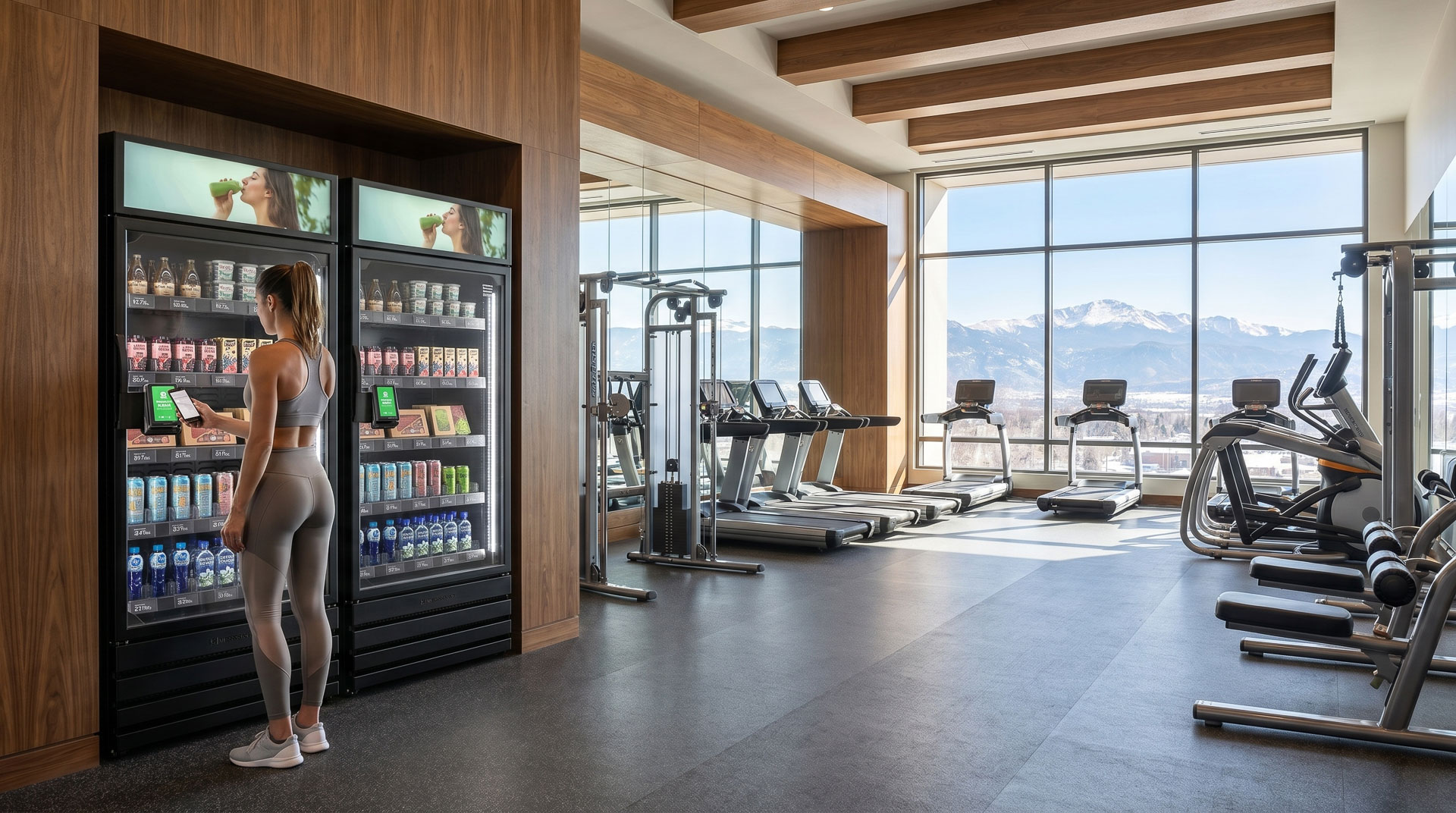
    A gym amenity with integrated vending gives members, residents, tenants, or employees convenient access to drinks, protein snacks, quick meals, and essentials near the place they already work out. For fitness centers in Denver properties, the strongest setup is a fully managed smart vending or smart store model that supports wellness routines without asking staff to stock products or handle payment issues.

    The goal is not to make medical or performance claims. The goal is practical convenience: hydration after a workout, a snack before a commute, a quick meal after a class, or a small item someone forgot.

    Quick answer

    Integrated vending for fitness centers places a smart vending cabinet or smart store near a gym, studio, locker area, or fitness-adjacent common space. It can offer water, electrolyte drinks, ready-to-drink coffee, protein items, snacks, meals, and small essentials while the provider handles stocking, monitoring, service, payment support, and product changes.

    For property and facility teams, the best fit is a provider-managed model. The fitness center gets a more useful amenity, and staff do not become the retail operator.

    What integrated vending means

    Integrated vending means the retail amenity is planned around the fitness experience instead of placed randomly in the building. The product mix, cabinet location, payment flow, and service plan should all support how people use the gym.

    That might mean a smart cabinet near an apartment fitness center, an office wellness room, a residential lobby next to the gym corridor, or a standalone fitness center with enough traffic. The key is that the vending amenity feels connected to the workout routine.

    Traditional vending often sits wherever there is room. Integrated vending starts with the use case: what do people need before, during, and after using the fitness space?

    Why fitness centers are a strong fit

    Fitness spaces create predictable convenience moments. People often need hydration, caffeine, protein, or something small before they leave the building. They may also forget basic items or want a quick option after a workout.

    Integrated vending can support:

    • early morning workouts before nearby retail opens
    • evening gym use after leasing or office hours
    • post-workout hydration and snacks
    • quick meals for residents or employees with tight schedules
    • personal care basics and small essentials
    • visitors or guests who did not bring a drink

    For apartment communities, this can make the fitness center feel more complete. For offices, it can support wellness rooms and employee convenience. For standalone gyms, it can add a low-lift retail point if the provider model fits traffic and access.

    Product categories that make sense

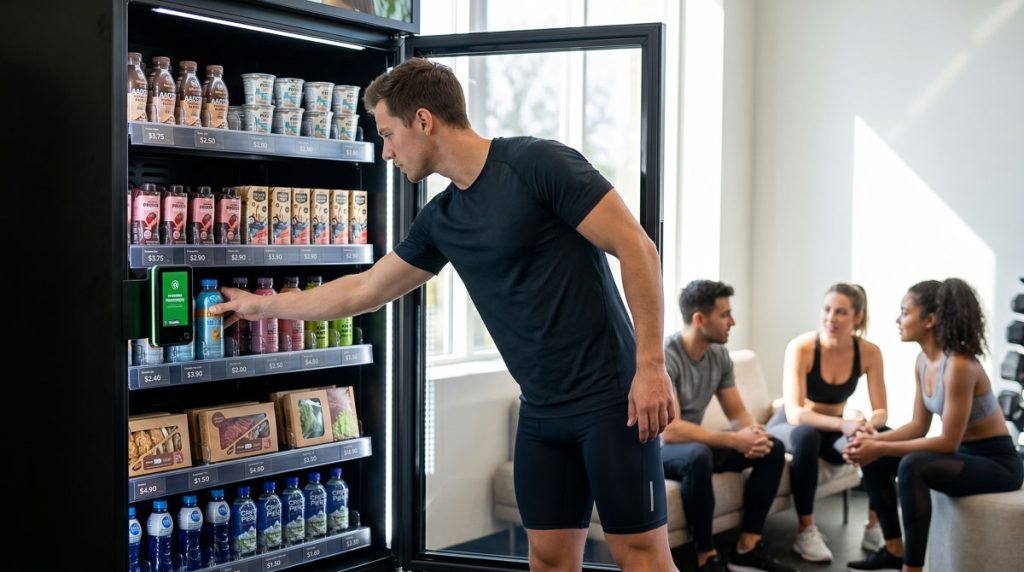
    Three people chatting while a man buys a recovery drink at a gym micro-market after a workout.

    Fitness-adjacent vending should be useful without overpromising. Product labels and manufacturer information should support any nutrition or ingredient claims.

    CategoryCommon use caseCaution
    Water and hydration drinksBefore or after workoutsAvoid unsupported performance claims
    Protein snacksMore filling snack optionDo not imply medical or fitness outcomes
    Ready-to-drink coffee and teaMorning or afternoon energy routineKeep caffeine choices balanced
    Better-for-you snacksEveryday convenience near the gymDefine by product facts, not vague health language
    Quick mealsPost-workout or late-day hungerRequires demand tracking and rotation
    Small essentialsForgotten items, personal care basicsKeep the mix focused and clean

    The product mix should start simple. If sales data shows demand for refrigerated meals, higher-protein items, or specific beverages, the provider can adjust.

    Placement and design considerations

    Placement has a direct effect on usage. A smart vending cabinet should be visible enough to feel like part of the amenity, but not placed where it blocks traffic, creates clutter, or interferes with the fitness experience.

    Good placement options include:

    • just outside the fitness center
    • near a locker or towel area
    • in a lobby connected to the gym path
    • near a resident lounge or coworking area used after workouts
    • in an office break area connected to a wellness room

    The location should have appropriate power, safe access, visibility, and enough room for people to browse without crowding the fitness entrance. If the cabinet includes refrigerated products, the provider should confirm ventilation and service access.

    How smart vending improves the operation

    Old vending machines can feel out of place in premium fitness environments. Smart vending can make the experience cleaner and more flexible when the operator manages it well.

    Useful features include:

    • cashless payment
    • glass-front browsing
    • remote inventory monitoring
    • product mix updates based on sales
    • refrigerated, pantry, or freezer formats where appropriate
    • provider-managed restocking and service

    The smart technology should make the amenity easier to use and easier to operate. If the property or fitness staff still have to track inventory, handle refunds, or call repeatedly for service, the model is not doing its job.

    What property and fitness teams should ask

    Before adding integrated vending to a fitness center, ask:

    • Which products are appropriate for a fitness-adjacent setting?
    • How will nutrition, ingredient, and dietary claims be handled?
    • Who restocks, monitors inventory, handles payment issues, and services the cabinet?
    • Can the mix include refrigerated drinks or meals if demand supports it?
    • Where should the cabinet sit so it supports the gym without crowding it?
    • What power, ventilation, connectivity, and service access are required?
    • How often will the product mix be reviewed?

    Good providers will answer in operational terms. They should not rely on vague wellness language or make unsupported health promises.

    When integrated vending may not fit

    Integrated vending may not be right for every fitness center. A low-traffic gym, hidden room, outdoor-only placement, or space with poor power access may underperform. It may also be a weak fit if the audience only wants free water or if staff expect a provider to stock products that do not sell.

    The product strategy should be grounded in actual demand. A cabinet full of niche fitness items can look thoughtful but still fail if people mostly want water, coffee drinks, snacks, and simple meals.

    How AI Vending supports fitness-adjacent amenities

    Smart store technician providing on-site support by restocking product inventory in an automated kiosk.

    AI Vending installs and operates fully managed smart store amenities for Colorado properties. For fitness-adjacent use cases, that means the cabinet, product mix, restocking, monitoring, payment support, and service remain with the operator.

    For a Denver property or facility, a site survey should review gym traffic, adjacent common areas, power, visibility, audience, and product needs. The right setup should make the fitness amenity more useful while keeping the operation simple for staff.

    FAQs

    What should a gym vending machine stock?

    Start with water, hydration drinks, ready-to-drink coffee, protein snacks, better-for-you snacks, quick meals, and small essentials. The exact mix should change based on actual sales data.

    Can vending near a fitness center include meals?

    Yes, if traffic and refrigeration support it. Refrigerated meals require stronger rotation, monitoring, and service discipline than shelf-stable snacks.

    Who manages the products?

    In a fully managed smart vending model, the provider manages product selection, inventory monitoring, restocking, payment support, and service. The property or fitness team should not have to run the retail operation.

    What should a property do next?

    Start with placement and user needs. If the fitness center has regular traffic and a visible location nearby, talk to AI Vending about whether a fully managed smart store can support the amenity.