Tag: Multifamily

  • The Future of Smart Vending in Denver Real Estate

    The Future of Smart Vending in Denver Real Estate

    The Future of Smart Vending in Denver Real Estate

    The future of smart vending in Denver real estate is not just more machines in more buildings. It is a shift toward managed, data-informed, cashless onsite retail amenities that support residents, tenants, employees, and guests without adding daily work for property teams.

    For Denver property managers, ownership groups, and asset managers, the most useful question is practical: can smart vending make a building more convenient, more competitive, and easier to operate without becoming another vendor headache?

    Quick answer

    Smart vending is likely to become a more normal part of Denver real estate because it solves a daily convenience problem inside existing buildings. The strongest programs will look less like traditional vending and more like compact smart stores: cashless, glass-front, monitored, locally serviced, and stocked based on actual usage.

    The future is not about novelty. It is about whether the amenity earns its place in the building.

    Why real estate teams are paying attention

    Real estate teams evaluate amenities through a different lens than consumers. A resident might ask whether the cabinet has the drink they want. A property team asks whether the amenity:

    • improves the resident or tenant experience
    • supports leasing and retention conversations
    • fits the look of the building
    • requires little or no staff time
    • can be serviced reliably
    • gives ownership a visible upgrade without major construction

    Smart vending is gaining attention because it can check several of those boxes when it is executed well. It can turn a lobby, mailroom, lounge, or fitness-adjacent area into a useful convenience point without building a staffed cafe or full micro market.

    From vending machine to smart store amenity
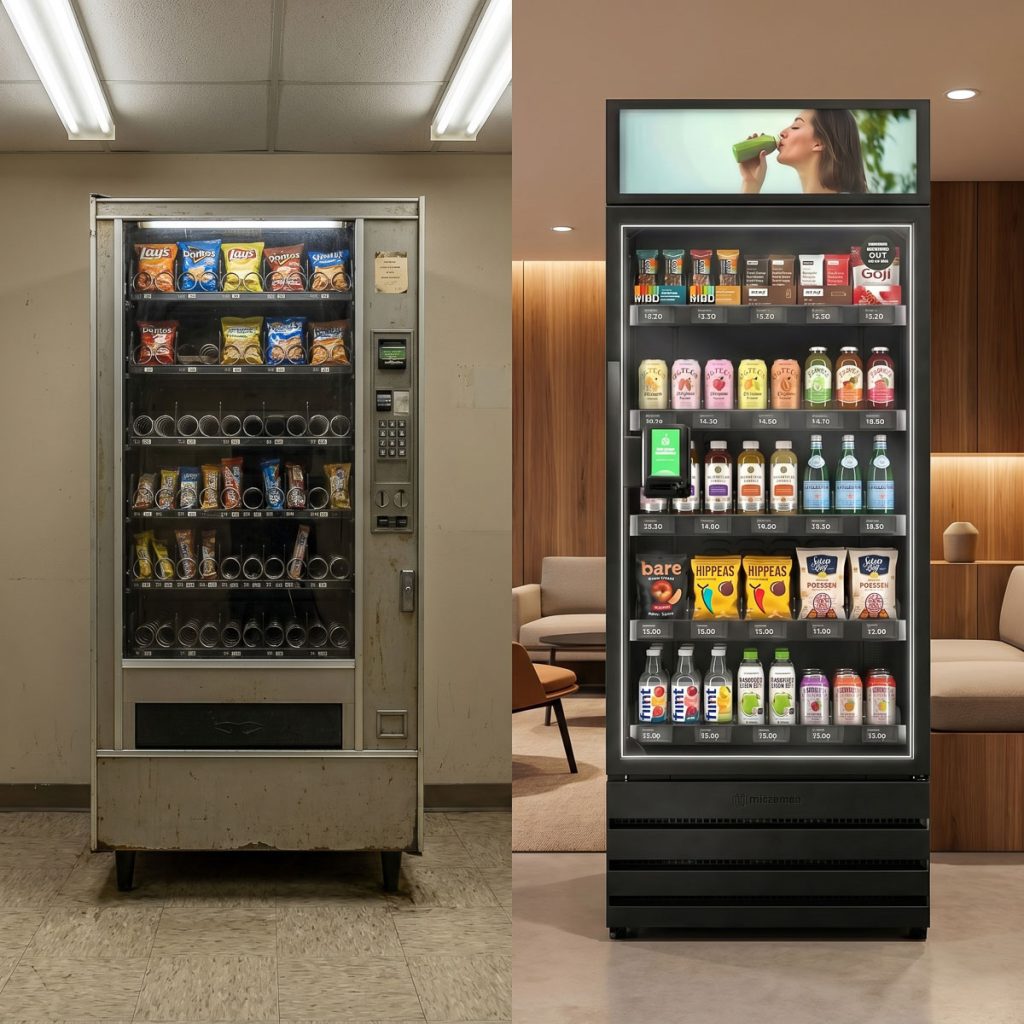
    Side-by-side comparison of traditional vending machine versus modern smart vending cabinet with cashless payment.

    Traditional vending is usually treated as a utility: a machine in a corner that sells packaged snacks or drinks. Smart vending changes the category when the setup is planned as an amenity.

    The difference shows up in several ways:

    Traditional VendingSmart Vending or Smart Store
    Often cash or card reader attached to a machineCashless card and mobile wallet access
    Limited product presentationGlass-front merchandising and clearer product visibility
    Static product planProduct mix can change based on actual usage
    Manual service checksRemote inventory visibility and provider monitoring
    Usually snack-and-drink focusedCan include meals, frozen items, essentials, and local products where supported
    Often feels like a break-room fixtureCan be planned around lobby, lounge, mailroom, or fitness design

    The future belongs to setups that feel intentional in the building, not machines that look inherited from an older office break room.

    Denver buildings need local service, not just hardware

    Denver real estate is varied. A downtown luxury apartment tower, a suburban Class B community, a mixed-use building, a student housing property, and an office building near a transit corridor do not need the same vending plan.

    Local fit matters because product demand, delivery access, parking, service timing, building rules, and resident expectations can vary from property to property. A smart vending program that looks good at launch but cannot stay stocked and serviced will lose credibility quickly.

    That is why the provider model matters. The machine is only one part of the decision. The property should understand who installs the unit, who stocks it, who monitors performance, who handles payment questions, and who responds when something needs attention.

    Data-informed stocking will matter more

    The future of vending in real estate will be shaped by product fit. Buildings do not need cabinets filled with items that look good in a proposal but sit untouched for weeks.

    Data-informed stocking helps the operator answer practical questions:

    • Which items sell at this property?
    • Which products are slow-moving?
    • Are residents buying meals or mostly drinks?
    • Does demand change by time of day?
    • Should refrigerated, freezer, or pantry space be adjusted?
    • Are late-night purchases meaningful enough to change the product plan?

    This is where AI and inventory management can be useful. The point is not to make the article about technology. The point is to stock the property better because the operator has better information.

    Multifamily will remain the strongest use case
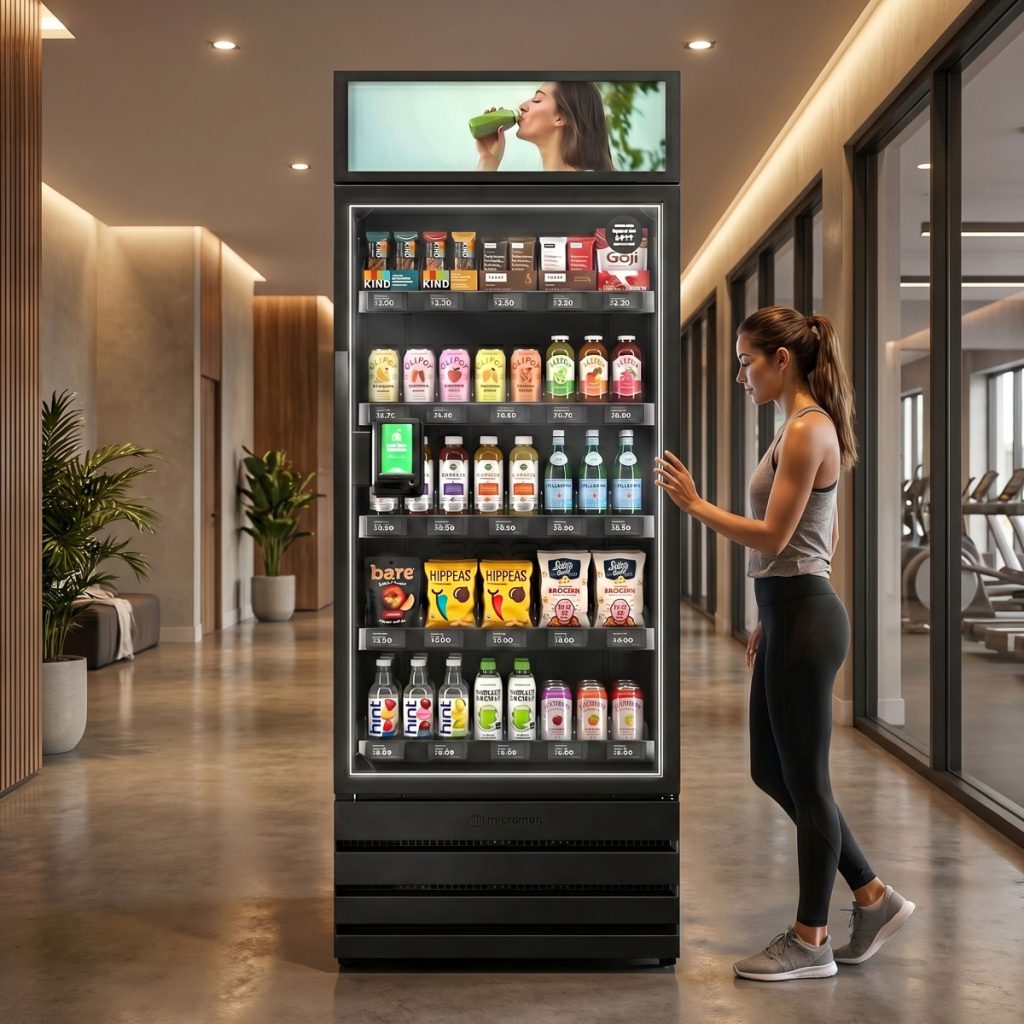
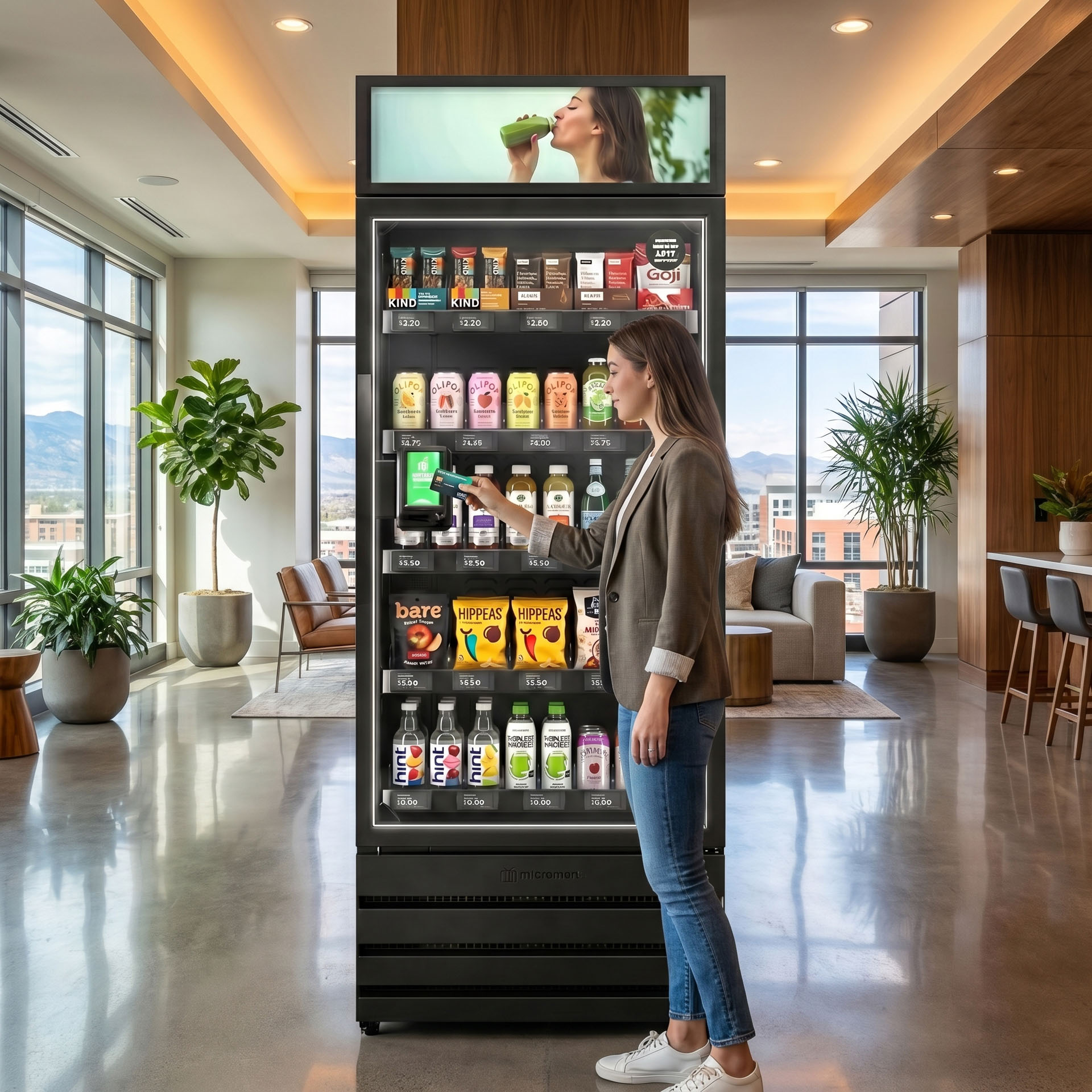
    Smart vending cabinet near a fitness center in a Denver multifamily apartment building.

    Multifamily properties are a natural fit because residents live with the amenity every day. They may use it after work, during remote-work days, after the gym, during move-in, or late at night when nearby stores are inconvenient.

    Smart vending can support:

    • resident lounges
    • mailrooms and package areas
    • fitness-adjacent spaces
    • coworking rooms
    • lobbies
    • student housing common areas
    • underused interior corridors with good visibility

    The strongest multifamily use cases are not about replacing every nearby retail option. They are about giving residents one useful, reliable option inside the building.

    Office and mixed-use properties have a different angle

    Office and mixed-use properties may use smart vending differently. Employees and tenants may need afternoon snacks, quick meals, drinks for late meetings, or visitor-friendly convenience near common areas.

    For these properties, the decision often depends on:

    • employee schedule patterns
    • meeting and visitor traffic
    • whether the building already has food service
    • how much space is available
    • whether the amenity serves tenants, guests, or both
    • service access and security rules

    Smart vending can complement coffee service, break rooms, and nearby retail. It should not be positioned as a universal substitute for a cafeteria or staffed food program when those are truly needed.

    The amenity will be judged by daily use

    Real estate teams are becoming more disciplined about amenities. A feature that tours well but does not get used can become expensive decoration. A practical amenity that residents use repeatedly can support the everyday experience more quietly.

    Smart vending has an advantage because the use case is simple. People understand food, drinks, and essentials. The challenge is execution:

    • Is the cabinet easy to find?
    • Does it look appropriate for the property?
    • Are the products relevant?
    • Is it stocked when residents need it?
    • Are payment questions handled by the provider?
    • Does the property team stay out of the operation?

    The future will favor providers that can answer those questions with service, not just software.

    Proof will matter more than promises

    Real estate teams should be cautious with broad claims about resident satisfaction, rent growth, or ROI unless a provider can explain the evidence behind them. Usage data is more useful than generic promises.

    AI Vending’s downtown Denver case study, published March 23, 2026, reported 60.7% resident adoption, 30.4% monthly usage, and 25.9% of transactions between 10 PM and 5 AM at an Avenue5 Residential-managed property. Those numbers do not guarantee the same outcome elsewhere, but they show why property teams should evaluate real resident behavior, not just product lists.

    The best future smart vending conversations will be grounded in what residents actually do after installation.

    What will not change

    Even as the technology improves, the basics will still decide whether the amenity works:

    • good placement
    • clear ownership of service
    • reliable restocking
    • appropriate product mix
    • safe, visible access
    • building-compatible hardware
    • realistic expectations
    • a provider that responds when needed

    Smart vending will not fix a poor location, weak product planning, or a vendor that disappears after installation. Technology can support the operation, but it cannot replace accountability.

    Questions Denver real estate teams should ask

    Before treating smart vending as part of the amenity roadmap, ask:

    • Which resident, tenant, employee, or guest behavior are we trying to support?
    • Where would the unit be visible without disrupting the building?
    • What product categories fit the audience?
    • Who handles stocking, payment support, refunds, maintenance, and product updates?
    • Can the product mix change after launch?
    • What data will the provider review?
    • What proof can the provider share from comparable properties?
    • What does the onsite team have to do after installation?
    • How will we know whether the amenity is working?

    The final question is important. Future-ready amenities need follow-through after the ribbon-cutting.

    A practical future, not a futuristic one

    The strongest future for smart vending in Denver real estate is practical. It is not about making every building feel like a tech demo. It is about adding a useful onsite retail amenity that can flex with resident and tenant needs while staying off the property team’s workload.

    For Denver and Colorado properties, smart vending should be evaluated as part of the broader amenity mix: a daily-use convenience feature with modern payment, managed service, and product decisions guided by real demand.
    The right next step is a property-specific conversation about traffic, placement, audience, product categories, and service expectations.
  • Premium Smart Vending for Denver Luxury Apartments: A Class A Amenity Upgrade

    Premium Smart Vending for Denver Luxury Apartments: A Class A Amenity Upgrade

    Premium Smart Vending for Denver Luxury Apartments: A Class A Amenity Upgrade

    Premium smart vending can help Denver luxury apartments add a Class A amenity that residents use after the tour is over: 24/7 access to drinks, meals, snacks, frozen items, and essentials in a clean, cashless, design-conscious format. The real decision for a property team is whether the setup fits the building, improves resident convenience, and stays fully off the onsite team’s workload.

    Quick Answer

    For Class A Denver apartments, premium smart vending works best as a fully managed smart store amenity. The right setup should look polished in a lobby, mailroom, fitness area, or resident lounge; support cashless grab-and-go shopping; offer a product mix that matches resident behavior; and include provider-managed stocking, service, and support.

    What Makes Smart Vending Premium?

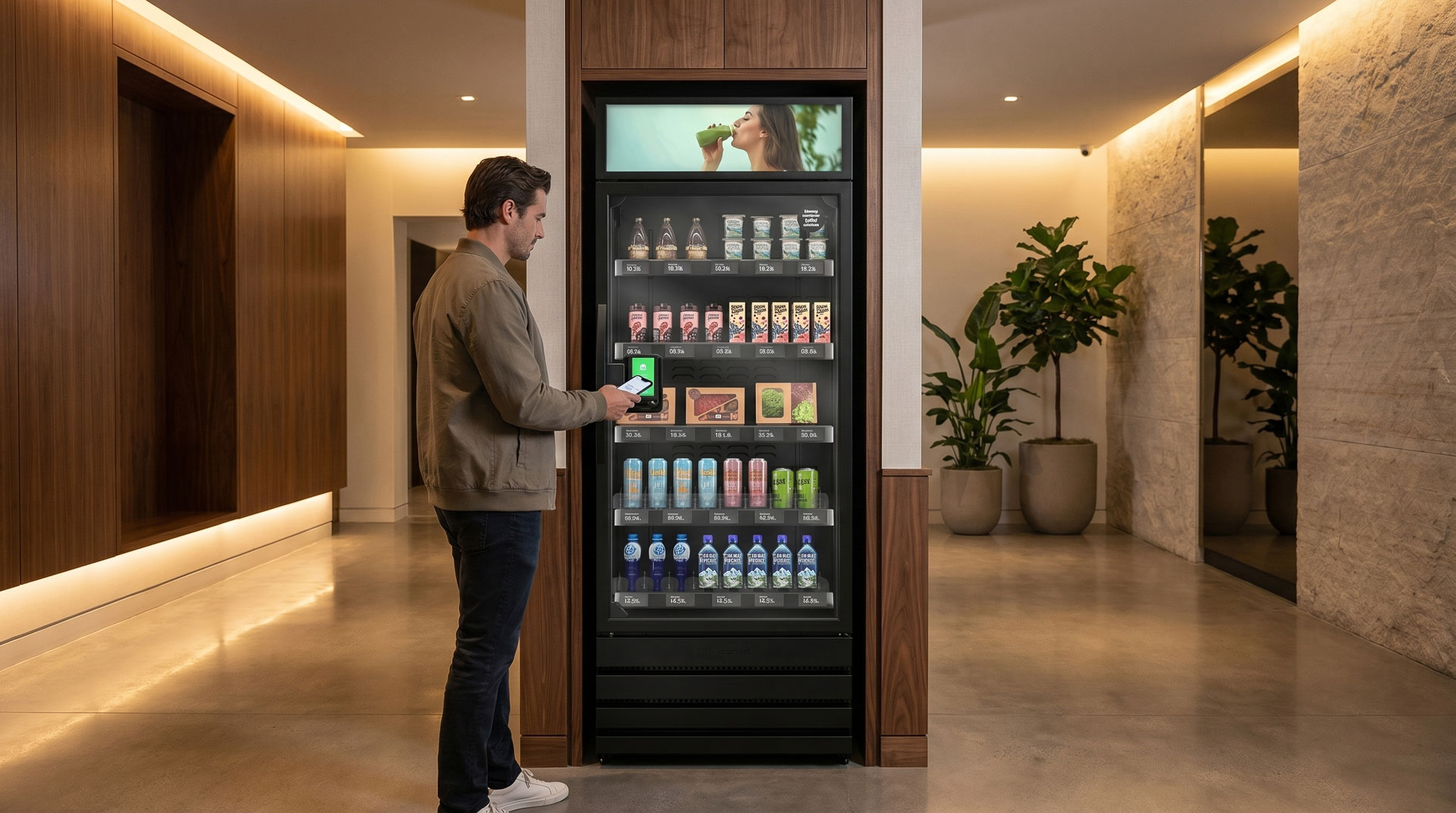
    Premium smart vending is different from a snack machine with a card reader. The better category is closer to a compact onsite retail amenity: residents open a glass-front smart cabinet, take one or more items, close the door, and receive a digital receipt.

    That shopping flow matters in a luxury apartment building because the amenity has to feel like it belongs in the property. Residents should not have to fight a spiral coil, carry cash, or settle for a narrow snack selection that looks forgotten after installation.

    A premium setup usually has five qualities:

    • modern glass-front presentation
    • cashless payment with card and mobile wallet support
    • refrigerated, pantry, or freezer cabinet options
    • a product mix that can include drinks, snacks, meals, and essentials
    • a service model where the provider handles stocking and support

    The hardware is only part of the upgrade. The operating model is what keeps the amenity from becoming another task for the leasing office.

    Why Class A Properties Evaluate This Differently

    Class A residents compare the entire building experience. Fitness centers, package rooms, coworking spaces, lounges, and pet amenities all shape whether the property feels current after move-in. A vending area that looks like a leftover breakroom fixture can work against that standard.

    Premium smart vending fits a different expectation. It gives residents a practical convenience they can use at normal and off-hour moments:

    • a drink after the fitness center
    • a quick meal after a late shift
    • a snack before leaving for work
    • a frozen item when delivery feels like too much
    • a basic essential without leaving the building

    For managers, the amenity also has to pass a practical test. It should improve resident convenience without asking staff to monitor inventory, choose products, handle refunds, or chase service requests.

    The Amenity Upgrade Is Operational, Not Just Visual

    The most common mistake is evaluating premium smart vending as a design object only. A sleek cabinet can still disappoint residents if the product mix is wrong, the cabinet is empty, or support is unclear.

    Class A properties should evaluate the operating model in four areas:

    AreaWhat to Look For
    PresentationEquipment that fits the finish level of the common area
    Product mixSnacks, beverages, meals, frozen items, or essentials matched to resident demand
    ServiceProvider-managed restocking, cleaning, maintenance, and support
    PlacementA visible, convenient location with power, airflow, and enough resident traffic

    The provider should be able to explain who owns each part of the operation. If the answer puts inventory, product selection, payment questions, or routine service back on the property team, it is not really a hands-off amenity.

    Where Premium Smart Vending Works Best

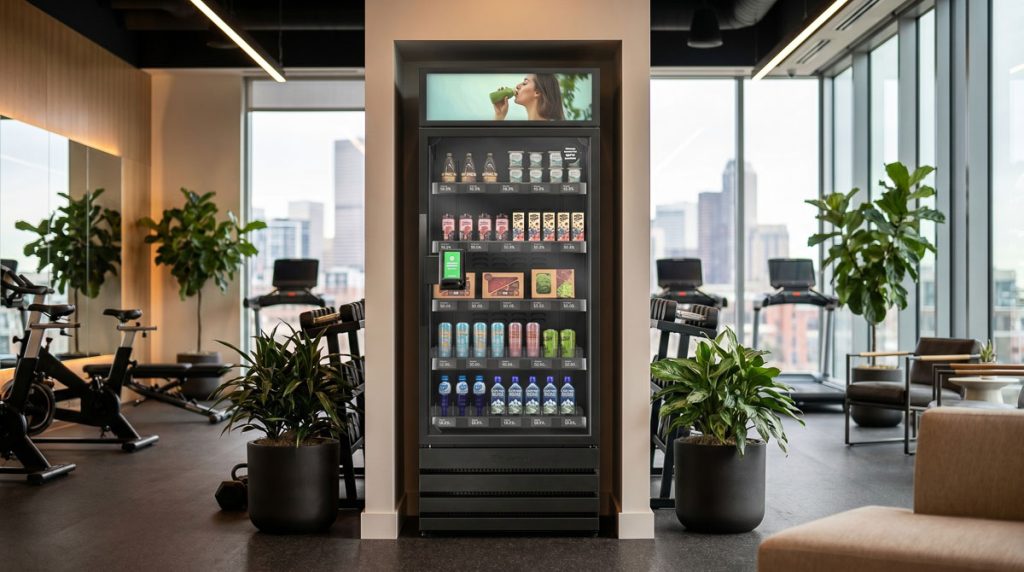
    Automated smart store micro-market integrated into a modern gym and fitness center.

    The right location depends on the building, but Class A apartment communities usually have a few strong candidates.

    Lobby or mailroom placements work when there is consistent resident traffic and enough room for the cabinets to feel intentional instead of squeezed in. Fitness-area placements work when the product mix includes drinks, protein options, and quick recovery items. Resident lounges can support broader grab-and-go selections, especially when residents already use the space for work, socializing, or package pickup.

    The setup should also respect the building’s physical limits. Refrigerated cabinets need proper airflow. Smart systems need reliable connectivity. The cabinet should be easy for residents to find, but not placed where it blocks circulation or looks like an afterthought.

    For Denver properties, local service coverage matters too. A premium amenity loses value quickly if the operator cannot keep it stocked, clean, and working.

    Premium Smart Vending vs. Traditional Vending

    Traditional vending can still work in some lower-traffic or cost-sensitive locations. For luxury apartments, the gap is usually in experience, presentation, and flexibility.

    CategoryTraditional VendingPremium Smart Vending
    Resident experienceOne item at a time, often coil-basedOpen-browse, grab-and-go shopping
    PaymentMay include cash, card, or bothCashless cards and mobile wallets
    Product rangeOften snacks and drinksCan support snacks, drinks, meals, frozen items, and essentials
    AppearanceCan feel utilitarianDesigned for modern common areas
    OperationsDepends heavily on vendor reliabilityBest when fully managed by the provider
    Property fitFunctional but often datedBetter fit for Class A amenity expectations

    The point is not that every building needs the largest setup. The point is that luxury properties should evaluate vending as part of the resident experience, not as a hallway machine purchase.

    What Residents Actually Notice

    Residents usually do not care about the technical language behind smart vending. They notice whether the amenity is convenient, stocked, clean, and worth using.

    That means a strong setup should answer simple resident questions:

    • Is there something I actually want?
    • Can I buy it quickly?
    • Does the machine look clean and current?
    • Is it available when nearby stores are closed?
    • If something goes wrong, is there a clear support path?

    For the property team, those resident questions become operating questions. Who adjusts the product mix? How often is the cabinet restocked? How are payment issues handled? What happens when resident demand shifts from snacks to meals or from drinks to frozen items?

    A Denver Usage Signal Worth Noting

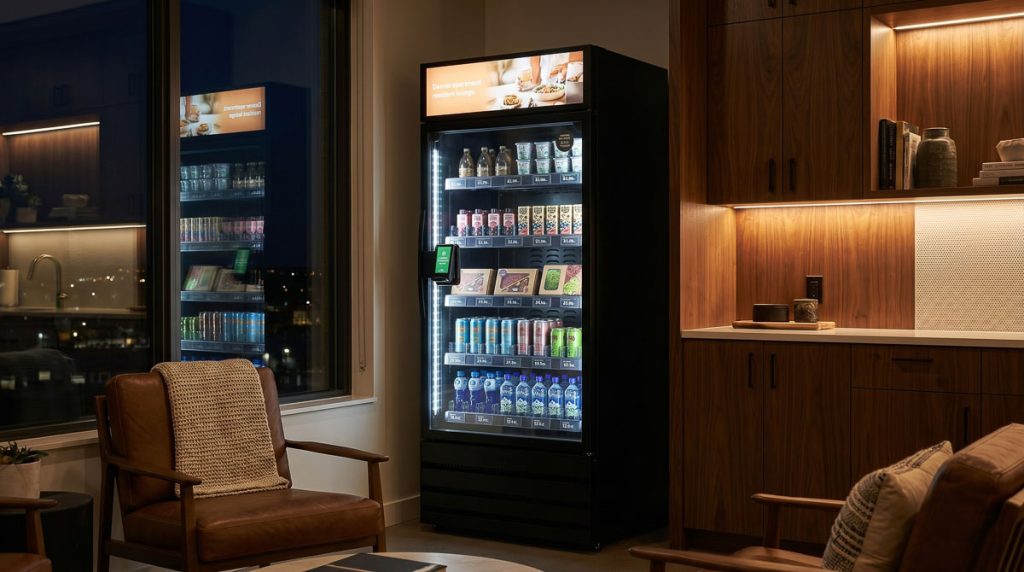
    Brightly lit luxury smart store kiosk in a high-end building lobby at night.

    AI Vending’s downtown Denver case study, published March 23, 2026, gives one useful signal for luxury apartment teams evaluating this category. In that property, the smart store saw 60.7% resident adoption, 30.4% monthly usage, and 25.9% of transactions between 10 PM and 5 AM.

    The late-night number is the detail property teams should pay attention to. Residents use convenience amenities outside leasing-office hours, and a 24/7 smart store can serve those moments without adding a staffing requirement.

    The same case study reported 31.7% stronger demand for full meal options than the operator’s per-location average. That does not mean every building needs the same product mix. It means product selection should be adjusted around actual resident behavior.

    What a Full-Service Model Should Include

    A full-service smart vending model should make the division of labor clear. The property should provide appropriate space and power. The operator should handle installation, product planning, restocking, payment support, maintenance, and ongoing adjustments.

    In AI Vending’s model, the property team does not manage inventory, stocking, service, customer support, or payment issues. That matters for Class A apartments because an amenity that creates staff work can quickly become an operational distraction.

    Before choosing a provider, use the conversation as a practical selection test:

    • Who owns the equipment?
    • Who pays for installation?
    • Who chooses the initial product mix?
    • Who changes the selection after launch?
    • Who handles payment issues?
    • Who restocks the cabinets?
    • What connectivity does the system use?
    • What are the airflow and placement requirements?
    • Can the setup support refrigerated, pantry, and freezer items?
    • How will the cabinet fit the common-area design?

    The answers should sound operationally specific. Vague promises about convenience are not enough for a luxury property.

    How to Make the Amenity Feel Class A

    For a smart vending setup to feel like a real Class A amenity, the details have to work together.

    Start with placement. The cabinet should sit where residents already move, not in a hidden corridor. Then match the product mix to the building. A fitness-heavy community may need more drinks and protein options. A downtown building may need fresh meals, late-night snacks, and essentials. A property with larger units and longer resident stays may benefit from frozen or pantry items.

    Presentation matters too. The cabinet should look intentional in the room, with clean merchandising and enough surrounding space. A premium amenity should not feel like a vendor dropped off equipment and left.

    Finally, treat the launch as the beginning of the work, not the end. The best product mix after 60 days may not be the first product mix. Usage patterns should guide adjustments.

    FAQs

    Is premium smart vending a good fit for every luxury apartment building?

    Not automatically. It works best when there is enough resident traffic, a practical common-area location, power access, and a provider that manages the operation. A smaller or low-traffic property may need a lighter setup.

    Does smart vending replace a market or staffed cafe?

    Usually no. It is better understood as a compact 24/7 convenience amenity. It can complement lounges, fitness areas, package rooms, or larger resident amenity spaces without requiring staff.

    What products should a Class A apartment smart vending setup include?

    The best mix depends on the property. Common categories include beverages, snacks, fresh meals, frozen items, and everyday essentials. The mix should change based on what residents actually buy.

    Who should handle restocking and support?

    For a Class A property, the provider should handle restocking, service, maintenance, and support. Property staff should not be expected to run the smart vending program.

    A Better Standard for Apartment Convenience

    Premium smart vending is worth evaluating when a Denver luxury apartment property wants a useful amenity that feels modern, looks appropriate in a high-end common area, and does not add work for the onsite team.

    The strongest setup starts with good placement, clean presentation, resident-fit product selection, reliable service, and a clear operating model. Once those pieces are in place, the smart store becomes more than a vending upgrade. It becomes a practical 24/7 convenience layer for the building.

    AI Vending can help Denver property teams evaluate the right cabinet mix, placement, and service model before committing space to a smart store amenity.


  • Denver Apartment Amenities That Actually Increase Resident Retention

    Denver Apartment Amenities That Actually Increase Resident Retention

    Denver Apartment Amenities That Actually Increase Resident Retention

    The Denver apartment amenities most effective at increasing resident retention in 2026 combine daily practicality with low friction — on-site fitness centers, 24/7 package lockers, coworking lounges, and smart stores. On-site smart vending fills one of the highest-frequency daily needs: access to snacks, beverages, and household essentials without leaving the building. It delivers measurable satisfaction and renewal lift with zero additional management burden on property staff.

    In Denver’s multifamily market, resident retention is the KPI that matters most. Turnover costs — vacancy loss, make-ready expenses, leasing commissions, and marketing spend — can easily exceed $3,000 to $5,000 per unit depending on the property class and submarket. Every lease renewal you secure is money that stays in the building.

    The challenge is that resident expectations keep rising. What was a differentiator two years ago is a baseline expectation today. Property managers are constantly being asked to do more with the same team and the same budget. The key is finding amenities that have a high impact on resident satisfaction without creating new operational obligations for your staff.

    The Amenities Denver Renters Actually Want in 2026

    Resident preference data from the National Multifamily Housing Council (NMHC) and other industry research consistently surfaces the same themes: residents want convenience, reliability, and connection. They want amenities they actually use every day — not a rooftop lounge that looks great in photos but gets used four times a year.

    Here’s how Denver properties are scoring on the amenities that matter most:

    Amenity Daily Use? Zero-Management Option? Retention Impact
    Smart Store / Vending Yes Yes (full-service vendor) High
    Package Lockers Yes Yes (third-party management) High
    In-Unit Washer/Dryer Yes N/A (in-unit) Very High
    High-Speed Wi-Fi Yes Yes (provider-managed) High
    Fitness Center 3–5x/week Partial (monthly cleaning) Medium-High
    Coworking Lounge Variable Low (furniture, cleaning) Medium
    Rooftop / Pool Seasonal Low (seasonal maintenance) Medium
    Dog Wash Station Weekly Low (cleaning schedule) Medium

    The pattern is clear: the amenities with the highest retention impact are those used daily, and the best ones can be fully outsourced to a specialist vendor. On-site convenience hits both marks.

    Why On-Site Convenience Drives Renewals

    Consider the daily friction points a Denver apartment resident faces when their building lacks on-site convenience: running out of coffee before a morning call, needing a water bottle for a workout, forgetting a snack for a late work session. Each small inconvenience requires leaving the building — a five-to-fifteen minute round trip that residents consciously or unconsciously associate with their living experience.

    When those same residents have a smart store on-site, their perception of the building fundamentally shifts. The property stops being just an address and becomes a self-sufficient environment. That shift in perception is the substrate of lease renewals.

    This plays out particularly strongly in Denver because of the city’s demographics. Denver consistently ranks among the top metros in the country for percentage of young professionals working remotely or in hybrid arrangements. Residents who are in their buildings more are also more aware of — and more dependent on — the quality of their on-site amenities. A well-stocked smart store in 2026 has roughly the same psychological significance as a reliable parking situation: when it’s good, residents don’t think about it; when it’s missing, they feel it every day.

    Smart Stores: The Zero-Effort Amenity That Pays for Itself

    For property managers weighing the cost-benefit of adding or upgrading on-site convenience, the smart store model removes the traditional objections.

    There is no staffing cost. Unlike a leased coffee shop or managed retail space, a smart store requires no on-site employees. The vendor handles everything.

    There is no inventory management. AI Vending’s system monitors product levels in real time and dispatches restocking based on actual consumption data — not a fixed calendar, and not a report from your office.

    There is no maintenance burden. Any technical issue — payment terminal, cooling unit, display screen — is handled by our support team. Property staff need not be involved at any step.

    There is no capital outlay. AI Vending provides and installs the equipment. The property provides space and electrical access. The service is sustained through product revenue.

    What you get in return: a fully operational, resident-valued amenity that is available 24 hours a day, 365 days a year, without adding a single task to your team’s workload.

    Related reading: Smart Store vs. Traditional Vending Machine: What Denver Properties Need to Know | Smart Vending Denver: Why AI-Powered Stores Are Replacing Old Machines

    Frequently Asked Questions

    Q: How do I justify the space commitment for a smart store to my ownership group? A: Frame it in terms of retention value. If a smart store helps retain even two additional residents per year who would otherwise have moved, the avoided turnover costs alone will comfortably exceed any opportunity cost from repurposing the space.

    Q: What size building works best for a smart store? A: Smart stores are most effective in communities of 100 units or more, where daily foot traffic is sufficient to sustain a diverse product selection. For smaller buildings, a single or dual vending machine may be the more appropriate choice — and AI Vending serves both formats.

    Q: Can we brand the smart store as part of our property’s identity? A: Yes. We work with properties to customize the store’s signage and visual presentation to align with the community’s brand and design language.


    Add a Zero-Effort Amenity That Residents Actually Use

    The most effective Denver apartment amenities are ones that residents interact with daily — and that your team never has to manage. We deploy the best smart store machines in the industry, powered by AI analytics to ensure they are always stocked at the right time with the products your tenants love most.

    Give your residents a reason to stay. Get Your Free Site Survey & Amenity Report

  • The 7 Best Amenities for Multifamily Properties in Denver (2026 Guide)

    The 7 Best Amenities for Multifamily Properties in Denver (2026 Guide)

    In the competitive Denver multifamily market, standard amenities like a gym or a pool are no longer enough to stand out. With a surge in new developments and a savvy renter demographic that values lifestyle, convenience, and technology, property managers must offer more to attract and retain residents.

    Denverites live a unique lifestyle—balancing outdoor adventure with urban professionals’ needs. To maximize occupancy and resident satisfaction, your property needs amenities that reflect the “work hard, play hard” culture of the Mile High City.

    Here are the top amenities that are proving to be game-changers for multifamily properties in Denver this year.

    1. Pet-Friendly Facilities & Dog Parks

    Denver is consistently ranked as one of the most dog-friendly cities in America. For many renters, their dog is their roommate.

    • On-site Dog Parks: A fenced run is essential for urban properties.
    • Pet Wash Stations: After a muddy hike in the foothills, a dedicated dog wash station keeps units clean and residents happy.
    • Pet Spas & Services: Partnering with mobile groomers or walkers can add an extra layer of luxury.

    2. Outdoor & Ski Storage

    With the Rockies in our backyard, Denver residents have gear. Skis, snowboards, mountain bikes, and kayaks take up significant space.

    • Secure Gear Lockers: Offering heavy-duty, secure storage for expensive outdoor equipment is a huge selling point.
    • Bike Repair Stations: A dedicated bench with tools and an air pump appeals to the large cycling community.

    3. Co-Working Spaces & Work-From-Home Lounges

    Remote work is here to stay. Residents are looking for more than just a desk in their unit; they want a “third place” within their building to focus and take calls.

    • Private Phone Booths: Soundproof pods for Zoom calls are highly coveted.
    • High-Speed Community Wi-Fi: Ensure dead zones are non-existent in common areas.
    • Coffee Bars: A high-quality coffee station creates a café vibe right in the lobby.

    4. Smart Home Technology

    Tech-enabled living isn’t just a perk; it’s an expectation. Smart amenities provide convenience for residents and operational efficiency for managers.

    • Keyless Entry: Smart locks allow for easier guest access and fewer lockouts.
    • Smart Thermostats: Eco-conscious Denverites appreciate the energy savings and control.

    5. Elevated Outdoor Living Areas

    Denver boasts 300 days of sunshine. Capitalize on it with outdoor spaces that act as an extension of the living room.

    • Rooftop Decks: Views of the mountains or city skyline are premium value drivers.
    • Grilling Stations & Fire Pits: These encourage community and social interaction year-round.

    6. EV Charging Stations

    As electric vehicle adoption grows, especially in eco-friendly Colorado, EV charging is becoming a non-negotiable for many car owners. Installing Level 2 chargers can be a deciding factor for affluent tenants.

    7. The Ultimate Convenience: On-Site Smart Stores

    Perhaps the most overlooked but high-impact amenity is immediate 24/7 access to essentials. Residents shouldn’t have to drive to the grocery store for a late-night snack, a forgotten ingredient, or morning cold brew.

    Why “Smart Stores” Are the Future of Multifamily Retail

    Traditional vending machines with stale chips are out. AI-powered Smart Stores are in. These mini-markets offer fresh food, premium beverages, and household necessities right in the lobby or common area.

    Imagine your residents being able to:

    • Grab a healthy wrap or salad for lunch without leaving the building.
    • Pick up laundry detergent or sunscreen on their way out.
    • Enjoy a cashless, seamless checkout experience that takes seconds.

    Upgrade Your Property with AI Vending

    At AI Vending, we specialize in bringing this next-generation amenity to Denver multifamily properties. Our smart stores are designed to elevate your resident experience at zero cost to you.

    • Tailored Selection: We curate products based on your demographics—from kombucha and protein bars to everyday toiletries.
    • 24/7 Availability: Always open, always stocked.
    • Hands-Off Management: We handle everything—installation, stocking, maintenance, and support.

    Ready to stand out in the Denver market?
    Give your residents the convenience they deserve. Contact AI Vending today to request a free rendering and see how a smart store can fit perfectly into your property.