Tag: Leasing

  • Using Vending Perks for Resident Retention Events

    Using Vending Perks for Resident Retention Events

    Using Vending Perks for Resident Retention Events

    Vending perks can make resident retention events more useful when they give residents something immediate, practical, and easy to redeem. Instead of relying only on coffee carts, one-time snacks, or generic giveaways, property teams can use smart vending credits, product drops, sampling moments, and 24/7 onsite access to support renewal campaigns and resident appreciation.

    The point is not to turn vending into a party favor. The stronger use is to connect an event with an amenity residents can keep using after the event ends.

    Quick answer

    Using vending perks for resident retention events means offering residents a temporary benefit tied to an onsite vending or smart store amenity. That might include free item credits, renewal-week snack drops, move-in welcome credits, resident appreciation promos, or curated product moments around events.

    The best programs are simple for residents and low-lift for the property team. The vending provider should manage product availability, payment support, promotion setup, restocking, and service so the event does not become another operational task.

    Why vending works for retention events

    Resident retention events work best when they create a real reason for residents to engage with the property. Food and beverages are already familiar event tools, but traditional event catering is short-lived. Once the event is over, the benefit disappears.

     Smart vending can extend the value. Residents can redeem perks when the timing actually works for them, including after work, during late-night routines, or on weekends. That flexibility matters in communities where residents have different schedules.

    Vending perks can support:

    • renewal season
    • resident appreciation weeks
    • move-in and onboarding
    • finals or student-housing events
    • fitness center programming
    • package-room or lobby activations
    • new amenity launches

     The offer should feel useful, not gimmicky. A resident is more likely to remember a convenient onsite amenity if the event helps them try it naturally.

    What counts as a vending perk?
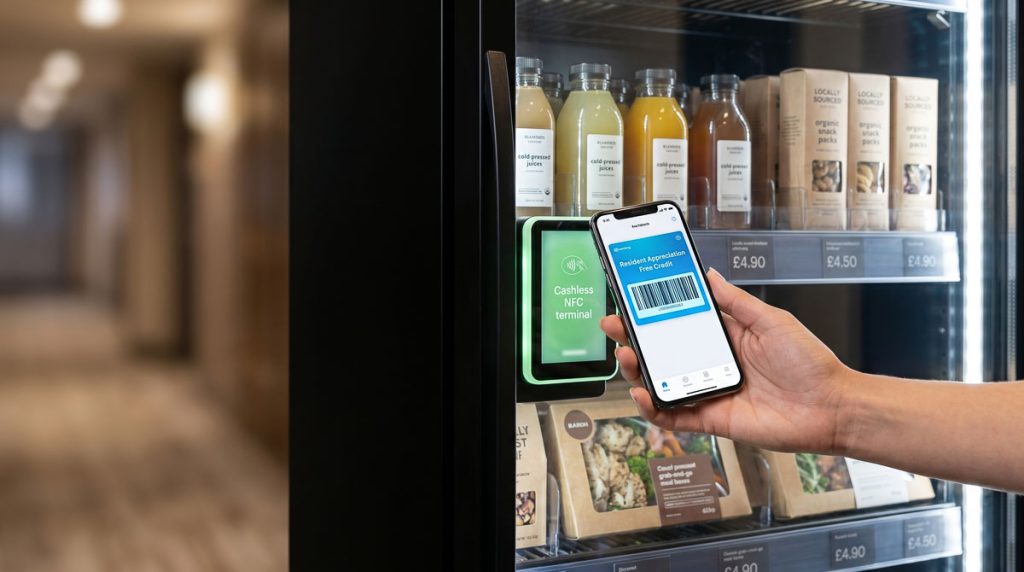
    Resident scanning a free credit barcode on a smartphone at an AI Vending 
cashless smart cabinet terminal stocked with premium local snacks and cold 
beverages in a luxury apartment building

    A vending perk does not have to be complicated. The strongest options are easy to explain and easy to redeem.

    Perk Type

    How It Works

    Best Use

    Free item credit

    Resident receives a one-time credit or equivalent promotion

    Amenity launch, renewal push, resident appreciation

    Product sampling

    Provider stocks a curated set of featured items

    Wellness event, local brand feature, fitness programming

    Time-limited promo

    Certain products are highlighted during a campaign

    Move-in week, finals week, leasing events

    Staff-hosted demo

    Property team introduces the amenity while provider supports use

    First launch or resident event

    Themed assortment

    Product mix changes for an event or season

    Summer pool event, study week, holiday appreciation


    The right approach depends on the building, audience, and provider capabilities. Property teams should confirm exactly what can be supported before promising perks in resident communications.

    Connect perks to a real resident need

    The most useful vending perks are tied to routines residents already have. A fitness-center event might feature hydration and protein snacks. A move-in event might focus on drinks, quick meals, and forgotten essentials. A renewal event might use a small thank-you credit that introduces residents to the smart store.

    This is stronger than handing out a random coupon. The perk works because it shows residents how the amenity fits daily life.

    Property teams should think through:

    • When are residents most likely to use the amenity?
    • Which product categories match the event?
    • How will residents learn how the smart store works?
    • What happens if a featured product sells out?
    • Who answers payment or support questions?
    • How will the provider restock after the event?

    If the property team cannot answer those questions, the event may create confusion instead of goodwill.

    Use events to introduce the amenity

    Resident events are a useful way to teach residents that the amenity exists. Many residents will not change habits just because a new machine appears in a lobby or lounge. A small event gives the property team a reason to point it out.

    The introduction should be simple:

    • what the amenity offers
    • where it is located
    • how residents pay
    • when it is available
    • who handles support

    Avoid overexplaining the technology. Residents need to know how to use the smart store and why it is useful. Property teams need to know the provider is handling the operation.

    A usage signal for after-hours convenience

    Retention events should not promise renewal results from a vending promotion. Still, local usage data can help property teams understand why a 24/7 amenity is worth introducing during resident engagement campaigns.

    AI Vending’s downtown Denver case study, published March 23, 2026, reported 60.7% resident adoption, 30.4% monthly usage, and 25.9% of transactions between 10 PM and 5 AM at an Avenue5 Residential-managed property.

    Those numbers are not a guarantee for another property. They are useful because they show that residents may use onsite convenience outside normal office hours. A retention event can help residents discover the amenity, but continued value depends on stocking, service, location, and product fit.

    Retention value depends on follow-through
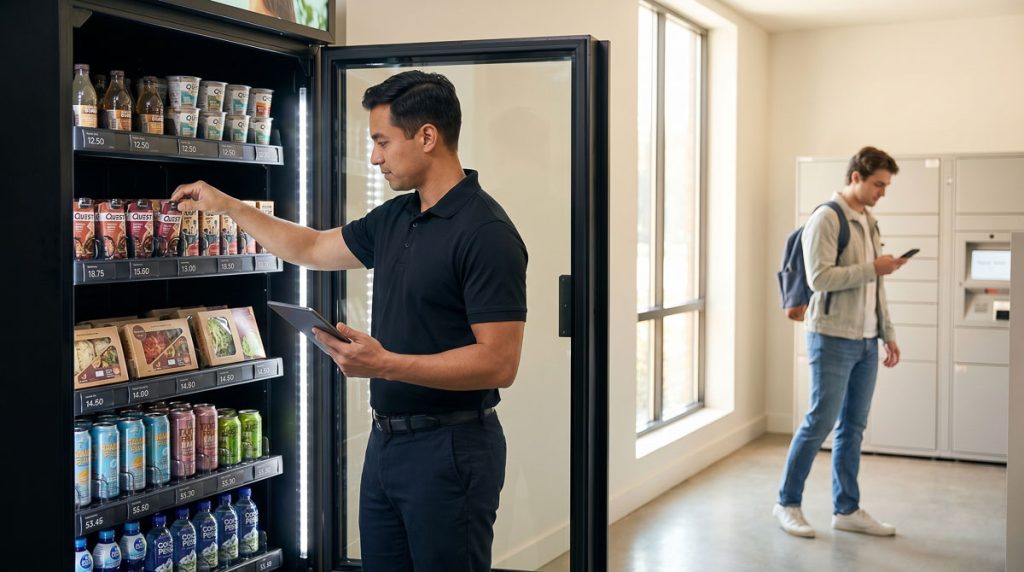
    AI Vending service representative restocking a smart vending cabinet with 
fresh snacks and meals in a modern apartment mailroom corridor while a 
resident picks up a package undisturbed in the background.

    A vending perk can create a good first impression, but retention value comes from consistent usefulness after the event. If the unit is empty, poorly stocked, hard to use, or slow to service, the event will not matter.

    That is why the operating model is part of the retention strategy. A smart vending amenity should be monitored, restocked, maintained, and adjusted based on what residents actually buy. It should not become a task for onsite staff.

    In AI Vending’s full-service model, the property provides space and power while the operator installs the equipment, curates products, monitors inventory, restocks, maintains the unit, and handles support. That keeps the event mechanics and the day-after service from landing on the onsite team.

    How to plan a vending perk event

    Start with the event goal. A renewal campaign, new amenity launch, and resident appreciation week should not use the same vending perk by default.

    Then decide:

    1. Which resident group is the event for?
    2. What product categories fit the moment?
    3. Where should the vending unit be promoted?
    4. How long should the perk run?
    5. What does the provider need to configure?
    6. How will the property communicate the perk?
    7. Who handles support questions?
    8. How will usage inform future stocking?

    The more specific the plan, the easier it is to keep the event clean and low-lift.

    When vending perks may not be worth it

    Vending perks may underperform if the building does not have enough resident traffic near the unit, if the available product mix does not match the event, or if the provider cannot configure the promotion cleanly.

    They may also be the wrong tool when the property is trying to solve a bigger resident-experience issue. A vending credit will not fix slow maintenance response, poor communication, or an amenity that is consistently out of service. It should support a broader resident experience strategy, not distract from core operations

    Finally, avoid overpromising. A perk can introduce residents to a useful amenity, but retention depends on the total resident experience.

    Mistakes to avoid

    The first mistake is making the perk too hard to redeem. If residents need a long set of instructions, the event loses momentum.

    The second mistake is promoting products that are not stocked well enough. A perk tied to an empty machine creates frustration.

    The third mistake is making the onsite team responsible for the mechanics. If staff are troubleshooting payments or restocking products, the vending program is not functioning as a managed amenity.

    The fourth mistake is treating the event as the whole strategy. Retention depends on the day-after experience too.

    Make the event useful beyond the event

    Vending perks work best when they introduce residents to a useful everyday amenity. The event creates attention. The smart vending program earns continued use through product fit, availability, payment simplicity, and reliable service.

    For property teams, the right question is not “Can we give residents a free snack?” It is “Can this event help residents discover a convenience amenity they will actually use?”

    AI Vending can help property teams design vending perks that match the building, resident profile, product mix, event calendar, and service plan.
  • Winning the Denver Amenity War: How Properties Stand Out

    Winning the Denver Amenity War: How Properties Stand Out

    Winning the Denver Amenity War: How Properties Stand Out

    Winning the Denver amenity war is not about adding the loudest feature. Properties stand out when they choose amenities residents actually use, that tour well, and that do not create extra work for the onsite team. A fully managed smart vending or smart store amenity can help because it solves a daily convenience need: quick access to drinks, snacks, meals, and essentials inside the building.

    For Denver property teams, the better question is not “What amenity looks impressive?” It is “What amenity will residents notice, use, and appreciate after move-in?”

    Quick answer

    Denver properties can stand out by prioritizing amenities that are visible, useful, reliable, and operationally simple. Smart vending fits that standard when it gives residents 24/7 convenience while the provider handles stocking, monitoring, payments, service, and product changes.

    It should not be the only amenity strategy. It works best as a practical layer that supports everyday resident routines and makes existing common areas more useful.

    What the amenity war really means

    The phrase “amenity war” can make the market sound like a contest of bigger gyms, flashier lounges, and more expensive finishes. Those features can matter, but residents also judge a property through smaller daily moments.

    Can they grab a drink after the fitness center? Is there a quick meal option when they get home late? Can they get something small without leaving the building? Does the property feel current without making staff manage another program?

    Those practical moments shape resident perception. A property does not always need a dramatic new amenity. Sometimes it needs a better use of the space residents already pass every day.

    The strongest amenities share four traits

    Strong resident amenities usually pass four tests:

    1. They are easy to understand.
    2. Residents use them repeatedly.
    3. They fit the property’s audience and traffic patterns.
    4. They do not create a hidden staff burden.

    Smart vending can pass those tests when it is placed well and fully managed. Residents understand the value immediately. They can use it at different times of day. The product mix can change based on buying behavior. The property team does not have to stock shelves, troubleshoot payments, or monitor inventory.

    The same framework can help evaluate any amenity. If a feature looks good in a brochure but creates low usage, unclear value, or staff frustration, it may not help the property stand out for long.

    Where smart vending fits in the amenity mix

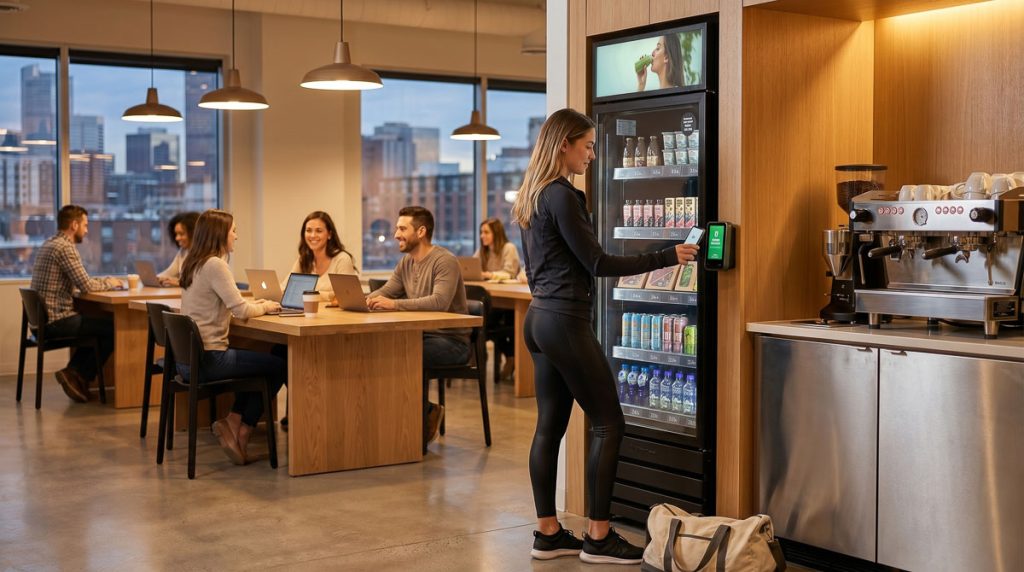
    Woman purchasing a snack from a self-service micro-market inside a modern coworking space lounge.

    Smart vending is most useful when it fills a real gap between larger amenities. A fitness center supports exercise, but residents may want hydration or protein afterward. A coworking lounge supports remote work, but residents may want coffee, snacks, or a quick meal. A package room brings residents to a common area, but it may not offer any everyday convenience.

    That is where a managed smart store can make existing amenities more useful. It does not replace the gym, lounge, or package room. It adds a convenience layer around those spaces.

    Good placements include:

    • lobbies
    • mailrooms and package areas
    • resident lounges
    • coworking areas
    • clubrooms
    • fitness-adjacent spaces
    • laundry rooms
    • parking-level vestibules where appropriate and secure

    The best placement is visible, easy to access, and tied to a resident routine.

    Comparing amenity options

    Every amenity has tradeoffs. Smart vending tends to compete well when the goal is useful daily convenience with low operational lift.

    Amenity optionWhat it can do wellWhat to evaluate
    Fitness upgradeImproves lifestyle value and tours wellCost, maintenance, space, usage concentration
    Coworking loungeSupports remote and hybrid residentsNoise, furniture upkeep, reservation behavior
    Package technologyReduces delivery frictionSpace, carrier adoption, resident education
    Coffee barCreates hospitality and morning valueStocking, cleaning, service ownership
    Smart vending or smart storeAdds 24/7 food, drinks, meals, and essentialsPlacement, product fit, provider service model

    The point is not that smart vending is better than every alternative. The point is that it can make an existing amenity stack more useful without requiring a major buildout.

    What local proof suggests

    Apartment resident buying a late-night snack at an illuminated smart kiosk in a dark lobby.

    AI Vending’s downtown Denver case study, published March 23, 2026, reported 60.7% resident adoption, 30.4% monthly usage, and 25.9% of transactions between 10 PM and 5 AM at an Avenue5 Residential-managed property. The same case study reported 31.7% stronger demand for full meal options than AI Vending’s per-location average.

    Those numbers are not a promise that every property will see the same results. They do show that residents may use onsite retail beyond standard daytime snack trips. Late-night access and meal options can matter when the amenity is placed, stocked, and managed around real behavior.

    For property teams trying to stand out, that is the important lesson. A useful amenity should serve the resident moments that already exist.

    How to avoid amenity bloat

    Amenity bloat happens when a property adds features without a clear resident job. The result can be a crowded amenity package, higher maintenance, and unclear value.

    Smart vending can avoid that problem if the property defines the job first:

    • Serve residents after nearby retail closes.
    • Support remote work and coworking areas.
    • Add food and drink convenience near the fitness center.
    • Make underused lobby or mailroom space more useful.
    • Offer a low-lift convenience option for residents and guests.

    If the job is unclear, the amenity will be harder to evaluate. If the job is clear, the product mix, placement, and service plan become easier to judge.

    What to ask a provider

    Before adding smart vending to an amenity strategy, property teams should ask:

    • Who owns stocking, service, payment support, and product changes?
    • What cabinet format fits our traffic and space?
    • How will the product mix support our resident profile?
    • Can the setup support drinks, snacks, quick meals, and essentials?
    • How often do you review performance and adjust inventory?
    • What happens when a product sells out, a payment issue happens, or equipment needs service?
    • How will the amenity look in a tour path or common area?

    The provider should answer with operational detail. A polished cabinet is only valuable if the service model keeps it stocked and reliable.

    When smart vending will not be enough

    Smart vending is not a full amenity strategy by itself. It will not replace a thoughtful leasing experience, well-maintained common areas, responsive maintenance, strong resident communication, or larger amenities that fit the property’s positioning.

    It also may not be right for a hidden, low-traffic, or poorly powered space. A smart store needs a real resident path and a provider that can manage the operation.

    For the right building, though, it can be a practical differentiator: visible on tours, useful after move-in, and simpler for staff than a self-managed market.

    How AI Vending supports Denver properties

    AI Vending installs and operates fully managed smart store amenities for Colorado properties. That means the cabinet, product curation, restocking, monitoring, payment support, and service stay with the operator.

    For Denver teams looking at the amenity mix, a site survey can clarify whether smart vending belongs in a lobby, mailroom, coworking area, fitness-adjacent space, or another high-traffic common area.

    FAQs

    Is smart vending a luxury amenity?

    It can support a premium amenity package, but its value is practical. Residents use it because it solves everyday convenience needs, not because it is flashy.

    Can smart vending help properties stand out on tours?

    Yes, if it is visible, clean, modern, and easy to explain. It should look like a managed resident convenience point, not an old vending machine hidden away.

    What products matter most?

    Common categories include drinks, coffee beverages, snacks, protein items, quick meals, and small essentials. The best mix depends on resident behavior.

    What should a Denver property do next?

    Start by identifying the resident moments your current amenities do not serve. Then talk to AI Vending about whether a fully managed smart store can fill that gap without adding work for staff.