Denver Vending Services for Car Dealership Customer Lounges
Denver vending services for car dealerships should be planned as a customer-facing amenity inside the dealership, not just an employee break-room perk. A smart vending cabinet can sit in a customer lounge, service waiting area, or guest-accessible hospitality space so shoppers and service customers have easy access to drinks, snacks, coffee, light meals, and essentials while they are onsite.
The same program can also support employees in break rooms, technician areas, and fixed-ops spaces, but the placement should start with the dealership experience customers actually see. For Denver dealerships, a store along a busy metro corridor, a service-heavy dealership with long morning wait times, and a multi-building auto group location may need different customer lounge placement, product mix, and service expectations.
Quick answer
Car dealerships should choose vending services that are customer-ready, cashless, professionally stocked, easy to service, and matched to the dealership’s layout. The best fit is usually a full-service smart vending or smart store model placed where customers already wait: the service lounge, customer waiting room, delivery area, or another visible hospitality space.
The provider should install the equipment, curate products, monitor inventory, restock, maintain the unit, and handle support. That lets the dealership offer a visible customer amenity without turning the front desk, service advisors, or office team into vending managers.
Why dealerships need a different vending plan
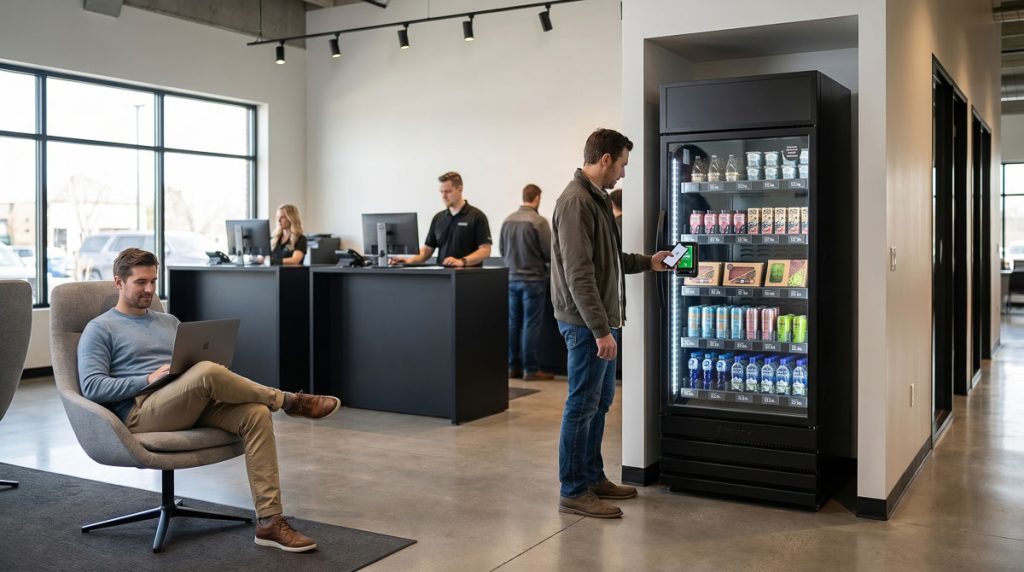
Dealerships have several traffic patterns under one roof, and the customer-facing spaces matter first. A customer waiting for an oil change has different needs than a technician on a short break, a sales associate between appointments, or a parts employee working through lunch.
That means the vending program should be planned around actual use cases inside the dealership:
- customer waiting rooms
- service lounges
- employee break rooms
- technician and fixed-ops areas
- parts departments
- body shop or recon areas
- after-hours staff access
A one-size-fits-all snack machine hidden in a staff area may miss the highest-visibility opportunity: serving customers while they wait. A stronger vending service considers who will use the amenity, when they will use it, and what products make sense for each customer-facing or employee-only location.
Front-of-house versus back-of-house vending
Customer-facing vending and employee-only vending should not be treated as the same setup. The dealership may need one polished, guest-ready unit in the customer lounge and a different product mix for staff-only spaces.
| Area | Primary Audience | Product Priorities | Presentation Priorities |
|---|---|---|---|
| Customer lounge | Service customers and guests | Drinks, low-mess snacks, coffee, mints, simple essentials | Polished, quiet, clean, easy to understand |
| Service waiting area | Customers waiting for maintenance | Water, snacks, quick breakfast, coffee | Visible but not disruptive |
| Sales floor support area | Sales team and guests | Drinks, caffeine, light snacks | Clean and brand-appropriate |
| Employee break room | Sales, admin, service, and parts staff | Filling snacks, meals, caffeine, hydration | Useful and easy to restock |
| Technician or fixed-ops area | Technicians and service staff | Fast snacks, drinks, meals where refrigeration is available | Durable, accessible, out of work paths |
Front-of-house vending should protect the customer experience because customers see it, use it, and associate it with the dealership’s hospitality. Back-of-house vending should support employees during long shifts without slowing down dealership operations.
Customer lounge vending should feel polished
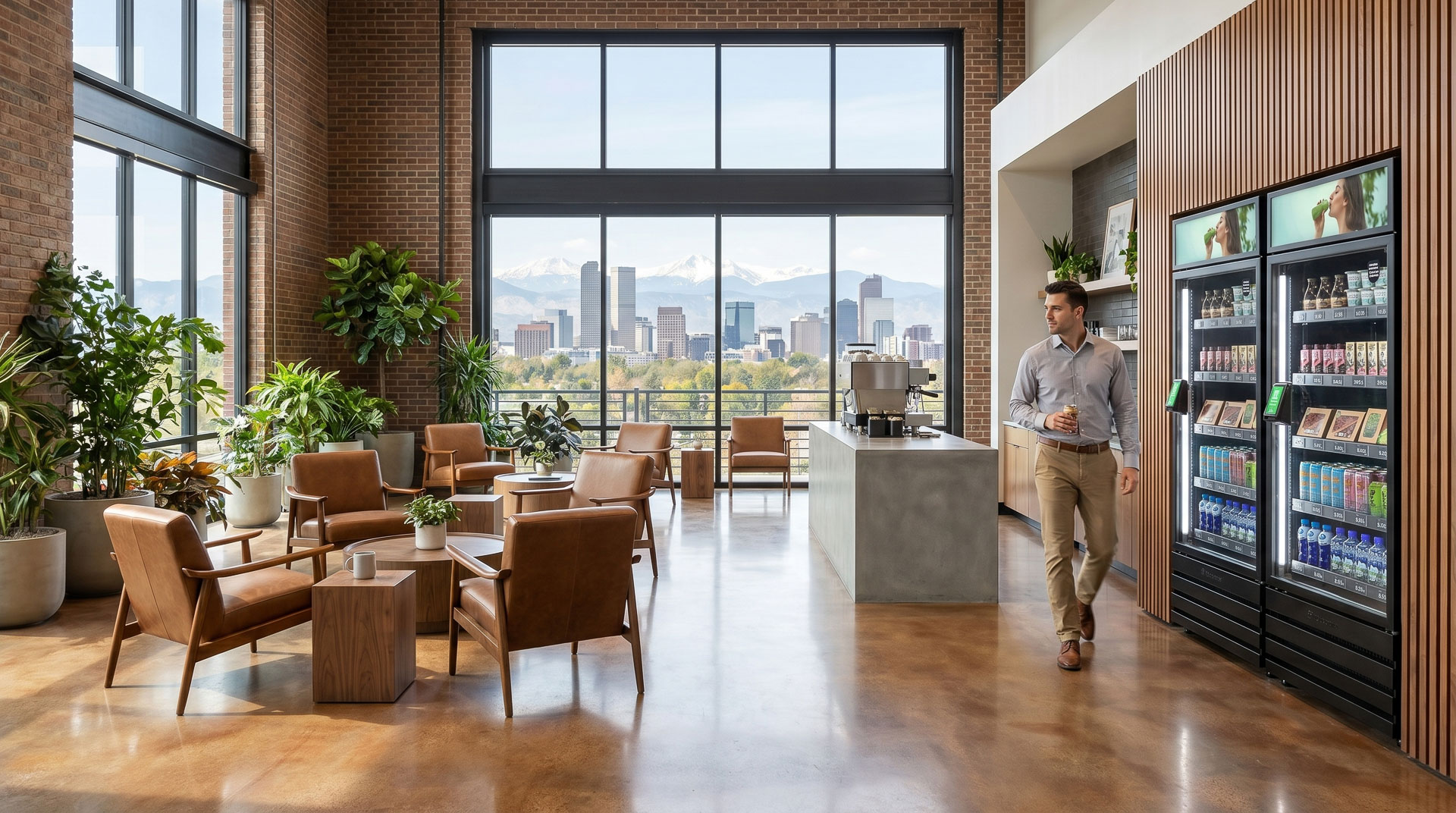
In a dealership customer lounge, presentation matters. This is where the vending setup becomes part of the customer’s visit, next to coffee, seating, Wi-Fi, service updates, and hospitality touches. The unit should look intentional, stay clean, and offer products that fit the dealership’s brand experience. A poorly stocked or outdated machine can make the waiting area feel neglected.
Useful customer-facing products may include:
- bottled water and sparkling water
- coffee or cold brew where appropriate
- lower-mess snacks
- protein bars and granola-style snacks
- gum or mints
- quick breakfast items
- phone chargers or small essentials where supported
The product mix should avoid items that create spills, strong odors, or extra cleanup in the customer lounge. The goal is to give customers a convenient option during service or sales visits without adding work for reception or service staff.
Employee vending should support long shifts
Dealership employees often work through busy sales days, service rushes, deliveries, and end-of-month activity. Technicians and service staff may not have the same flexibility to leave for food or drinks during peak hours.
Employee-focused vending can be added in separate staff areas and can include more filling products:
- energy drinks and coffee
- water and hydration options
- sandwiches or meals where refrigeration is available
- protein snacks
- salty and sweet snacks
- basic personal care items
- phone chargers or small tech accessories
The employee mix should be practical. It does not need to look exactly like the customer lounge assortment, and it should be adjusted based on actual use. In many dealerships, the customer-facing unit and the staff unit should be treated as two related placements with different goals.
Where vending fits in a dealership
Placement should match the dealership’s operations. If the goal is to serve customers, the unit should be inside the dealership where customers already wait or pass through, not tucked away in an employee-only room. It should be visible to the intended audience, easy to service, and out of the way of customer flow, vehicle delivery paths, and service-lane movement.
| Location | Best Use | What To Check |
|---|---|---|
| Customer lounge | Drinks, snacks, polished waiting-area convenience | Appearance, cleanliness, noise, and product mess |
| Service waiting area | Quick drinks and snacks for customers | Traffic flow and support visibility |
| Employee break room | Filling snacks, meals, drinks, caffeine | Restocking access and product variety |
| Technician area | Fast shift support | Clearance, durability, and service access |
| Parts department | Employee convenience | Space, power, and whether customers pass through |
| Back-of-house hallway | Staff-only access | Lighting, visibility, and crowding |
Outdoor or poorly ventilated areas should be avoided unless the equipment is specifically approved for that environment. Refrigerated and freezer options need appropriate indoor placement, airflow, and power.
Cashless service is a better fit for modern dealerships
Cashless vending fits how customers and employees already pay. Cards and mobile wallets are faster than bills and coins, and they let customers use the amenity without asking dealership staff for change, help, or a manual checkout.
For dealerships, cashless operation also helps reduce common vending headaches:
- bill jams
- coin issues
- change complaints
- onsite cash handling
- unclear refund responsibility
- manual collection coordination
The provider should handle payment support and refunds. Dealership staff should not be pulled into customer vending transaction issues while they are trying to run the showroom or service lane.
What a full-service vending provider should handle
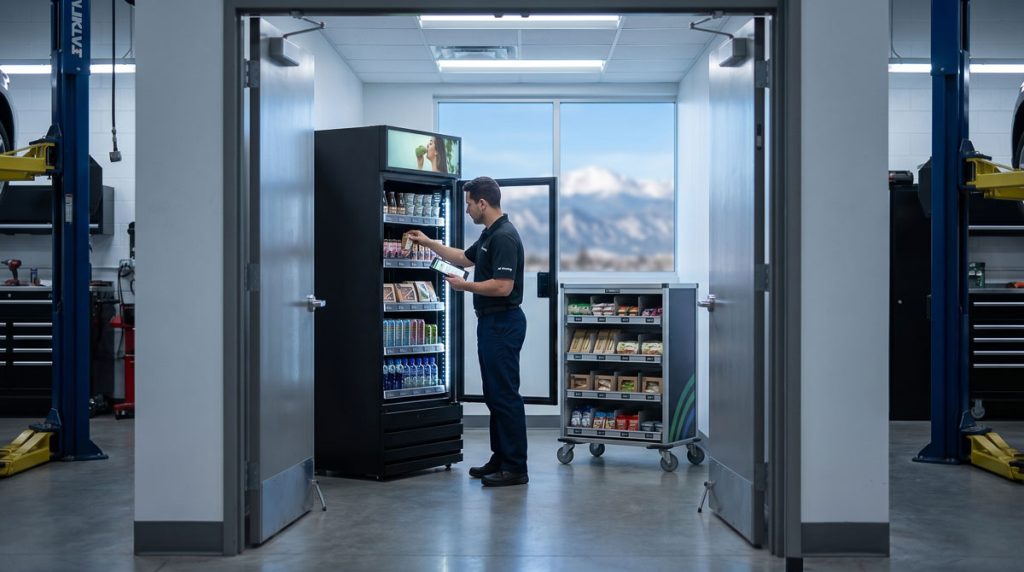
The service model matters as much as the equipment, especially when the machine is in a customer-facing area. A dealership should not have to assign someone to check inventory, buy products, clean up the program, or chase service requests.
A full-service vending provider should handle:
- site review and placement recommendations
- equipment delivery and installation
- product curation by audience and location
- cashless payment setup
- remote inventory monitoring
- restocking based on actual usage
- maintenance and service issues
- customer support for payment questions
- product changes when items do not sell
In AI Vending’s model, the dealership provides space and power while the operator handles equipment, stocking, monitoring, maintenance, and support. That keeps the customer-facing amenity accountable to the provider instead of the dealership team.
Smart vending versus traditional vending for dealerships
Traditional vending can work for basic snacks and drinks, but smart vending is often a stronger fit when the dealership wants a more modern, controlled, cashless experience in a customer lounge or service waiting area.
Smart vending can support:
- glass-front product presentation
- cashless checkout
- controlled product access
- refrigerated, pantry, or freezer cabinet options
- data-informed product updates
- a cleaner customer-facing look
- provider-managed stocking and service
The format should fit the location. A customer lounge may need a more polished setup. An employee break room may need more filling products. A technician area may need durability and fast access more than presentation.
Questions to ask before choosing a provider
Before approving dealership vending services, ask:
- Where should the customer-facing unit go inside the dealership?
- What setup do you recommend for customer-facing versus employee-only areas?
- Who handles stocking, payment support, refunds, and maintenance?
- Can the product mix differ by location inside the dealership?
- Can the setup support refrigerated meals or only snacks and drinks?
- What power, airflow, connectivity, and service access are required?
- How often do you review inventory data?
- What happens when products do not sell?
- How quickly do you respond to visible service issues?
- Does the equipment fit the look of our customer lounge?
- What does dealership staff have to do after installation?
The last question is important. A vending service should support the dealership, not become another job for the team.
When vending may not be the right fit
Vending may underperform if the only available location is hidden, hard to service, poorly lit, or disconnected from customer and employee traffic. If the purpose is customer convenience, a staff-only break room will not solve the customer lounge problem. Vending may also be the wrong setup if the dealership wants fresh meals but cannot support refrigerated equipment, product rotation, or service access.
Dealerships should also avoid putting customer-facing vending in a location that feels cluttered or off-brand. If the lounge is part of the sales and service experience, the equipment should look appropriate for that space.
Build around the dealership experience
The best vending services for car dealerships are planned around real daily routines inside the store. Customers want something easy while they wait in the lounge, service area, or showroom. Sales and service employees need quick options during long shifts. Technicians and fixed-ops teams need access that does not pull them away from the workday.
A smart vending program can support all of those needs if the placement, product mix, payment flow, and service model are right.
AI Vending can help Denver dealerships evaluate where a customer-facing vending setup should go inside the dealership, how it should look in the lounge or service waiting area, and whether separate employee break-room vending should be added behind the scenes.