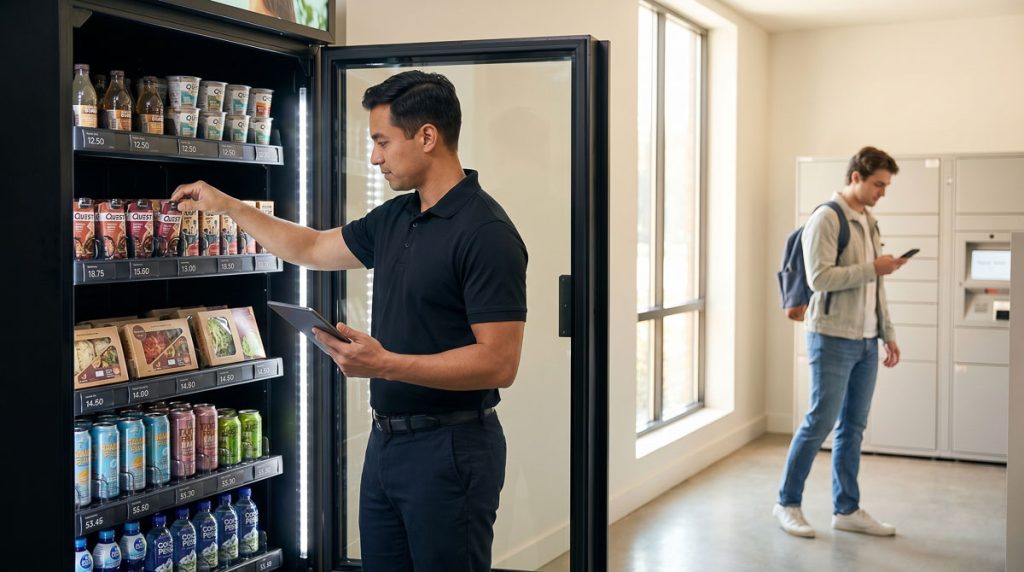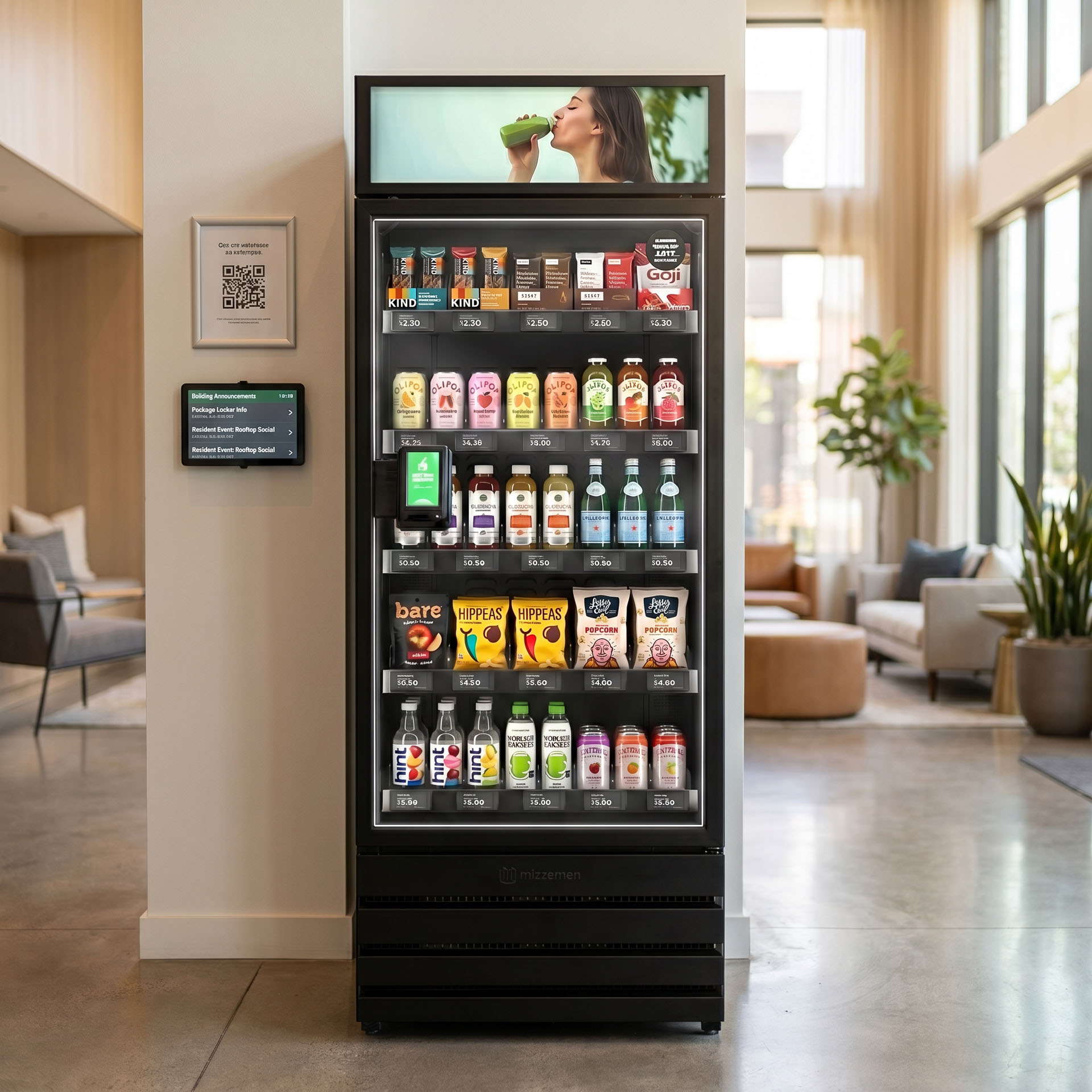
Category: Resident Retention

  • Integration Nation: Connecting Vending to Property Tech

    Integration Nation: Connecting Vending to Property Tech

    Integration Nation: Connecting Vending to Property Tech

    Connecting vending to property tech means making the vending amenity fit the building’s digital operations, resident communications, service workflows, payment expectations, and reporting needs. It does not always mean a deep software integration with every property management system. The best approach is to connect the vending program where it improves the resident experience or reduces work for the property team.

    For property managers and ownership groups, the real goal is simple: smart vending should feel like part of the property’s operating system, not a disconnected machine that staff have to explain, monitor, or manage manually.

    Quick answer

    Smart vending can connect to property tech through resident apps, building communications, access planning, digital promotions, service workflows, payment support, and performance reporting. Some connections may be software-based. Others may be operational: clear launch communications, QR codes, resident portal placement, event credits, support routing, and reporting cadences.

    The right level of integration depends on the building, the resident journey, the provider’s capabilities, and what the property team actually needs.

    Start with the problem, not the integration

    Property tech stacks can already be crowded. Many teams use separate systems for leasing, payments, resident messaging, maintenance, access control, package management, events, and reputation management.

    Adding vending to that environment should not create another dashboard for staff to check. The first question should be:

    What job does this connection need to do?

    Useful answers might include:

    • help residents discover the amenity
    • make payment support clear
    • route service issues to the right provider
    • support resident events or move-in promotions
    • show usage trends to the property team
    • coordinate launch messaging
    • keep the amenity aligned with the building’s access rules

    If an integration does not solve a real problem, it may add complexity without improving the amenity.

    Common connection points

    Property teams can think about vending and property tech in layers:

    Connection PointWhat It Can DoBuyer Question
    Resident app or portalAnnounce the amenity, share instructions, promote creditsHow will residents learn it exists?
    Digital signage or emailSupport launch, events, and product updatesWho writes and manages the message?
    Access control planningPlace the unit where the right users can reach itDoes this location match resident and guest access rules?
    Payment supportKeep transaction questions out of the leasing officeWho handles refunds and receipts?
    Maintenance workflowsRoute machine issues to the providerHow does staff report a problem without owning it?
    ReportingShow usage, product movement, and service insightsWhat data will the provider share and how often?
    Resident eventsSupport move-in, renewal, or appreciation creditsCan promotions be managed without staff handling inventory?

    The strongest programs connect the resident experience and the service model. They do not integrate just for the sake of sounding advanced.

    Resident communication is usually the first integration
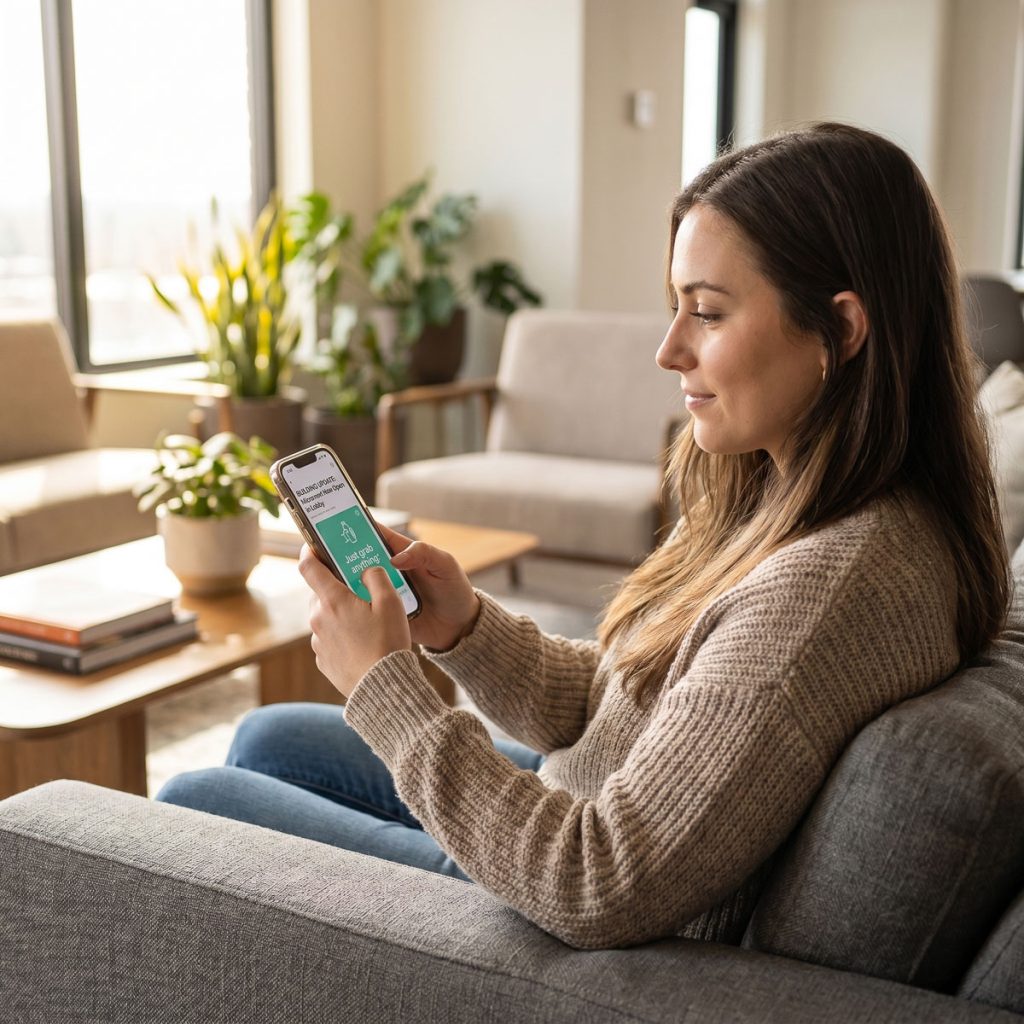
    Apartment resident reading a smart vending amenity announcement on a resident portal app on their phone.

    Most apartment teams do not need a complex technical integration on day one. They need residents to know what the smart vending amenity is, where it is, how payment works, and who to contact if there is an issue.

    That can happen through:

    • resident portal announcements
    • move-in emails
    • building newsletters
    • app posts
    • lobby signage
    • QR codes near the cabinet
    • event communications
    • renewal or resident appreciation messages

    This is a real form of integration because it connects the amenity to the resident journey. If residents never hear about the cabinet, the technology behind it does not matter.

    Payment support should stay out of the leasing office
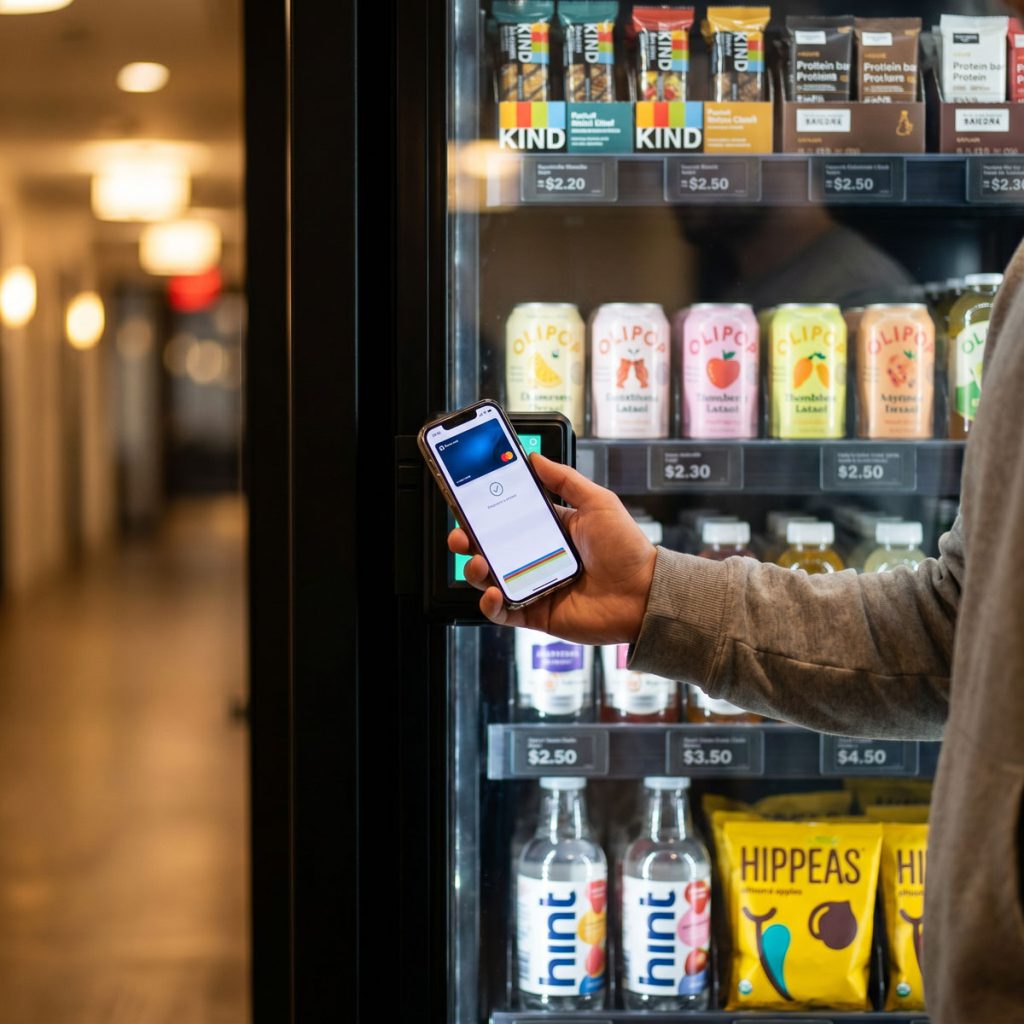
    Apartment resident tapping a mobile wallet to pay at a smart vending cabinet cashless payment terminal.

    Payment is one of the most important operational boundaries. Smart vending should support card and mobile wallet behavior, digital receipts, and provider-managed payment questions.

    The property team should know how residents get help, but it should not become the payment-support desk. A strong provider should define:

    • where receipt questions go
    • who handles refunds
    • how residents report transaction issues
    • how quickly support responds
    • what staff should do if a resident asks the leasing office

    This is where property tech and service design overlap. The resident should have a clear path, and the property team should not inherit the work.

    Access planning matters as much as software

    Some vending “integration” questions are really access questions. The property needs to decide who can reach the amenity and when.

    For example:

    • Is the cabinet in a resident-only area?
    • Can guests reach it?
    • Does it sit behind controlled entry?
    • Is it visible to staff or cameras where appropriate?
    • Can the provider service it without disrupting residents?
    • Does the location work after leasing-office hours?

    The vending system does not need to integrate with access control software in every case. But the placement should respect the building’s access strategy.

    Reporting should be useful, not noisy

    Smart vending can produce useful operating information, but property teams do not need another stream of raw data.

    Good reporting should answer:

    • Are residents using the amenity?
    • Which product categories are strongest?
    • Are restocks aligned with demand?
    • Are service issues being resolved?
    • Is the product mix changing based on behavior?
    • Are resident events or credits being used?

    The best reporting cadence is usually simple and decision-oriented. Ownership and regional teams may want periodic summaries. Onsite teams may only need exception-based updates and a clear support process.

    Promotions and resident events

    Property tech can make vending more useful during resident events. A smart vending program can support launch credits, renewal-week promotions, move-in welcome moments, product sampling, or resident appreciation campaigns.

    The integration does not have to be complicated. The provider and property team can coordinate:

    • who receives the promotion
    • when it runs
    • what products are included
    • how residents learn about it
    • who handles questions
    • what data is reviewed afterward

    The goal is to make the amenity part of the resident experience, not to create a one-off giveaway that staff have to manage manually.

    What should not be integrated

    Not every system should connect. Property teams should be cautious about unnecessary access to resident data, overly complex API promises, or integrations that require staff to manage product decisions.

    Avoid integration plans that:

    • require the property team to monitor inventory
    • push vending support into the leasing office
    • collect more resident data than needed
    • depend on a custom connection with no clear owner
    • sound impressive but do not improve resident use or service
    • create a new manual process for staff

    Simple and reliable is often better than complex and fragile.

    Data and privacy questions

    Any technology-connected amenity should be clear about data boundaries. Property teams should ask what data is collected, who can access it, how payment information is handled, and what reporting is shared with the property.

    For most smart vending decisions, the property does not need personal shopping profiles. It needs operational insight: product performance, usage trends, restock needs, and service quality.

    The provider should be able to explain the difference.

    What a connected vending rollout looks like

    A practical rollout might follow this sequence:

    1. Review building traffic, access, power, and visibility.
    2. Choose the cabinet location and product categories.
    3. Define resident communication before launch.
    4. Set payment support and service routing.
    5. Launch with clear signage and resident messaging.
    6. Review early usage and product performance.
    7. Adjust product mix, promotions, or communication based on behavior.

    The property team should be involved in decisions about location, audience, and messaging. The provider should own the vending operation.

    Questions to ask before connecting vending to property tech

    Before approving an integration plan, ask:

    • What resident or staff problem does this connection solve?
    • Does it require a true software integration or just better communication?
    • Who owns payment support?
    • Who owns maintenance and service routing?
    • What data will the provider share?
    • Does the plan require property staff to manage inventory?
    • How will residents learn about the amenity?
    • How will promotions or credits be handled?
    • What happens if a system connection fails?
    • Can the vending program still operate without creating staff work?

    The answers should clarify responsibility, not create new ambiguity.

    Make the amenity feel connected without making it complicated

    The best smart vending programs connect to property tech in ways residents and staff can feel: clear communication, easy payment, visible support, useful reporting, and clean service ownership. They do not need to be over-engineered to be effective.

    For Denver and Colorado properties, the strongest path is to treat smart vending as part of the amenity and operations ecosystem. Connect it where it improves adoption, service, reporting, and resident experience. Keep the vending operation with the provider.
    The next step is a site and workflow review: where the cabinet belongs, how residents will find it, how support gets routed, and what reporting the property actually needs.
  • Using Vending Perks for Resident Retention Events

    Using Vending Perks for Resident Retention Events

    Using Vending Perks for Resident Retention Events

    Vending perks can make resident retention events more useful when they give residents something immediate, practical, and easy to redeem. Instead of relying only on coffee carts, one-time snacks, or generic giveaways, property teams can use smart vending credits, product drops, sampling moments, and 24/7 onsite access to support renewal campaigns and resident appreciation.

    The point is not to turn vending into a party favor. The stronger use is to connect an event with an amenity residents can keep using after the event ends.

    Quick answer

    Using vending perks for resident retention events means offering residents a temporary benefit tied to an onsite vending or smart store amenity. That might include free item credits, renewal-week snack drops, move-in welcome credits, resident appreciation promos, or curated product moments around events.

    The best programs are simple for residents and low-lift for the property team. The vending provider should manage product availability, payment support, promotion setup, restocking, and service so the event does not become another operational task.

    Why vending works for retention events

    Resident retention events work best when they create a real reason for residents to engage with the property. Food and beverages are already familiar event tools, but traditional event catering is short-lived. Once the event is over, the benefit disappears.

     Smart vending can extend the value. Residents can redeem perks when the timing actually works for them, including after work, during late-night routines, or on weekends. That flexibility matters in communities where residents have different schedules.

    Vending perks can support:

    • renewal season
    • resident appreciation weeks
    • move-in and onboarding
    • finals or student-housing events
    • fitness center programming
    • package-room or lobby activations
    • new amenity launches

     The offer should feel useful, not gimmicky. A resident is more likely to remember a convenient onsite amenity if the event helps them try it naturally.

    What counts as a vending perk?

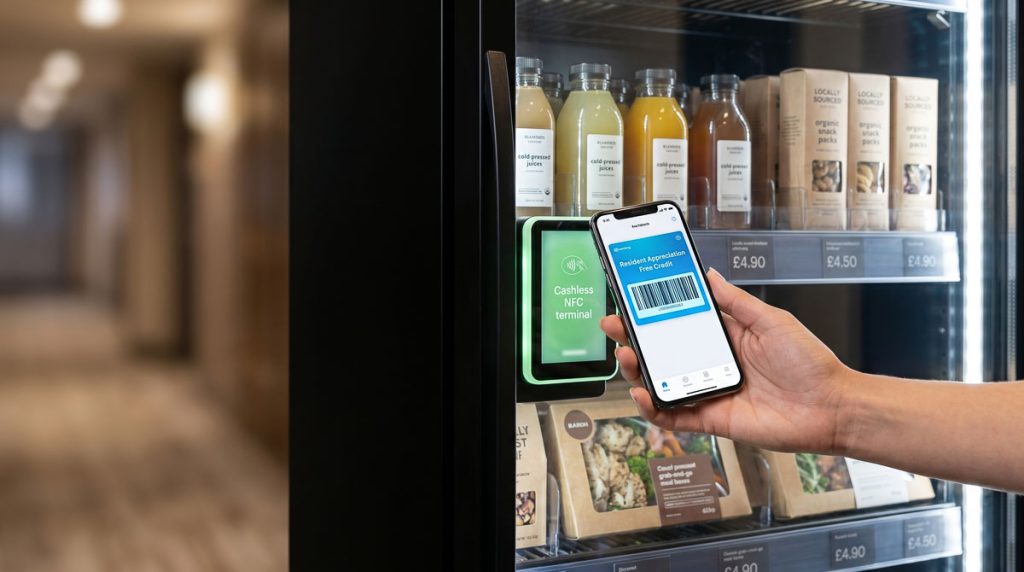
    Resident scanning a free credit barcode on a smartphone at an AI Vending 
cashless smart cabinet terminal stocked with premium local snacks and cold 
beverages in a luxury apartment building

    A vending perk does not have to be complicated. The strongest options are easy to explain and easy to redeem.

    Perk Type

    How It Works

    Best Use

    Free item credit

    Resident receives a one-time credit or equivalent promotion

    Amenity launch, renewal push, resident appreciation

    Product sampling

    Provider stocks a curated set of featured items

    Wellness event, local brand feature, fitness programming

    Time-limited promo

    Certain products are highlighted during a campaign

    Move-in week, finals week, leasing events

    Staff-hosted demo

    Property team introduces the amenity while provider supports use

    First launch or resident event

    Themed assortment

    Product mix changes for an event or season

    Summer pool event, study week, holiday appreciation


    The right approach depends on the building, audience, and provider capabilities. Property teams should confirm exactly what can be supported before promising perks in resident communications.

    Connect perks to a real resident need

    The most useful vending perks are tied to routines residents already have. A fitness-center event might feature hydration and protein snacks. A move-in event might focus on drinks, quick meals, and forgotten essentials. A renewal event might use a small thank-you credit that introduces residents to the smart store.

    This is stronger than handing out a random coupon. The perk works because it shows residents how the amenity fits daily life.

    Property teams should think through:

    • When are residents most likely to use the amenity?
    • Which product categories match the event?
    • How will residents learn how the smart store works?
    • What happens if a featured product sells out?
    • Who answers payment or support questions?
    • How will the provider restock after the event?

    If the property team cannot answer those questions, the event may create confusion instead of goodwill.

    Use events to introduce the amenity

    Resident events are a useful way to teach residents that the amenity exists. Many residents will not change habits just because a new machine appears in a lobby or lounge. A small event gives the property team a reason to point it out.

    The introduction should be simple:

    • what the amenity offers
    • where it is located
    • how residents pay
    • when it is available
    • who handles support

    Avoid overexplaining the technology. Residents need to know how to use the smart store and why it is useful. Property teams need to know the provider is handling the operation.

    A usage signal for after-hours convenience

    Retention events should not promise renewal results from a vending promotion. Still, local usage data can help property teams understand why a 24/7 amenity is worth introducing during resident engagement campaigns.

    AI Vending’s downtown Denver case study, published March 23, 2026, reported 60.7% resident adoption, 30.4% monthly usage, and 25.9% of transactions between 10 PM and 5 AM at an Avenue5 Residential-managed property.

    Those numbers are not a guarantee for another property. They are useful because they show that residents may use onsite convenience outside normal office hours. A retention event can help residents discover the amenity, but continued value depends on stocking, service, location, and product fit.

    Retention value depends on follow-through

    AI Vending service representative restocking a smart vending cabinet with 
fresh snacks and meals in a modern apartment mailroom corridor while a 
resident picks up a package undisturbed in the background.

    A vending perk can create a good first impression, but retention value comes from consistent usefulness after the event. If the unit is empty, poorly stocked, hard to use, or slow to service, the event will not matter.

    That is why the operating model is part of the retention strategy. A smart vending amenity should be monitored, restocked, maintained, and adjusted based on what residents actually buy. It should not become a task for onsite staff.

    In AI Vending’s full-service model, the property provides space and power while the operator installs the equipment, curates products, monitors inventory, restocks, maintains the unit, and handles support. That keeps the event mechanics and the day-after service from landing on the onsite team.

    How to plan a vending perk event

    Start with the event goal. A renewal campaign, new amenity launch, and resident appreciation week should not use the same vending perk by default.

    Then decide:

    1. Which resident group is the event for?
    2. What product categories fit the moment?
    3. Where should the vending unit be promoted?
    4. How long should the perk run?
    5. What does the provider need to configure?
    6. How will the property communicate the perk?
    7. Who handles support questions?
    8. How will usage inform future stocking?

    The more specific the plan, the easier it is to keep the event clean and low-lift.

    When vending perks may not be worth it

    Vending perks may underperform if the building does not have enough resident traffic near the unit, if the available product mix does not match the event, or if the provider cannot configure the promotion cleanly.

    They may also be the wrong tool when the property is trying to solve a bigger resident-experience issue. A vending credit will not fix slow maintenance response, poor communication, or an amenity that is consistently out of service. It should support a broader resident experience strategy, not distract from core operations

    Finally, avoid overpromising. A perk can introduce residents to a useful amenity, but retention depends on the total resident experience.

    Mistakes to avoid

    The first mistake is making the perk too hard to redeem. If residents need a long set of instructions, the event loses momentum.

    The second mistake is promoting products that are not stocked well enough. A perk tied to an empty machine creates frustration.

    The third mistake is making the onsite team responsible for the mechanics. If staff are troubleshooting payments or restocking products, the vending program is not functioning as a managed amenity.

    The fourth mistake is treating the event as the whole strategy. Retention depends on the day-after experience too.

    Make the event useful beyond the event

    Vending perks work best when they introduce residents to a useful everyday amenity. The event creates attention. The smart vending program earns continued use through product fit, availability, payment simplicity, and reliable service.

    For property teams, the right question is not “Can we give residents a free snack?” It is “Can this event help residents discover a convenience amenity they will actually use?”

    AI Vending can help property teams design vending perks that match the building, resident profile, product mix, event calendar, and service plan.